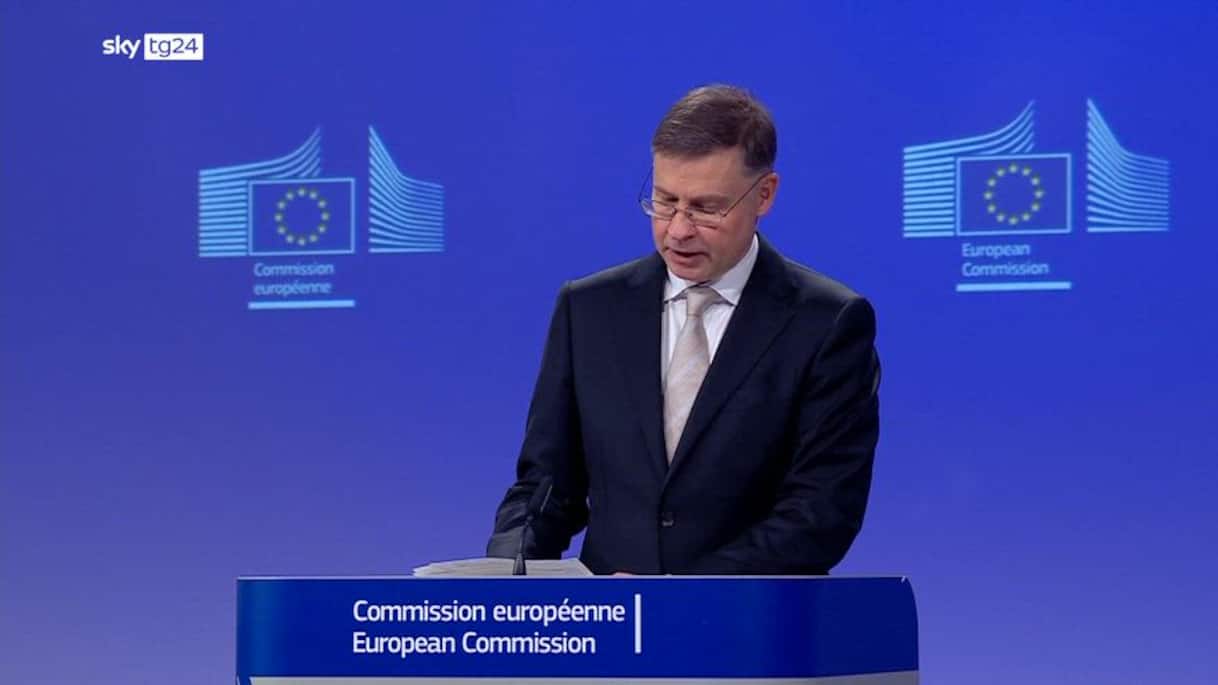
Brussels is navigating a high-stakes balancing act, attempting to reconcile the rigid demands of fiscal discipline with the astronomical costs of the green energy transition. At the heart of this tug-of-war is a new era of budgetary pragmatism, championed by the European Commission’s leadership, which seeks to ensure that the drive toward decarbonization does not inadvertently trigger a debt crisis across the Eurozone.
Pavel Dombrovskis, the European Commission’s Executive Vice President for Budget and Administration, has been a central figure in articulating this shift. The core of the current debate involves providing “flexibility” to member states—specifically regarding how they manage their national budgets as they invest heavily in energy infrastructure, renewable projects, and the broader transition to a climate-neutral economy. This flexibility is not merely a suggestion. it is a structural component of the recently reformed EU fiscal framework, designed to provide a roadmap through the critical years leading up to 2028.
As the European Union moves to decouple its economy from fossil fuels and enhance its energy security following the geopolitical shocks of the past few years, the financial architecture supporting this shift is being fundamentally rewritten. The goal is to ensure that the path to 2028—a pivotal milestone for many of the EU’s climate and energy targets—is paved with sustainable investment rather than unsustainable debt.
The New Era of EU Fiscal Flexibility
For years, the European Union’s fiscal rules, primarily governed by the Stability and Growth Pact (SGP), were criticized by some as being too rigid to accommodate the massive capital requirements of the Green Deal. The traditional approach focused heavily on strict deficit and debt-to-GDP ratios, which often left little room for the long-term, front-loaded investments required for energy system overhauls.
Under the guidance of Pavel Dombrovskis and the broader Commission, the EU has moved toward a more tailored approach. The reformed fiscal rules, which saw significant progress in early 2024, introduce the concept of “national medium-term fiscal-structural plans.” These plans allow member states to negotiate specific paths for debt reduction that take into account their unique economic circumstances and their commitment to essential priorities.
Crucially, these priorities include the green transition and defense. By allowing countries to prioritize these sectors, the Commission is effectively providing the “flexibility” necessary to fund the energy transition without immediately breaching the strictures of the old rules. This is not a “blank check” policy; rather, it is a strategic realignment intended to ensure that fiscal stability and climate ambition are not mutually exclusive.
This structural shift is designed to prevent a “climate-debt trap,” where the cost of meeting environmental mandates forces countries into austerity measures that stifle the extremely growth needed to fund those mandates. By creating a predictable framework through 2028, the EU aims to give investors and governments the confidence to commit to long-term energy projects.
Prioritizing Energy Security and Decarbonization
The impetus for this budgetary flexibility is rooted in a dual necessity: the urgent need to meet the targets of the European Green Deal and the imperative to secure energy independence. The energy crisis sparked by the invasion of Ukraine highlighted the extreme vulnerability of European economies to fossil fuel supply disruptions. The transition to renewables is no longer viewed solely as an environmental necessity, but as a cornerstone of European security.
The “flexibility” discussed by Dombrovskis targets the specific financial hurdles faced by energy-intensive industries and member states with aging, carbon-heavy grids. To modernize these grids and integrate intermittent renewable sources like wind and solar, billions of euros in capital expenditure are required. The reformed fiscal rules recognize that these investments often have a “multiplier effect”—they may increase debt in the short term but are expected to drive long-term productivity and reduce the massive costs associated with energy volatility.
the EU is working to harmonize how these energy-related investments are accounted for within national budgets. This includes ensuring that the transition to cleaner energy sources is supported by a stable regulatory environment, where the costs of decarbonization are distributed in a way that does not disproportionately burden the most vulnerable economies or households.
Why the 2028 Timeline Matters
The year 2028 serves as a critical temporal anchor for the EU’s current strategic cycle. It represents a mid-point in the decade-long journey toward the 2030 climate targets and a key period for the evaluation of the new fiscal-structural plans. The “flexibility” being implemented now is intended to bridge the gap between the immediate economic recovery and the long-term structural transformation of the European energy market.
The 2028 horizon is significant for several reasons:
- Review of National Plans: The mid-term reviews of the national fiscal-structural plans will determine if the flexibility granted to member states is effectively translating into the intended green and security investments.
- Energy Infrastructure Milestones: Many of the large-scale renewable energy projects and grid modernization efforts currently in the planning or early construction phases are slated for operational maturity around this period.
- Fiscal Sustainability Checks: The EU will use this period to assess whether the “tailored” paths for debt reduction are working, or if the flexibility has led to increased fiscal risks that require corrective action.
By setting this timeframe, the Commission is providing a window of predictability. This allows member states to align their national energy strategies with their budgetary constraints, knowing that the rules of the game will not shift abruptly, provided they adhere to the agreed-upon investment targets.
The Geopolitical Stakes of Energy Investment
Beyond the technicalities of budget spreadsheets, the flexibility championed by Dombrovskis has profound geopolitical implications. The ability of the EU to rapidly transition its energy mix is a direct measure of its strategic autonomy. A Europe that remains dependent on imported fossil fuels is a Europe that remains susceptible to external political leverage.
The fiscal space provided to member states allows for the rapid scaling of domestic energy production, from offshore wind in the North Sea to solar arrays in the Mediterranean. This decentralized energy production not only lowers the carbon footprint but also hardens the continent against energy blackmail. The “flexibility” in the budget is a tool of foreign policy, enabling the EU to project strength through economic and energy resilience.
However, this strategy is not without its critics. Some economists argue that any deviation from strict fiscal rules, even for green investments, risks undermining the credibility of the Euro and could lead to higher borrowing costs for highly indebted nations. The challenge for the Commission will be to prove that this “smart flexibility” actually enhances long-term stability rather than merely delaying inevitable fiscal corrections.
Key Takeaways: The EU’s Fiscal-Energy Nexus
- Strategic Realignment: The EU is moving from rigid, one-size-fits-all fiscal rules to tailored “fiscal-structural plans” that allow for more investment in energy and defense.
- Investment Focus: The “flexibility” is specifically aimed at supporting the massive capital requirements of the green transition and enhancing energy security.
- The 2028 Benchmark: This period acts as a critical evaluation window for whether the new budgetary approach is successfully fostering decarbonization without compromising debt sustainability.
- Security Through Energy: Decarbonization is increasingly viewed as a geopolitical imperative to achieve European strategic autonomy.
Frequently Asked Questions
Does “flexibility” mean the EU is abandoning fiscal discipline?
No. The European Commission maintains that the goal remains debt sustainability. The flexibility is about *how* debt is managed and which types of spending (like green investments) are prioritized within the reduction process, rather than simply allowing more spending without oversight.
How will member states benefit from these new rules?
Member states can create customized plans that allow them to invest in essential areas like renewable energy and grid modernization while still following a path toward meeting EU deficit and debt targets. This prevents the need for sudden, drastic austerity that could derail climate goals.
What happens if a country fails to meet its investment targets?
The national fiscal-structural plans are subject to monitoring and review by the European Commission. If a country fails to adhere to its agreed-upon path for both investment and debt reduction, the Commission can trigger corrective measures under the reformed Stability and Growth Pact.
Why is 2028 such a significant year?
It marks a critical mid-point for evaluating the effectiveness of the new fiscal rules and the progress of many of the EU’s major energy transition projects. It will be a period of intense scrutiny regarding both fiscal health and climate progress.
The next major checkpoint for these policies will be the upcoming mid-term reviews of the national fiscal-structural plans, where the European Commission will assess the initial implementation of these tailored budgetary paths. As these reviews approach, all eyes will be on whether the promised flexibility is indeed fueling the green transition or merely masking underlying fiscal vulnerabilities.
What are your thoughts on the EU’s approach to balancing debt and the green transition? Should the rules be even more flexible, or is the current approach a risk to economic stability? Let us know in the comments below and share this article with your network.