
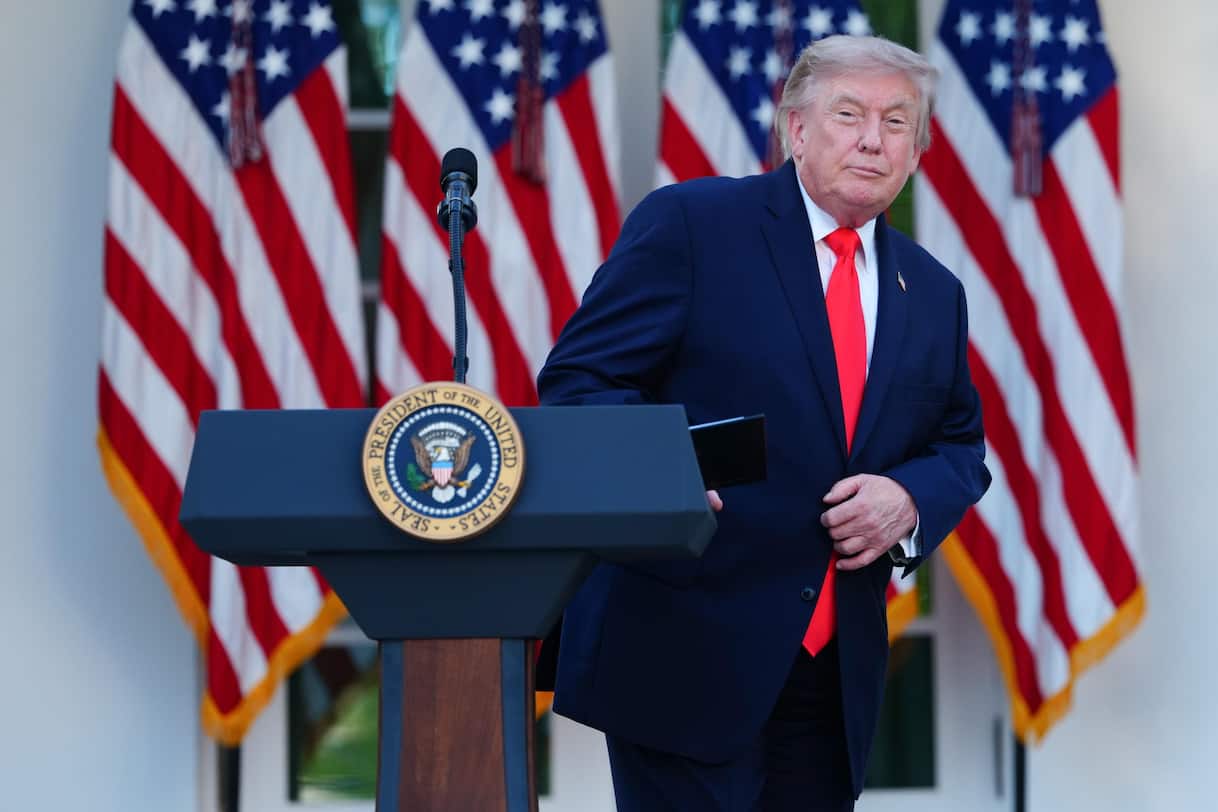
Donald Trump has maintained strong political support despite recurring conflict of interest allegations because his base views these accusations as partisan attacks rather than ethical failures. According to political analysts and polling data, Trump’s image as a successful businessman makes financial entanglement appear as a sign of competence to his supporters, neutralizing the impact of ethics concerns that typically damage traditional politicians.
The persistence of Donald Trump’s popularity amidst claims of financial impropriety reflects a fundamental shift in how a significant portion of the American electorate perceives the relationship between private wealth and public office. While critics argue that his ownership of the Trump Organization creates systemic conflicts, his supporters often interpret these same assets as evidence of the executive experience necessary to manage the federal government.
This dynamic has allowed Trump to survive multiple legal challenges and ethics investigations that would likely end the careers of other political figures. From the debate over the Foreign Emoluments Clause to recent civil fraud rulings in New York, the political cost of these controversies has remained remarkably low among his core constituency.
Why Donald Trump conflict of interest claims fail to dent voter support
The failure of conflict of interest allegations to weaken Donald Trump stems from a strategic framing of the accusations as “witch hunts.” By casting ethics probes as coordinated efforts by political opponents, Trump transforms legal and ethical vulnerabilities into symbols of persecution. According to reporting by the Associated Press, this strategy reinforces a narrative of a “deep state” attempting to undermine a populist leader, which strengthens the bond between Trump and his voters.
Furthermore, the traditional standard of “conflict of interest”—where a public official is expected to distance themselves from private business to avoid bias—clashes with the brand Trump has built over decades. For his supporters, the fact that he is a billionaire is not a liability but a primary qualification. In this framework, the pursuit of profit is seen as a proxy for efficiency and winning, making the overlap between his business interests and government policy appear as a benefit rather than a breach of trust.
This perception is bolstered by the lack of a clear, universally accepted enforcement mechanism for presidential ethics. While the U.S. Office of Government Ethics (OGE) provides guidelines, the president is exempt from many of the conflict-of-interest laws that apply to other federal employees. This legal gray area allows Trump to maintain his business ties while arguing that he is operating within the law, further insulating him from the political fallout of his financial arrangements.
The role of the Trump Organization and the Emoluments Clause
The most persistent conflict of interest concerns have centered on the Trump Organization, particularly the Trump International Hotel in Washington, D.C. During his first term, the hotel became a focal point for critics who argued it served as a conduit for foreign governments to influence U.S. policy. The U.S. Constitution’s Foreign Emoluments Clause prohibits federal officials from accepting gifts or payments from foreign states without the consent of Congress.

Several lawsuits were filed alleging that Trump violated this clause by accepting payments from foreign diplomats and officials staying at his properties. However, these legal challenges faced significant hurdles. In January 2021, the U.S. Supreme Court dismissed the primary emoluments case as moot after Trump left office, meaning the court never issued a definitive ruling on whether his business activities constituted a constitutional violation.
The lack of a definitive legal condemnation contributed to the perception among his supporters that the claims were politically motivated. Because no court ever formally ruled that Trump had committed a crime via the Emoluments Clause, the narrative remained contested. For the Trump base, the absence of a conviction served as a proxy for innocence, regardless of the evidence presented regarding foreign spending at his hotels.
Legal rulings vs. political reality: The New York civil fraud case
The gap between legal findings and political impact was most evident in the New York civil fraud case. In February 2024, Justice Arthur Engoron ruled that Donald Trump, his adult sons, and the Trump Organization had conspired to inflate the value of their assets to secure better loan terms and insurance rates. The court ordered Trump to pay hundreds of millions of dollars in penalties, concluding that the defendants had engaged in persistent and repeated fraud.
Under normal political circumstances, a court finding of systemic fraud would be a devastating blow to a candidate’s credibility. However, Trump successfully integrated this ruling into his existing political narrative. He framed the case as “election interference” and a weaponization of the justice system by New York Attorney General Letitia James. According to Reuters, this framing shifted the focus from the act of fraud to the identity of the prosecutor.
The result was a paradoxical effect: the legal ruling actually increased his fundraising capabilities. Following the announcement of the judgment, Trump’s campaign saw a surge in small-dollar donations, as supporters viewed the financial penalty as an attack on the movement itself. This suggests that for his followers, the “truth” of a court ruling is secondary to the perceived political intent behind the ruling.
New concerns over 2024 transition and government efficiency
As Donald Trump looks toward a potential second term, new conflict of interest concerns have emerged regarding his proposed appointments and his approach to government reform. The announcement of a “Department of Government Efficiency” (DOGE), potentially led by Elon Musk, has raised questions about the intersection of government oversight and private corporate interests.
Elon Musk holds numerous federal contracts through SpaceX and Tesla, creating a direct link between his business success and the government agencies he may be tasked with streamlining. Ethics experts have pointed out that granting a private citizen with massive government contracts the power to cut budgets or reorganize agencies creates an unprecedented conflict of interest. According to reports from The New York Times, this arrangement could allow Musk to target competitors or protect his own interests under the guise of efficiency.
Trump’s supporters, however, view the appointment of figures like Musk as a necessary disruption of the “administrative state.” They argue that the only people capable of fixing a bloated government are those who have succeeded in the private sector, regardless of their current business ties. This reflects the same logic that protected Trump from earlier ethics charges: the belief that business acumen outweighs the need for traditional neutrality.
Comparing the impact of ethics charges across political eras
To understand why these accusations fail to weaken Trump, it is useful to compare his experience with that of previous presidents. Historically, conflict of interest scandals—such as those involving the Teapot Dome in the 1920s or the financial disclosures of later presidents—led to significant drops in approval ratings or calls for resignation.
| Era/President | Nature of Conflict | Primary Political Outcome | Voter Reaction |
|---|---|---|---|
| Traditional Era | Undisclosed gifts/Financial ties | Congressional hearings, resignation threats | Widespread public disapproval |
| Trump Era | Direct business ownership/Asset inflation | Civil penalties, dismissed lawsuits | Increased base loyalty, fundraising surges |
The contrast highlights a shift in the “cost” of scandal. In previous eras, the goal of an ethics probe was to establish a factual record of wrongdoing that the public would find unacceptable. In the current polarized environment, the factual record is often viewed as a partisan construct. When a source is perceived as biased, the facts they produce are dismissed as “fake” or “manipulated,” rendering the traditional mechanism of political accountability ineffective.
What this means for government transparency
The resilience of Donald Trump against conflict of interest claims signals a potential long-term change in the standards of U.S. governance. If the electorate no longer views the separation of private business and public office as a requirement for leadership, the incentive for future presidents to divest from their assets disappears.
This shift could lead to a “normalization” of the president acting as a corporate executive of the state. While this may appeal to those who want a more business-like approach to government, it poses risks to institutional transparency. When the line between personal profit and national interest blurs, it becomes difficult for oversight bodies to determine if policy decisions are being made for the public good or for the benefit of the leader’s portfolio.
Furthermore, this trend affects international perceptions of U.S. leadership. Allies and adversaries alike monitor how the U.S. manages internal ethics. A perceived lack of accountability at the highest level can weaken the U.S. position when advocating for anti-corruption measures in other nations.
The next major checkpoint for these issues will be the formal confirmation hearings for cabinet members and the establishment of any new efficiency commissions, where the U.S. Senate will be required to vet the financial ties of Trump’s chosen leaders. These proceedings will likely serve as the next battleground between traditional ethics standards and the “businessman-in-chief” model of governance.
Do you believe business experience outweighs the need for traditional ethics rules in the presidency? Share your thoughts in the comments below.