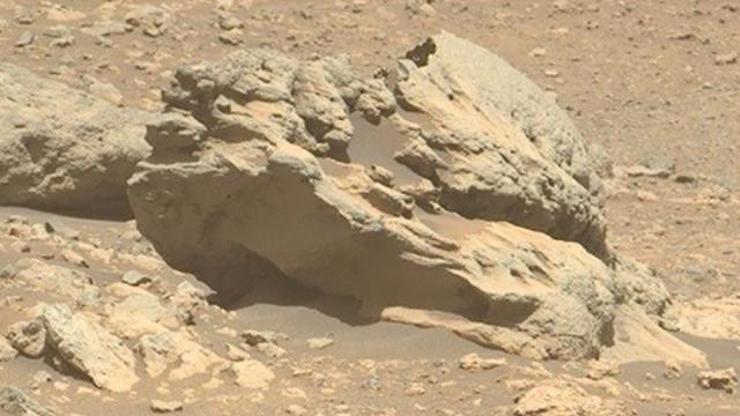
NASA’s Perseverance rover has identified diverse organic matter within the Jezero Crater on Mars, providing significant new evidence for the geological history of the Red Planet. According to the National Aeronautics and Space Administration (NASA), the rover’s SHERLOC instrument detected signals consistent with organic molecules in all ten targets analyzed in the crater’s floor, suggesting that the building blocks of life may have been more widespread than previously understood.
The discovery, detailed in a study published in the journal Nature, does not confirm the existence of past or present life on Mars, but it does establish that the planet’s ancient environment contained the chemical precursors necessary for biological processes. The organic molecules were found in igneous rocks, which formed from cooling magma, rather than the sedimentary rocks where researchers typically expect to find such compounds. This finding indicates that the geological processes in the Jezero Crater were more complex than initial models suggested.
What Are Organic Compounds in a Martian Context?
In planetary science, organic compounds are defined as molecules consisting primarily of carbon atoms bonded to hydrogen, oxygen, nitrogen, and other elements. While these molecules are fundamental to life as we know it, their presence does not inherently prove biological activity. As reported by the Nature research team, these compounds can also be generated through non-biological, or abiotic, processes, such as volcanic activity or chemical reactions between water and minerals.

The SHERLOC (Scanning Habitable Environments with Raman & Luminescence for Organics & Chemicals) instrument allows the Perseverance team to map the spatial distribution of these molecules at a microscopic scale. By correlating these signals with the mineralogy of the surrounding rocks, scientists are working to determine whether the organic matter was deposited by water or formed in situ through rock-fluid interactions. The presence of these molecules in igneous rock samples suggests that Martian surface processes may have been interacting with a reservoir of organic material for a significant duration of the planet’s history.
The Significance of Jezero Crater
Jezero Crater is a 28-mile-wide basin that scientists believe hosted a river delta billions of years ago. The site was selected for the Mars 2020 mission because it features a variety of geological environments that could have preserved signs of ancient life. According to NASA mission documentation, the rover’s primary objective is to collect rock and regolith samples that will eventually be returned to Earth for more detailed laboratory analysis.

The current findings provide context for these future sample returns. By identifying where organic molecules are sequestered within the Martian crust, researchers can better prioritize which samples to store for the Mars Sample Return campaign. This collaborative project between NASA and the European Space Agency (ESA) aims to bring these materials to Earth in the 2030s, allowing for the use of instrumentation far more sensitive than what can currently be carried on a rover.
Methodology and Instrumentation
The detection of these compounds relied on the integration of multiple sensors aboard the rover. SHERLOC uses ultraviolet laser spectroscopy to detect the fluorescence of organic molecules, while the PIXL (Planetary Instrument for X-ray Lithochemistry) instrument analyzes the elemental composition of the rocks. By combining these data sets, the team can verify that the organic signals are not artifacts of the rover’s own hardware or contamination from Earth.
The researchers noted that the organic signatures vary in both type and abundance across the different rock formations. This variability suggests that different geological events influenced the preservation of these molecules. The study published in Nature highlights that the preservation of organic matter in igneous rocks could be linked to the presence of mineral surfaces that protect the molecules from harsh ultraviolet radiation and oxidation on the Martian surface.
What Happens Next
The Perseverance rover continues to explore the upper layers of the crater floor and the remnants of the ancient delta. As the mission progresses, the rover will continue to document the geological diversity of the region. NASA has scheduled regular mission updates to track the rover’s progress as it moves into new areas of the crater, with data publicly available through the NASA Mars 2020 Raw Images database.

While this discovery marks a milestone in the search for potential past life, the next definitive step involves the laboratory analysis of the returned samples. Until those samples reach Earth, the scientific community will continue to refine models of the Martian geochemical cycle. For those following the mission, official updates on sample collection status and rover telemetry are provided periodically by the Jet Propulsion Laboratory (JPL) in Pasadena, California.
Have questions about the Mars 2020 mission or the latest data from the Jezero Crater? Share your thoughts in the comments section below.