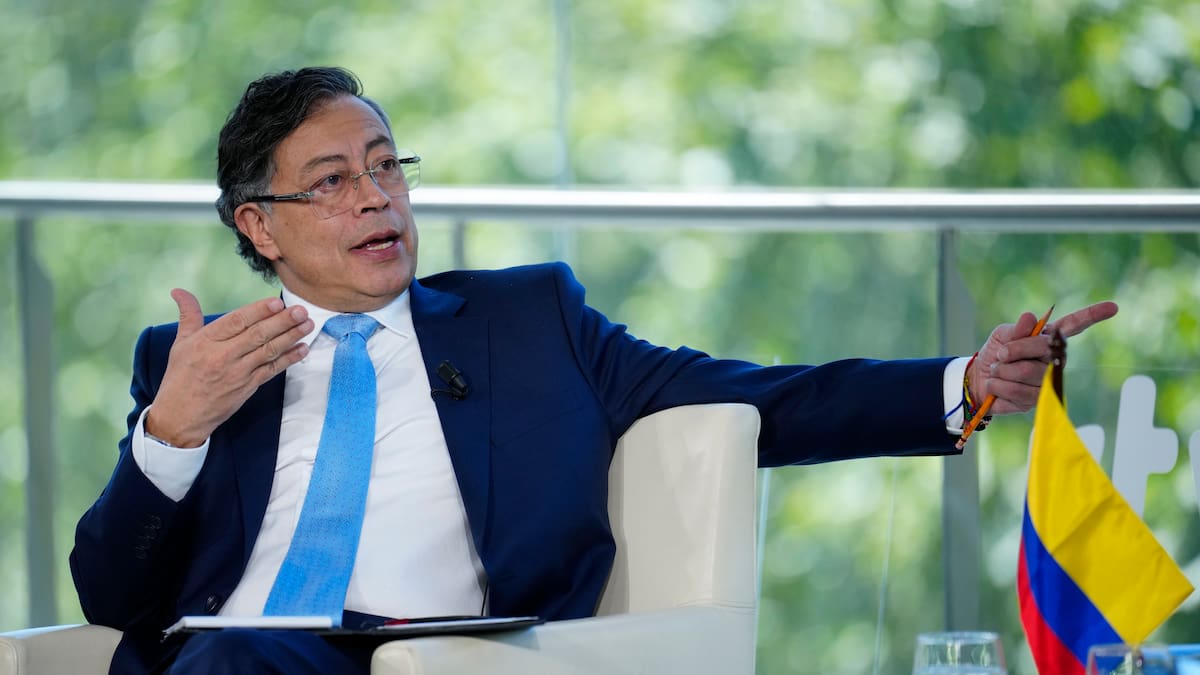
President Gustavo Petro of Colombia has announced plans to file a criminal complaint against Ecuador’s President Daniel Noboa over allegations of indirect ties to a jailed drug trafficker, escalating tensions between the two Andean nations. The move follows remarks by Noboa suggesting Petro met with individuals linked to José Adolfo Macías Villamar, alias “Fito,” leader of the Los Choneros gang. Petro rejected the claims as baseless and said he would pursue legal action for defamation.
According to verified reports, Petro made the announcement on April 19, 2026, via social media, stating he had “decided to criminally sue President Noboa for his slander.” The Colombian president referenced his May 2023 visit to Ecuador for Noboa’s inauguration, noting he was escorted by both Ecuadorian and Colombian security forces during his stay in Manta. He emphasized that no evidence supports the claim of any contact with criminal elements during that trip.
Noboa’s comments originated from an interview with the Colombian news outlet Semana, where he said Petro “met with members of the Citizen Revolution party, and some of those members have links to alias Fito,” while acknowledging he could not confirm a direct meeting between Petro and the fugitive leader. Fito, who escaped prison in 2024 and was recaptured in June 2025, remains a central figure in Ecuador’s ongoing security crisis tied to gang violence and drug trafficking.
The exchange marks a significant deterioration in bilateral relations, which have already been strained by trade disputes. Earlier in April 2026, Petro accused Ecuador of imposing unjustified tariffs on Colombian goods, calling the move politically motivated. In response, Noboa defended the measures as necessary to protect domestic industries amid concerns over illegal trade and insecurity.
Analysts warn the feud risks undermining regional cooperation on security and economic integration within the Andean Community, where both leaders hold rotating presidencies. Petro assumed the pro tempore presidency of the bloc on September 30, 2025, succeeding Noboa, who took office on November 23, 2023, following a special election after Guillermo Lasso’s dissolution of parliament.
Both leaders face domestic pressures: Petro contends with opposition criticism over his peace talks with armed groups and economic reforms, while Noboa grapples with rising violence linked to drug cartels and corruption allegations involving his administration. Neither has provided verifiable proof to substantiate the other’s claims, leaving the dispute rooted in conflicting narratives rather than documented evidence.
As of April 21, 2026, no formal legal petition has been filed in Colombian courts, though Petro’s announcement signals intent to proceed through judicial channels. Ecuador’s government has not issued an official rebuttal to the threat of litigation, focusing instead on maintaining its stance regarding national security and border controls.
The situation underscores the growing influence of disinformation in international diplomacy, particularly when amplified through social media. While neither side has presented authenticated proof of AI-generated content in this specific exchange, recent regional incidents have raised concerns about the use of synthetic media to manipulate political narratives—a topic under increasing scrutiny by fact-checkers and electoral authorities across Latin America.
For ongoing updates, readers are encouraged to monitor official statements from the Presidencies of Colombia and Ecuador, as well as communiqués from the Andean Community Secretariat. Verified developments will be reported through credible international news outlets and institutional channels.
What are your thoughts on how leaders should address unsubstantiated allegations in public discourse? Share your perspective in the comments and facilitate foster informed discussion on this developing story.
- The Jurabogen Region: Economy and Development (Part 2)
- Suspected ‘Atlixcáyotl Sniper’ Captured in Puebla: Everything We Know About Rafael ‘N
- Robert Reich: Trump’s Failed Iran Diplomacy and the Crisis in the Strait of Hormuz (archyde.com)
- Putin Spokesman Peskov’s Statement Sparks Reaction Amid Macron’s Ukraine Stance (world-today-news.com)