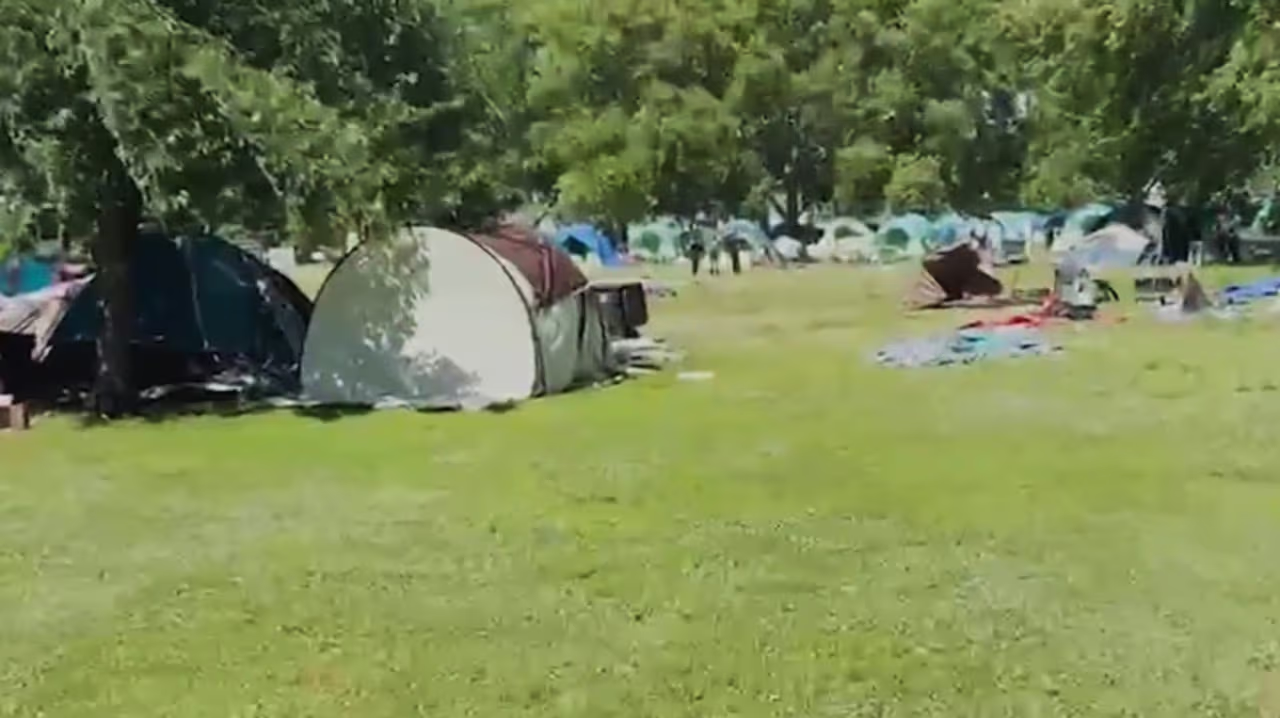
State and local authorities in Delaware have moved to clear encampments of people experiencing homelessness from public park spaces, citing public health and safety concerns, a decision that has triggered protests from advocates and displaced individuals who characterize the actions as unfair. The enforcement actions, which follow a broader trend of municipal efforts to address unsheltered homelessness in the United States, have reignited debates regarding the balance between public park usage and the rights of vulnerable populations.
According to reports from local community members and advocacy groups, the clearing of these sites often occurs with limited notice, leaving individuals without immediate alternatives for shelter or support services. The tension between municipal ordinances, which often prohibit overnight camping in public parks, and the lack of available emergency shelter beds remains a central point of contention in Delaware’s ongoing efforts to manage the housing crisis.
Legal Framework and Municipal Authority
Municipalities in Delaware generally derive the authority to clear encampments from local ordinances that regulate public park hours, sanitation, and the use of public property for long-term residency. Under standard city policies, public parks are designated for recreational use, and the establishment of semi-permanent dwellings is prohibited under codes intended to maintain public health and safety standards. The legal landscape for such evictions was significantly clarified by the U.S. Supreme Court’s ruling in City of Grants Pass v. Johnson, which determined that the Eighth Amendment does not prohibit cities from enforcing anti-camping ordinances, even when shelter space is unavailable, as noted by the Supreme Court of the United States.
For individuals displaced by these operations, the immediate impact is the loss of personal property, including identification documents, medication, and essential items for survival. While local agencies often provide outreach during these clearings, the transition from an encampment to a stable housing environment remains a significant hurdle due to the limited inventory of permanent supportive housing and the complexity of accessing social services, as identified in data provided by the U.S. Interagency Council on Homelessness.
The Impact on Vulnerable Populations
Advocates argue that the removal of encampments without providing adequate, long-term housing solutions does not address the underlying causes of homelessness but instead disperses individuals to less visible areas, making them harder to reach for medical and social support. The process of moving frequently can disrupt established connections to healthcare providers and jeopardize the stability required for individuals to secure employment or apply for housing assistance.
Human rights organizations emphasize that the criminalization of homelessness, through fines or forced displacement, often creates a cycle of legal debt that serves as a barrier to future housing. Research from the National Alliance to End Homelessness indicates that the most effective strategies for reducing unsheltered homelessness involve “Housing First” initiatives, which prioritize immediate access to permanent housing without preconditions, rather than enforcement-heavy approaches.
Current Efforts and Future Coordination
In response to the growing visibility of unsheltered homelessness, several Delaware jurisdictions are exploring collaborative models that involve partnerships between municipal government, private nonprofits, and healthcare systems. These efforts aim to streamline the intake process for social services and ensure that outreach teams are present during any changes to park access policies.

As state officials continue to monitor the situation, advocates are calling for increased transparency in how clearing operations are planned and executed. The next phase of these discussions will likely center on the allocation of state funding for emergency shelter expansion and the development of “low-barrier” shelters that can accommodate individuals who may have been turned away from traditional facilities due to pets, partners, or specific behavioral requirements.
Updates regarding the schedule for future municipal park maintenance or potential policy adjustments will be posted through official city and county government portals. Readers are encouraged to share their perspectives on local housing initiatives in the comments section below.
Worth a look