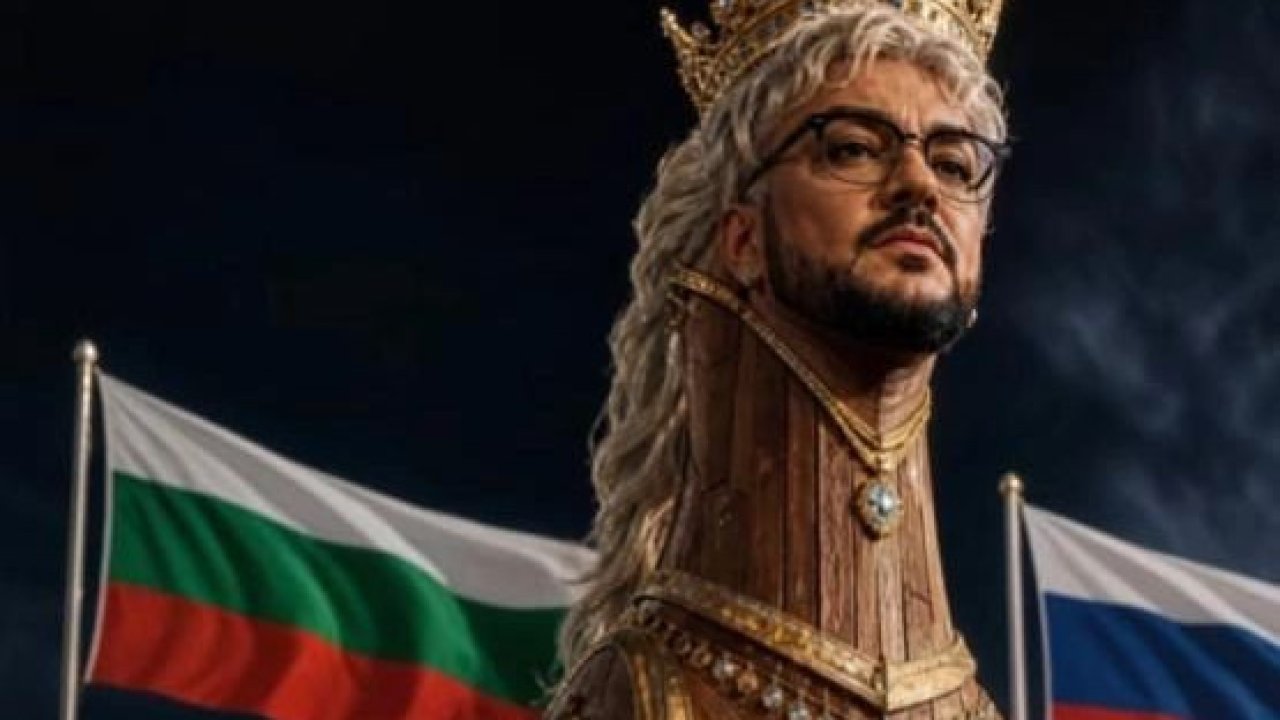
The Controversy Surrounding Philip Kirkorov’s Claims of Bulgaria’s Eurovision Victory
In the high-octane world of European pop music, where celebrity ego often clashes with national pride, few names command as much attention—or provoke as much debate—as Philip Kirkorov. Recently, the Bulgarian-born superstar has found himself at the center of a media firestorm following sensationalist claims regarding Bulgaria’s historical performance in the Eurovision Song Contest. Reports circulating through various Balkan media outlets have suggested that Kirkorov has asserted a direct link between his influence and a purported Eurovision victory for Bulgaria.
For fans of the contest and music historians, the claim immediately raised eyebrows. The intersection of pop stardom, national identity, and the factual record of the Eurovision Song Contest has created a complex narrative that demands careful scrutiny. As the headlines continue to swirl, It’s essential to separate the theatricality of pop performance from the documented reality of the competition’s history.
The controversy highlights a recurring theme in modern celebrity culture: the blurring of lines between metaphorical influence and literal achievement. While Kirkorov’s impact on the Eastern European music industry is indisputable, the mathematical reality of Eurovision results tells a significantly different story. To understand why these claims have caused such a stir, one must look closely at both the artist in question and the actual trajectory of Bulgaria on the Eurovision stage.
Fact-Checking the Claim: Has Bulgaria Ever Won Eurovision?
To address the core of the controversy, we must first look at the official records of the Eurovision Song Contest. According to the official archives maintained by the European Broadcasting Union (EBU), Bulgaria has participated in the contest multiple times since its debut in 2005, but the nation has never won the Eurovision Song Contest.
While the claim that Kirkorov “won it for Bulgaria” may be a piece of hyperbolic rhetoric or a misunderstood interview snippet, it stands in direct contradiction to the competition’s scoring history. For a nation to win Eurovision, it must secure the highest number of points from both the professional juries and the public televote during the Grand Final. A review of all winning entries from the inception of the modern era shows no Bulgarian winner on the list.
Bulgaria’s most successful moment in the contest occurred in 2016. That year, artist Kristina Todoeva performed the song “Impossible,” which resonated deeply with audiences across Europe, ultimately securing a 5th-place finish. This remains the highest ranking ever achieved by a Bulgarian representative. While this was a landmark achievement for the Bulgarian music industry, it falls short of the victory suggested in the recent controversial headlines.
The discrepancy between the reported claim and the historical record suggests one of three things: a deliberate use of hyperbole by Kirkorov to bolster his brand, a journalistic misinterpretation of a more nuanced statement, or a piece of sensationalist media designed to drive engagement through controversy. In the era of rapid-fire digital news, the distinction between “influence” and “victory” is often lost in translation.
The Architect of Pop: Who is Philip Kirkorov?
To understand why such a statement would carry weight—even if factually inaccurate—one must understand the stature of Philip Kirkorov. Born in Bulgaria and having risen to superstardom in Russia, Kirkorov is often referred to as the “King of Pop” in many parts of Eastern Europe. His career spans several decades, characterized by lavish stage productions, high-fashion aesthetics, and a massive, loyal following.
Kirkorov’s connection to Bulgaria is foundational. His roots in the country provided him with a cultural springboard that allowed him to navigate the complexities of the post-Soviet music market. His influence extends far beyond mere song charts; he is a cultural icon whose presence can shift public discourse and influence the career trajectories of younger artists across the Balkan peninsula.
Throughout his career, Kirkorov has been a frequent subject of both admiration and scrutiny. His ability to command the spotlight is unparalleled, often utilizing grand gestures and provocative statements to maintain his relevance in a shifting media landscape. Whether through his involvement in major televised competitions or his high-profile personal life, Kirkorov understands the power of the narrative. In the context of the Eurovision claims, his statement was intended to reflect his role as a mentor or a catalyst for the high production standards seen in Bulgarian musical entries, rather than a literal claim of a trophy win.
A Deep Dive into Bulgaria’s Eurovision Journey
While Bulgaria has yet to claim the ultimate prize, the nation’s participation in Eurovision has been a significant part of its cultural export strategy. Since its first appearance, Bulgaria has used the platform to showcase a blend of traditional Balkan melodies and modern Western pop production.
The evolution of Bulgaria’s entries can be categorized into several distinct phases:
- The Early Years (2005–2010): This period was marked by experimentation as the nation sought to find its footing in a highly competitive field. Entries often leaned heavily on traditional elements but struggled to gain significant traction in the televote.
- The Growth Period (2011–2015): During these years, Bulgarian entries began to show increased production value, moving closer to the “Eurovision standard” of high-energy, polished performances.
- The Peak Performance (2016): As mentioned, the 5th-place finish by Kristina Todoeva marked a turning point, proving that Bulgarian artists could compete at the highest level of the contest.
- Modern Era (2017–Present): Bulgaria has continued to send diverse acts, ranging from ethnic-pop to contemporary ballads, though the country has faced periods of withdrawal from the contest due to budgetary and logistical considerations.
The struggle to secure a win is not unique to Bulgaria; many participating nations face the immense challenge of balancing national identity with the broad, pan-European appeal required to win the televote. The “Kirkorov factor”—the idea that a superstar’s involvement can elevate a nation’s profile—is a sentiment shared by many music industry professionals, even if the results do not always manifest in a first-place trophy.
The Cultural Weight of Eurovision in the Balkans
In the Balkan region, Eurovision is more than just a singing competition; it is a significant cultural event that serves as a window to the West and a stage for regional soft power. For countries like Bulgaria, the contest offers a rare opportunity to project a modern, vibrant image to a global audience of hundreds of millions.
Because the stakes involve national pride, any news—true or hyperbolic—regarding Eurovision success or failure is bound to trigger intense emotional responses. This explains why a claim by a figure as prominent as Kirkorov can ignite such widespread discussion. The contest acts as a lightning rod for discussions about national identity, the influence of foreign markets (specifically the Russian-speaking market), and the role of celebrity in shaping national reputation.
the controversy underscores the power of the “superstar narrative.” In the Balkans, the success of a single artist is often conflated with the success of the nation itself. When an artist of Kirkorov’s caliber makes a claim, even a questionable one, it is often interpreted through the lens of national achievement, making the distinction between the individual and the state a central point of contention.
Key Takeaways: The Eurovision Controversy
- Factual Reality: Bulgaria has never won the Eurovision Song Contest, making the claim of a “victory” factually incorrect.
- Highest Achievement: Bulgaria’s best result was 5th place in 2016 with Kristina Todoeva.
- The Artist: Philip Kirkorov is a major pop icon with deep Bulgarian roots and immense influence in Eastern Europe.
- The Context: The claim likely stems from hyperbolic rhetoric regarding his influence on the Bulgarian music scene rather than a literal win.
- Media Impact: The story highlights how celebrity statements can trigger intense nationalistic and cultural debates in the Balkan region.
Analyzing the Impact of Celebrity Hyperbole
The rise of “clickbait” journalism has changed how celebrity statements are processed. In many instances, a nuanced or metaphorical comment made by an artist in a private interview can be transformed into a sensationalist headline designed to maximize clicks. This phenomenon is particularly prevalent in the entertainment sectors of Eastern Europe, where the appetite for celebrity drama is high.
When a headline reads “Kirkorov: Thanks to me, Bulgaria won Eurovision!”, it is designed to provoke an immediate reaction—either through shock, anger, or amusement. For the journalist, the goal is engagement; for the celebrity, the goal may be maintaining a “larger-than-life” persona. However, for the audience, the consequence is often a blurred understanding of historical and factual truth.
This incident serves as a case study in the importance of media literacy. In an era where news travels instantly across borders, the ability to cross-reference sensational claims with official records—such as the EBU’s Eurovision archives—is more critical than ever. As we navigate a landscape filled with competing narratives, the responsibility falls on both the consumer and the editor to demand accuracy over sensation.
As of now, there have been no official statements from the Bulgarian National Television (BNT) or the EBU regarding these specific claims, as the matter remains within the realm of celebrity commentary rather than official contest dispute. We will continue to monitor the situation for any formal responses or clarifications from Kirkorov’s management.
What are your thoughts on the intersection of celebrity influence and national pride in music competitions? Do you believe hyperbole is a necessary tool for pop stardom, or does it damage the integrity of the art? Let us know in the comments below and share this article with your network.
Worth a look