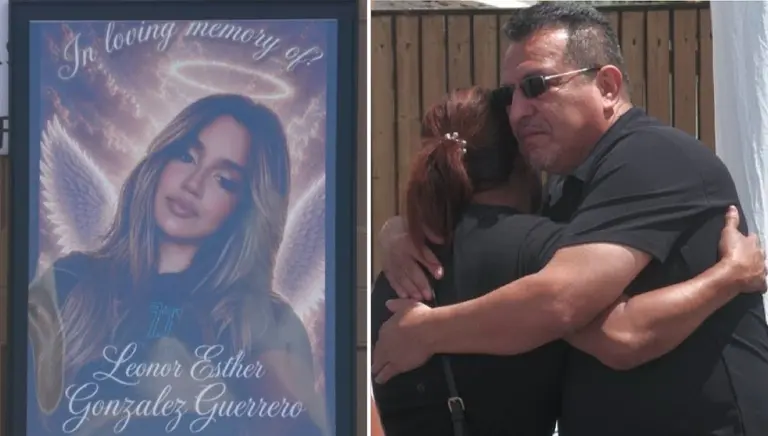
Phoenix Community Rallies Around Regional Mexican Singer El Rayo del Sur After Daughter’s Death from Pancreatic Cancer
PHOENIX, Arizona — The vibrant music scene of Phoenix’s Maryvale neighborhood fell silent this week as one of its most beloved voices, José Luis González — known to fans as El Rayo del Sur — mourns the loss of his 31-year-old daughter, Leonor Bailon, who died on Wednesday, April 22, 2026, after a prolonged battle with pancreatic cancer. The outpouring of support from the local community, however, has transformed grief into a collective embrace, illustrating the deep cultural and emotional ties that bind this predominantly Latino enclave in Arizona’s largest city.
González, a regional Mexican singer whose music has become a staple in Southwest communities, spoke publicly about his daughter’s illness for the first time in an emotional interview with Univision Arizona. In it, he described Leonor’s courageous fight, her determination to survive for her two young children, and the crushing financial burden that cancer imposed on the family. “No creo que se haya ido,” González said, his voice breaking. “I don’t believe she’s gone.” His words, shared widely on social media, have resonated across borders, drawing attention not only to his personal tragedy but to the broader struggles faced by families confronting aggressive, costly diseases like pancreatic cancer.
Leonor Bailon, a mother of two — a son, 2, and a daughter, 11 — had been diagnosed with pancreatic cancer in late 2024. According to González, she underwent 12 rounds of chemotherapy, which initially appeared successful. Medical scans later confirmed that the cancer had been halted in her pancreas, but it had metastasized to her bones, a devastating turn that ultimately proved fatal. Her story, while deeply personal, reflects a grim reality: pancreatic cancer remains one of the deadliest forms of the disease, with a five-year survival rate of just 12% in the U.S., according to the American Cancer Society.
A Community United in Grief and Action
In the days following Leonor’s death, the Maryvale community — a predominantly Latino neighborhood on Phoenix’s west side — mobilized to support the grieving family. Neighbors, fans, and local businesses organized fundraisers, including a car wash and a kermés (a traditional Mexican fair), to help cover funeral expenses. The events, held over the weekend of April 25–26, drew hundreds of attendees, many of whom had never met the family but were moved by González’s public expressions of grief, and resilience.
“This is what community means,” said Maria Elena Ruiz, a longtime resident of Maryvale who attended the fundraisers. “When one of us hurts, we all hurt. And when one of us needs help, we come together.” Ruiz’s sentiment was echoed by local leaders, including Phoenix City Councilmember Laura Pastor, who represents the district. While Pastor did not attend the events, her office released a statement expressing condolences and highlighting the neighborhood’s history of solidarity. “Maryvale has always been a place where people look out for one another,” the statement read. “In times like these, that spirit shines even brighter.”
The financial strain of Leonor’s illness had been immense. According to González, she and her husband were forced to stop working as her condition worsened, relying on her parents and extended family for support. Medical bills piled up, and despite insurance coverage, the family faced mounting debt. In early 2026, they launched a GoFundMe campaign to help offset the costs of treatment. After her death, the campaign’s goal was adjusted to $20,000 to cover funeral expenses. As of April 27, the fund had raised just over $12,000, with donations continuing to trickle in from across the country and even internationally, including from fans in Mexico and Central America.
The Human Cost of Pancreatic Cancer
Leonor’s story is a stark reminder of the brutal toll pancreatic cancer takes on patients and their families. The disease is often diagnosed at a late stage, when treatment options are limited and the prognosis is poor. In the U.S., pancreatic cancer is the third leading cause of cancer-related deaths, despite accounting for only about 3% of all cancer cases. Its symptoms — which can include abdominal pain, jaundice, and unexplained weight loss — are often vague, leading to delays in diagnosis.

For Latino communities, the impact of pancreatic cancer is particularly acute. According to a 2023 study published in Cancer Medicine, Hispanic/Latino patients in the U.S. Are more likely to be diagnosed with advanced-stage pancreatic cancer than non-Hispanic white patients. The study also found that Hispanic patients were less likely to receive surgery, the most effective treatment for early-stage disease, due to barriers such as language, insurance status, and socioeconomic factors. These disparities underscore the urgent need for culturally competent healthcare and increased access to early detection and treatment.
Leonor’s case also highlights the financial devastation that cancer can inflict. A 2020 study by the American Society of Clinical Oncology found that cancer patients in the U.S. Are 2.65 times more likely to declare bankruptcy than those without cancer. For families like Leonor’s, the cost of treatment — which can exceed $100,000 for advanced cases — often forces impossible choices between medical care and basic needs like housing and food.
El Rayo del Sur: A Voice for the Voiceless
José Luis González, known professionally as El Rayo del Sur, has been a fixture in the regional Mexican music scene for over two decades. Born in Sinaloa, Mexico, he moved to Phoenix in the early 2000s and quickly became a beloved figure in the city’s Latino community. His music, which blends traditional norteño and banda styles, often reflects the struggles and triumphs of immigrant families, making him a cultural touchstone for many in the Southwest.
González’s public persona has always been one of strength and resilience, but in his recent interviews, he has allowed his vulnerability to show. “I never thought I’d have to bury my child,” he told Univision. “But if there’s one thing Leonor taught me, it’s that life is precious. We have to fight for every moment.” His willingness to share his grief has not only humanized him in the eyes of his fans but has also sparked conversations about the emotional toll of caregiving and the need for mental health support in Latino communities.
In the wake of Leonor’s death, González has continued to perform, albeit with a heavier heart. Over the weekend of April 25–26, he and his musical partner, Liz Lujan (known as La Soñadora), performed at the Festival de la Iglesia San Agustín in Phoenix, alongside guest artist La Pantera de Chihuahua. The event, which had been scheduled months in advance, took on new meaning as González dedicated several songs to his daughter. Videos of the performance, shared on social media, show a packed crowd singing along, many with tears in their eyes.
What Happens Next: Honoring Leonor’s Legacy
Leonor Bailon’s funeral is scheduled for Friday, May 1, 2026, at St. Mary’s Basilica in downtown Phoenix. The service will be open to the public, and the family has requested that in lieu of flowers, donations be made to the GoFundMe campaign or to local organizations that support cancer patients and their families.
For González and his wife, Enriqueta, the road ahead is uncertain. In addition to grieving, they are now tasked with raising Leonor’s two children, who will grow up without their mother. The community’s support, however, has provided a glimmer of hope. “We are not alone,” González said. “And that is what Leonor would have wanted — for us to keep going, to keep fighting, and to never forget the love that surrounds us.”
As Phoenix prepares to honor Leonor’s life, her story serves as a poignant reminder of the fragility of life and the power of community. In a world often divided by borders and differences, her memory has become a unifying force, bringing together strangers in a shared act of compassion and solidarity.
Key Takeaways
- Leonor Bailon’s Death: Leonor Bailon, 31, died on April 22, 2026, after a battle with pancreatic cancer that metastasized to her bones. She is survived by two children, ages 2 and 11.
- Community Support: The Maryvale neighborhood in Phoenix has rallied around the family, organizing fundraisers to cover funeral expenses and offering emotional support.
- Financial Burden: The family launched a GoFundMe campaign to help with medical and funeral costs, raising over $12,000 of their $20,000 goal as of April 27, 2026.
- Pancreatic Cancer Disparities: Hispanic/Latino patients in the U.S. Are more likely to be diagnosed with advanced-stage pancreatic cancer and face barriers to treatment, according to recent studies.
- El Rayo del Sur’s Role: José Luis González, known as El Rayo del Sur, has used his platform to raise awareness about the emotional and financial toll of cancer on families.
FAQ
-
What is pancreatic cancer, and why is it so deadly?
Pancreatic cancer is a disease in which malignant cells form in the tissues of the pancreas, an organ located behind the stomach. It is particularly deadly because it is often diagnosed at a late stage, when the cancer has already spread to other parts of the body. Symptoms are often vague, and there is currently no reliable early detection test. The five-year survival rate for pancreatic cancer is just 12%, making it one of the most lethal forms of cancer.
-
How can I support the Bailon family?
Donations can be made to the family’s GoFundMe campaign, which is now focused on covering funeral expenses. The family has also requested that in lieu of flowers, donations be made to local cancer support organizations.
-
What is El Rayo del Sur’s connection to Phoenix?
José Luis González, known professionally as El Rayo del Sur, moved to Phoenix from Sinaloa, Mexico, in the early 2000s. He has since become a beloved figure in the city’s regional Mexican music scene, known for his powerful voice and songs that reflect the immigrant experience. His music is a staple in Phoenix’s Latino community, particularly in neighborhoods like Maryvale.
-
How common is pancreatic cancer in the Latino community?
While pancreatic cancer affects all racial and ethnic groups, studies have shown that Hispanic/Latino patients in the U.S. Are more likely to be diagnosed at a later stage and face barriers to treatment, including language differences, lack of insurance, and socioeconomic challenges. These disparities contribute to lower survival rates among Latino patients.
As the community prepares to say its final goodbyes to Leonor Bailon, her legacy lives on in the acts of kindness and solidarity that have followed her passing. The next confirmed event is her funeral on May 1, 2026, at St. Mary’s Basilica in Phoenix. For updates on the family’s journey and ways to support them, follow El Rayo del Sur’s official Facebook page.
Share your thoughts and messages of support in the comments below, and help keep Leonor’s memory alive by sharing this story with others.