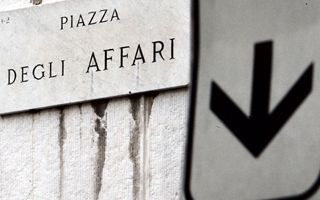
European stock markets closed sharply lower on Monday, March 9, 2026, as escalating tensions in the Middle East fueled investor anxiety and a surge in oil prices. Milan’s FTSE MIB index led the declines, falling 1.42% to close at 43,525 points, marking its third consecutive day of losses. The broader FTSE Italia All-Share index also retreated, slipping to 45,980 points. This downturn reflects a growing concern that the conflict in the region will be prolonged, impacting global economic stability and energy supplies. The situation is particularly sensitive given recent developments in Iran, where the son of Ayatollah Ali Khamenei has been appointed as his successor, raising fears of continued hardline policies.
The primary driver of the market sell-off was a dramatic increase in crude oil prices, with Brent crude reaching $105 per barrel, a 35% jump in a single week, and West Texas Intermediate (WTI) climbing to $103 per barrel, up 45% over the same period. This surge followed reports of attacks on oil facilities in the Gulf region and warnings from Iranian officials that attacks would intensify. The prospect of disrupted oil supplies sent shockwaves through financial markets, prompting a scramble for safe-haven assets and exacerbating existing geopolitical risks. Natural gas prices also rose sharply, reaching €61 per megawatt-hour, a significant increase from the €30 seen just weeks prior. The energy sector’s volatility is a key concern for European economies, which are heavily reliant on imported energy.
European Markets Under Pressure
Beyond Italy, other major European bourses experienced significant declines. Frankfurt’s DAX index fell 1.52%, even as London’s FTSE 100 dropped 1.20%. Paris’s CAC 40 index saw a substantial decrease of 1.92%. The widespread losses across Europe underscore the interconnectedness of global financial markets and the sensitivity to geopolitical events. Investors are increasingly pricing in the risk of a protracted conflict and its potential impact on economic growth. The European Central Bank (ECB) had previously anticipated a further decline in inflation, but the recent spike in oil prices has complicated that outlook, as evidenced in the minutes from their February 4-5 meeting, published today. As reported by Repubblica, the conflict is now a major factor influencing monetary policy decisions.
The increased risk aversion also impacted currency markets, although the euro-dollar exchange rate remained relatively stable at 1.157. Gold, often considered a safe-haven asset, experienced a slight decline, trading at $5,096.7 per ounce, down 1.44%. This suggests that investors are currently favoring cash and other liquid assets over precious metals. The Italian bond market also came under pressure, with the spread between Italian and German 10-year bonds widening to +80 basis points, an increase of 5 basis points, and the yield on the 10-year BTP rising to 3.68%. This widening spread indicates increased investor concern about Italy’s debt sustainability in the face of heightened geopolitical risk.
Italian Stock Performance: Mixed Signals
Within the Italian market, the picture was mixed. While the overall FTSE MIB index declined, some stocks bucked the trend. Leonardo, the Italian defense and aerospace company, saw a significant increase of 4.57%, likely benefiting from the increased focus on defense spending in the current geopolitical climate. Nexi, a payment solutions provider, also performed well, rising 3.88%, while Saipem, an energy services company, gained 2.04%. DiaSorin, a diagnostics company, saw a modest increase of 0.64%. However, several Italian companies experienced substantial losses. Prysmian, a cable manufacturer, fell 4.58%, while Azimut, an asset management firm, dropped 3.31%. Stellantis, the automotive giant, declined 3.08%, and Hera, a multi-utility company, lost 2.80%.
Among the mid-cap stocks, Alerion Clean Power led the gains with a 5.91% increase, followed by WIIT (2.67%), Avio (1.37%), and Pharmanutra (1.32%). On the downside, Brembo, a brake systems manufacturer, experienced the largest decline, falling 3.96%, followed by Danieli, a steelmaking equipment supplier, which dropped 3.95%. These varying performances highlight the sector-specific impacts of the current market volatility. The defense sector, as exemplified by Leonardo’s gains, is seen as relatively insulated from the negative effects of the conflict, while companies exposed to energy price fluctuations or cyclical consumer spending are facing greater headwinds.
Oil Prices and Global Economic Impact
The surge in oil prices is a major concern for the global economy. Analysts at Intesa Sanpaolo warn that a prolonged conflict and subsequent disruption to oil supplies could have serious economic consequences, particularly in Europe and Asia. According to Teleborsa, a sustained period of high oil prices could lead to higher inflation, reduced consumer spending, and slower economic growth. However, the analysts also suggest that a rapid resolution to the conflict or a change in regime in Iran could potentially normalize supply and create a buying opportunity for investors. The situation remains highly uncertain, and market participants are closely monitoring developments in the Middle East.
The United Arab Emirates issued a warning to residents of Dubai to seek shelter, indicating a potential escalation of the conflict and the risk of missile attacks. This heightened sense of insecurity is further contributing to market volatility. Meanwhile, Israel has reportedly conducted airstrikes on targets in Tehran for a second time today, escalating tensions further. The involvement of multiple actors in the region raises the risk of a wider conflict, which could have devastating consequences for the global economy. U.S. President Donald Trump has also weighed in, stating his desire to be personally involved in determining the next leader of Iran, echoing similar interventions in Venezuela. This adds another layer of complexity to the geopolitical landscape.
Macroeconomic Data and Market Sentiment
Beyond the geopolitical factors, recent macroeconomic data also contributed to the negative market sentiment. In the Eurozone, retail sales fell by 0.1% in January, contrary to expectations of a rise. However, the December retail sales figure was revised upwards to +0.1% from -0.5% month-on-month. This mixed data suggests that consumer spending remains subdued, despite some positive revisions. The ECB’s earlier expectations of falling inflation have been challenged by the recent surge in oil prices, creating uncertainty about the future path of monetary policy. The combination of geopolitical risks and weak economic data is creating a challenging environment for investors.
The current market conditions highlight the importance of diversification and risk management. Investors are advised to carefully assess their portfolios and consider reducing exposure to assets that are particularly vulnerable to geopolitical risks and rising oil prices. The situation remains fluid, and market volatility is likely to persist in the near term. Monitoring developments in the Middle East and staying informed about macroeconomic data will be crucial for making informed investment decisions.
Looking Ahead
The markets will be closely watching for further developments in the Middle East, including any diplomatic efforts to de-escalate the conflict and any changes in oil supply. The next key data release will be the Eurozone inflation figures for February, scheduled for release on March 18, 2026. These figures will provide further insight into the impact of rising oil prices on consumer prices and will likely influence the ECB’s monetary policy decisions. Investors should also pay attention to any statements from central bank officials regarding their response to the evolving geopolitical situation. The G7 countries are also expected to convene to discuss potential measures to stabilize oil markets, including the release of strategic petroleum reserves.
The current market downturn underscores the interconnectedness of the global economy and the importance of geopolitical stability. While the situation remains uncertain, investors should remain vigilant and focus on long-term investment strategies.
What are your thoughts on the current market volatility? Share your insights and perspectives in the comments below. Don’t forget to share this article with your network to keep them informed about the latest developments in the global financial markets.