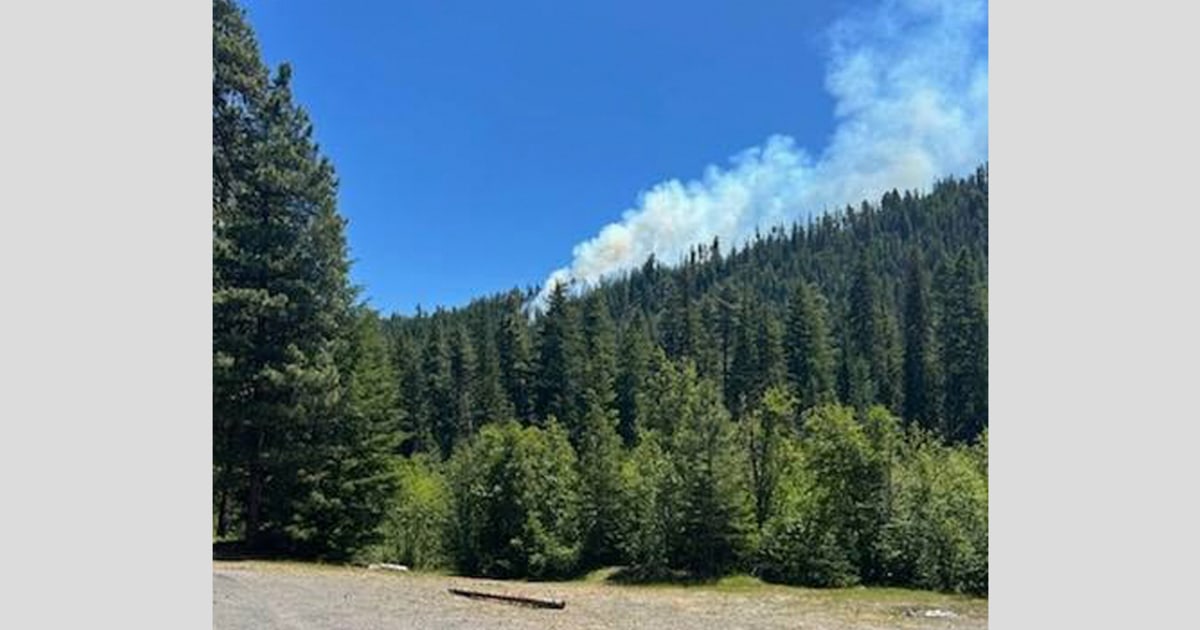
A U.S. Marine Corps pilot successfully ejected from an F/A-18E Super Hornet before the fighter jet crashed into a remote, mountainous area of Washington state on the afternoon of October 15, 2024. The incident, which occurred during a routine training flight, triggered a wildfire in the densely forested region east of Mount Rainier and south of Rimrock Lake, prompting an immediate search-and-rescue operation by local and military authorities.
The pilot, whose identity has not been released, was recovered by search teams shortly after the crash and transported to a medical facility for evaluation, according to official statements from the 3rd Marine Aircraft Wing. The aircraft was attached to the Marine Fighter Attack Squadron 232, based out of Marine Corps Air Station Miramar in California. While the pilot’s condition was initially described as stable, the military has indicated that a comprehensive investigation into the cause of the ejection and subsequent crash is currently underway.
Emergency Response and Wildfire Containment
The crash site, located in rugged terrain near the Yakima Training Center, ignited a fire that quickly spread through the surrounding timber. The U.S. Forest Service and local fire crews were deployed to the area to contain the blaze, which officials confirmed was directly sparked by the impact of the fighter jet. The remote nature of the location—characterized by steep slopes and limited road access—complicated initial efforts to secure the perimeter of the crash site.
According to the Yakima County Sheriff’s Office, the search for the pilot was coordinated using both ground teams and aerial support. The proximity of the crash to Rimrock Lake, a popular recreational area in the Cascade Range, necessitated temporary closures of forest roads to ensure public safety while military investigators established a secure zone. The fire, while contained, remains a point of focus for environmental assessment teams tasked with evaluating the impact of the jet fuel and debris on the local ecosystem.
Operational Context of the F/A-18E Super Hornet
The F/A-18E Super Hornet is a twin-engine, carrier-capable multirole fighter aircraft that serves as the backbone of the U.S. Navy and Marine Corps’ tactical aviation fleet. Training exercises in the Pacific Northwest are common for these squadrons, as the region provides diverse terrain and airspace conditions essential for maintaining combat readiness. The U.S. Navy confirms that such flights are conducted under strict safety protocols, though the inherent risks of high-performance aviation remain a constant factor in military operations.

This incident follows a series of recent safety reviews within the Department of Defense regarding tactical aviation training. While the military has not yet disclosed the specific mechanical or environmental factors that led to the ejection, standard procedures for such events involve the recovery of the aircraft’s flight data recorder, often referred to as the “black box,” to reconstruct the final moments of the flight. The National Transportation Safety Board typically defers to military investigators in cases involving tactical aircraft on active training missions.
Investigative Procedures and Next Steps
The investigation into the crash is being led by a military safety board, which will examine maintenance records, pilot performance, and weather conditions present at the time of the flight. According to the U.S. Marine Corps, the process of recovering the wreckage from the mountain slope is expected to take several days, requiring specialized equipment to navigate the steep, forested environment. This recovery phase is critical for determining whether the crash resulted from a mechanical failure, bird strike, or other unforeseen issue.
Public updates regarding the status of the investigation will be released by the 3rd Marine Aircraft Wing as findings are verified. The military has emphasized that there is no ongoing threat to the public in the areas surrounding the crash site. The next official briefing is expected once the initial recovery of the airframe is complete and preliminary data has been analyzed by the safety board.
Readers are encouraged to monitor official military press channels for updates regarding the investigation. Please share your thoughts or questions in the comments section below as we continue to track this developing story.