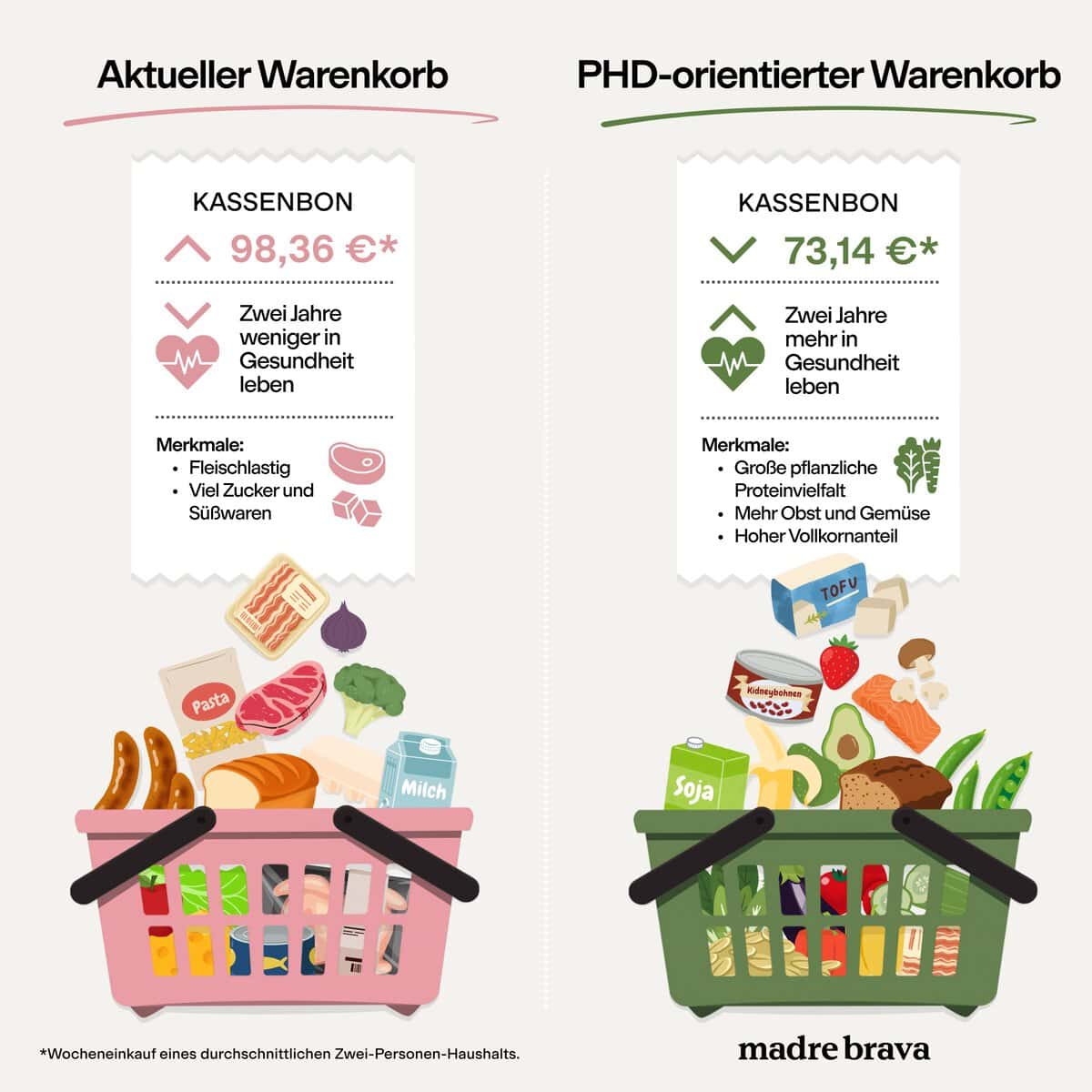
Adopting the Planetary Health Diet can reduce household grocery expenditures while simultaneously improving human health outcomes and lowering environmental impact, according to a study published by the sustainability consultancy PATOS and the food policy organization Madre Brava. The research examines how shifting toward a flexitarian dietary pattern rich in plant-based foods affects both consumer finances and ecological sustainability across European markets.
The analysis investigates the economic and nutritional viability of the dietary framework developed by the EAT-Lancet Commission. By modeling standard consumer shopping baskets against recommended intakes of vegetables, fruits, whole grains, and legumes—while substantially reducing consumption of red meat and processed foods—the researchers evaluated the financial burden placed on average households. The findings indicate that sustainable eating patterns do not necessarily demand higher food budgets, challenging common consumer assumptions about the cost of eco-friendly dietary choices.
Public health experts and economists have increasingly focused on the intersection of diet-related chronic illnesses, agricultural emissions, and household purchasing power. Food systems account for a substantial share of global greenhouse gas emissions, while poor dietary habits remain a leading contributor to preventable non-communicable diseases such as cardiovascular conditions and type 2 diabetes. The Madre Brava and PATOS study provides empirical data on how policy frameworks and retail pricing structures can align nutritional guidelines with economic realities for everyday shoppers.
Economic Feasibility and Household Budgets
Financial accessibility remains one of the primary hurdles for consumers attempting to modify their dietary habits. According to the Madre Brava study findings, shopping baskets configured around the Planetary Health Diet often prove comparable to or even more affordable than conventional meat-heavy diets, provided shoppers prioritize seasonal produce and staple legumes over costly specialty items. The economic evaluation highlights that reductions in spending on high-cost animal proteins frequently offset the incremental cost of acquiring fresh fruits and vegetables.
Supermarket pricing structures and agricultural subsidies heavily influence what ends up on consumer plates. Analysts from PATOS noted that structural shifts in agricultural policy could further enhance the affordability of sustainable food options. When policymakers redirect support toward nutrient-dense crops and sustainable farming practices, retail prices reflect the true cost of food production more accurately, shielding households from volatility in global meat and dairy markets.
Consumer research accompanying the evaluation underscores that financial savings depend heavily on regional retail markets and local availability. In urban centers with diverse produce suppliers, plant-forward shopping yields immediate budget relief. Conversely, food deserts or regions heavily reliant on imported goods face distinct economic hurdles that require targeted municipal interventions and supply chain optimizations to make sustainable eating financially viable for lower-income households.
Nutritional Advantages and Public Health Impact
From a clinical perspective, aligning daily nutritional intake with the Planetary Health Diet delivers measurable physiological benefits. Internal medicine data demonstrates that increasing the proportion of dietary fiber, antioxidants, and micronutrients while cutting back on saturated fats significantly lowers the incidence of metabolic syndrome. Public health institutions emphasize that dietary reforms serve as the most effective primary prevention tool against modern chronic epidemics.
Nutritional science guidelines recommend gradual transitions for populations accustomed to traditional high-protein Western diets to ensure long-term compliance and avoid micronutrient deficiencies. Healthcare professionals advise monitoring iron, zinc, and vitamin B12 levels when reducing meat intake, ensuring that plant-based alternatives or fortified foods compensate adequately. Public health campaigns tied to these dietary models aim to educate consumers on balanced meal planning without sacrificing culinary traditions.
Medical organizations and researchers continue to monitor the long-term outcomes of population-wide dietary shifts. Clinical evaluations published in epidemiological journals confirm that sustained adherence to flexitarian and plant-forward eating patterns correlates with lower systemic inflammation markers and improved longevity. These physiological advantages translate directly into reduced societal healthcare burdens and lower rates of hospital admissions for diet-related complications.
Environmental Sustainability and Policy Implications
The ecological imperative underpinning the EAT-Lancet framework centers on planetary boundaries and resource conservation. Food production currently consumes the vast majority of fresh water withdrawals and drives extensive land use change. By shifting dietary demand away from resource-intensive livestock production toward regenerative agriculture and plant cultivation, nations can drastically shrink their agricultural carbon footprints.
Environmental policy advisors suggest that integrating dietary guidelines into national food strategies can help governments meet international climate commitments under the Paris Agreement. Institutional catering services—such as those in schools, hospitals, and public administrative buildings—offer immediate test beds for large-scale implementation. Public procurement policies that favor sustainable, locally sourced ingredients create stable market demand for farmers transitioning away from intensive livestock farming.
Stakeholders across the agricultural and retail sectors face mounting pressure to adapt to changing consumer awareness and regulatory scrutiny. Food industry analysts stress that collaboration between agricultural producers, retail chains, and public health authorities is essential for redesigning supply chains. Transparent labeling, accurate carbon footprint indicators on packaging, and educational initiatives will dictate how rapidly broader populations adopt these sustainable nutritional standards in daily life.
Official updates and comprehensive documentation regarding sustainable food initiatives and dietary economic evaluations remain accessible through the public portals of PATOS and Madre Brava. Researchers, policymakers, and public health professionals anticipate further empirical updates as upcoming agricultural policy forums convene to evaluate European food security and sustainability metrics.
Related reading