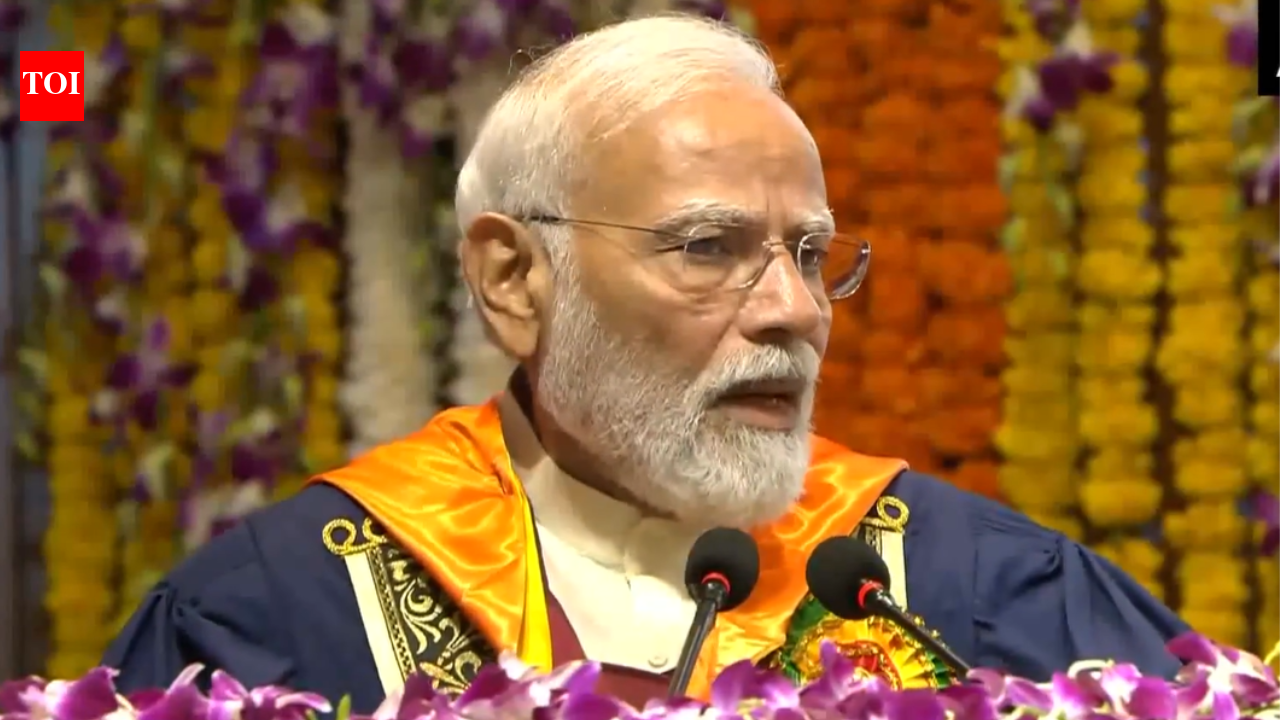
Prime Minister Narendra Modi stated that the number of female medal winners at the Indian Institute of Technology (IIT) Delhi convocation “should have been more,” pointing to a broader need to expand female representation in premier technical institutions. Speaking at the institution’s recent convocation ceremony, the Prime Minister highlighted the achievements of women graduates while emphasizing that the current proportions in top-tier engineering tiers do not yet reflect the full potential of the country’s female student population.
The remarks drew attention to ongoing demographic shifts within India’s prestigious engineering academies, where systemic efforts to bridge the gender gap have yielded gradual increases in enrollment over the past decade. According to official data from the Joint Entrance Examination (JEE) governing boards, special seats created exclusively for female candidates in recent years have helped raise female representation in undergraduate B.Tech programs across the IIT network, though postgraduate and doctoral cohorts continue to experience varying parity levels.
During the address, Prime Minister Modi noted that while female graduates consistently secure top honors and presidential medals when they enter these programs, their total volume relative to male peers requires a deliberate institutional push. Academic leadership at IIT Delhi and other central technical universities have increasingly prioritized outreach programs and mentorship initiatives to encourage more young women to pursue science, technology, engineering, and mathematics (STEM) careers from the school level upward.
Expanding Female Representation in Indian Engineering Education
The conversation around gender equity in technical institutes gained significant policy traction following the introduction of the supernumerary seats for women, which were first implemented in 2018 to counteract declining female enrollment ratios that had dipped below 10 percent in several major branches. By the early 2020s, those targeted interventions successfully pushed female enrollment across the combined IIT system past the 20 percent threshold.
Observers note that translating higher entry numbers into equal shares of top convocation medals involves complex academic pipelines, ranging from classroom environment support to career placement dynamics. Faculty members at IIT Delhi point out that female scholars frequently outperform male peers in grade-point averages once enrolled, yet the total pool of applicants from high schools taking advanced mathematics and physics remains skewed.
Education ministry guidelines continue to urge central universities to expand support systems, including dedicated hostel facilities, financial fellowships, and career counseling designed to retain female talent through rigorous research and development tracks. Industry partners have similarly launched targeted scholarships aimed at reducing financial barriers for female engineering undergraduates across metropolitan and tier-two cities.
Policy Responses and Future Institutional Targets
Institutional administrators face mounting pressure to align campus demographics with broader national development goals outlined in the National Education Policy. Higher education planners emphasize that achieving sustainable parity requires structural changes well before the undergraduate entrance examination stage.
As IIT Delhi and sister institutions plan their next academic cycles, review committees are expected to evaluate the long-term efficacy of current reservation and support mechanisms. Stakeholders across government and academia are monitoring how upcoming curriculum updates and research funding allocations will directly influence enrollment distributions in core engineering disciplines over the next five years.
Keep reading