
The European Union’s quest for mineral sovereignty has reached a critical juncture in Poland, where exploration for one of the continent’s most vital industrial metals is intensifying. In the Lubuskie region, drilling operations have officially commenced to unlock what could be a significant new source of copper and silver, potentially reshaping the strategic landscape of mining in Central Europe.
This development centers on the Nowa Sól project, an ambitious exploration effort situated within Poland’s Northern copper belt. As the global transition toward green energy accelerates, the demand for copper—essential for electric vehicle (EV) infrastructure, wind turbines and power grids—has transformed the metal into a strategic asset. For Poland, a nation already home to one of the world’s largest copper producers, the discovery of substantial new deposits in Lubuskie could solidify its role as the primary supplier of these critical raw materials for the European market.
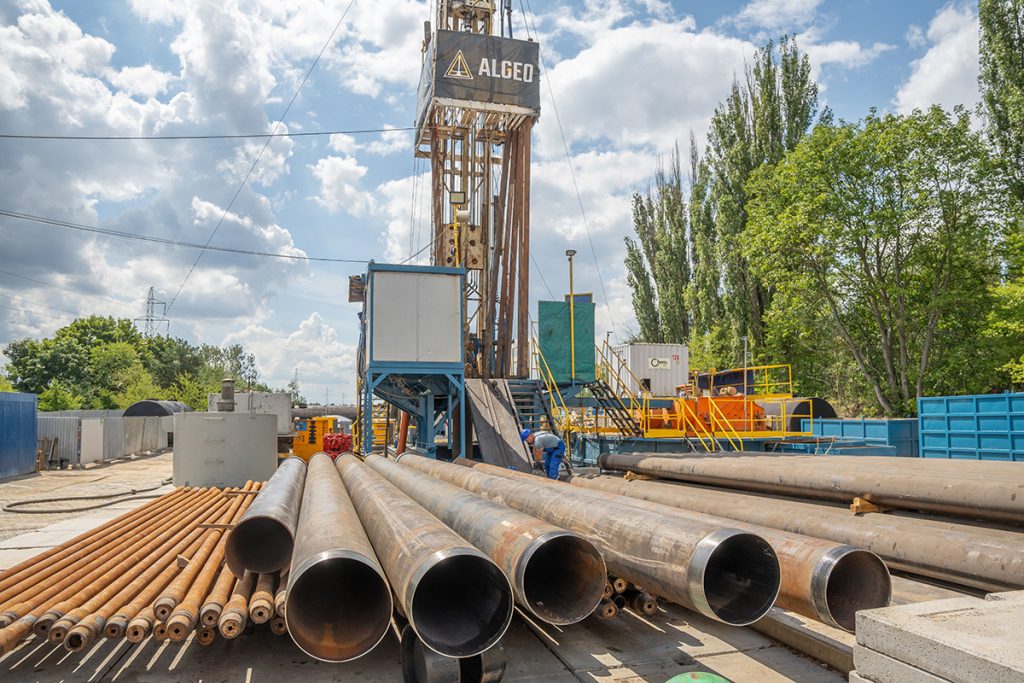
The project is being driven by Lumina Metals, a company that has recently secured the necessary capital to advance its exploration phase. The Nowa Sól project covers approximately 120 square kilometers of land, targeting deep-seated mineralizations that have long been suspected by geologists but remained largely untapped. The commencement of drilling represents the transition from theoretical geological modeling to physical verification, a high-stakes phase that will determine the commercial viability of the site.
For investors and policymakers, the stakes extend beyond simple resource extraction. The emergence of a new, large-scale mining prospect in Poland occurs against the backdrop of the EU Critical Raw Materials Act, a legislative framework designed to reduce the bloc’s dependence on third-country imports—particularly from China—for the minerals required for the digital and green transitions.
The Nowa Sól Project: Tapping the Northern Copper Belt
The Lubuskie region, specifically the area around Nowa Sól, is geologically distinct from the more famous copper-silver deposits found in Lower Silesia. The “Northern copper belt” is believed to host significant deposits that could rival existing European mines in scale, though the depth and complexity of the ore bodies require advanced drilling technology to accurately assess.
Copper and silver often occur together in porphyry or sedimentary deposits, and the Nowa Sól project is targeting these combined yields. Silver, even as often viewed as a precious metal, serves as a critical industrial component in electronics and photovoltaic cells, making the dual-extraction potential of the Lubuskie site particularly attractive. The current drilling program is designed to define the boundaries of the ore body and determine the “grade”—the concentration of metal within the rock—which will ultimately dictate whether the mine is economically feasible to operate.
Local reports have characterized these potential finds as some of the largest in Europe. While “largest” is a relative term in mining until a full JORC or NI 43-101 compliant resource estimate is published, the scale of the 120-square-kilometer concession suggests a project of regional significance. If the drilling confirms high-grade deposits, the project could move from exploration to feasibility studies, eventually leading to the construction of a full-scale underground mine.
A New Dynamic for KGHM Polska Miedź
The development of the Nowa Sól project introduces a fascinating competitive and collaborative dynamic for KGHM Polska Miedź, the state-controlled mining giant and one of the world’s leading producers of copper and silver. For decades, KGHM has enjoyed a near-monopoly over copper extraction within Poland, operating massive underground complexes in the Legnica-Głogów Copper District (LGOM).

The entry of Lumina Metals into the Lubuskie region creates a scenario where a private entity is exploring deposits in close proximity to KGHM’s spheres of influence. Still, the relationship is not necessarily adversarial. Industry reports indicate that Lumina has entered into discussions with KGHM regarding potential supply deals or strategic partnerships. In the mining industry, it is common for junior exploration companies to identify and “de-risk” a deposit before partnering with a major operator that possesses the infrastructure, capital, and technical expertise to bring the mine into production.
From an economic perspective, the presence of a second major copper player in Poland could stimulate regional competition, drive innovation in extraction techniques, and increase the overall volume of domestic supply. For KGHM, a partnership with Lumina could provide a low-risk pathway to expand its reserve base without the initial volatility of early-stage exploration.
Strategic Implications for the European Energy Transition
To understand why a drilling rig in Lubuskie matters to a global audience, one must gaze at the “copper gap.” The International Energy Agency (IEA) has repeatedly warned that the transition to net-zero emissions will require a massive increase in copper production. An electric car requires roughly four times as much copper as a conventional internal combustion engine vehicle, and offshore wind farms require significantly more copper per megawatt than fossil-fuel power plants.
Currently, Europe relies heavily on imports from Chile, Peru, and the Democratic Republic of Congo. By developing domestic sources in Poland, the EU reduces its exposure to geopolitical volatility and supply chain disruptions. The Nowa Sól project is a tangible example of “near-shoring” critical mineral production, ensuring that the raw materials for the European Green Deal are sourced within the union’s own borders.
the economic impact on the Lubuskie region could be transformative. Mining projects of this scale typically generate thousands of direct and indirect jobs, from geological engineering and drilling to logistics, smelting, and environmental management. This brings a surge of infrastructure investment to rural areas, potentially revitalizing local economies through increased tax revenues and secondary business growth.
Challenges and Environmental Considerations
Despite the optimism, the path from a drilling rig to a producing mine is fraught with challenges. The most immediate hurdle is geological uncertainty; drilling can reveal that a deposit is too fragmented or too low-grade to be profitable. The depth of the Northern copper belt may require expensive deep-shaft mining techniques, increasing the initial capital expenditure (CAPEX).
Environmental sustainability is another critical factor. Modern mining in the EU is subject to some of the strictest environmental regulations in the world. Any project in Lubuskie will need to undergo rigorous Environmental Impact Assessments (EIA) to manage water usage, tailings disposal, and land reclamation. The “social license to operate”—the acceptance of the project by the local community—will be essential. Lumina and any future partners must balance the promise of economic growth with the preservation of the Lubuskie region’s natural landscapes.
the volatility of global commodity prices poses a risk. Copper prices are sensitive to global economic growth, particularly in China. A significant downturn in global construction or a slowdown in EV adoption could compress margins, making the development of new mines more precarious.
Key Takeaways: The Lubuskie Mining Prospect
- Exploration Milestone: Drilling has begun at the Nowa Sól project in Lubuskie, targeting the Northern copper belt.
- Scale of Ambition: The project covers 120 square kilometers and seeks to unlock significant copper and silver deposits.
- Strategic Synergy: Lumina Metals is in talks with state-owned KGHM, potentially blending private exploration with state-scale production capacity.
- EU Sovereignty: The project aligns with the EU Critical Raw Materials Act to reduce dependence on external mineral imports.
- Economic Catalyst: If successful, the mine could provide a substantial boost to regional employment and the European green energy supply chain.
What Happens Next?
The immediate focus now shifts to the “assay results”—the laboratory analysis of the core samples extracted during the current drilling phase. These results will provide the first definitive evidence of the metal concentrations in the Nowa Sól project. Once these figures are released, the market will be able to determine if the “largest in Europe” claim holds water or if the deposits are modest in scale.
Following the assay results, the next confirmed checkpoint will be the publication of a formal resource estimate. This technical document will categorize the minerals into “inferred,” “indicated,” and “measured” resources, providing the financial basis for any further investment or a formal acquisition deal between Lumina and KGHM.
As we track the development of this strategic asset, the intersection of geology, geopolitics, and green energy will remain the primary driver. For those following the European markets, the Lubuskie drilling is more than just a local industrial event; it is a bellwether for Europe’s ability to secure its own industrial future.
Do you believe Europe can achieve mineral independence by 2030, or will we remain dependent on global imports for the green transition? Share your thoughts in the comments below or share this analysis with your network.