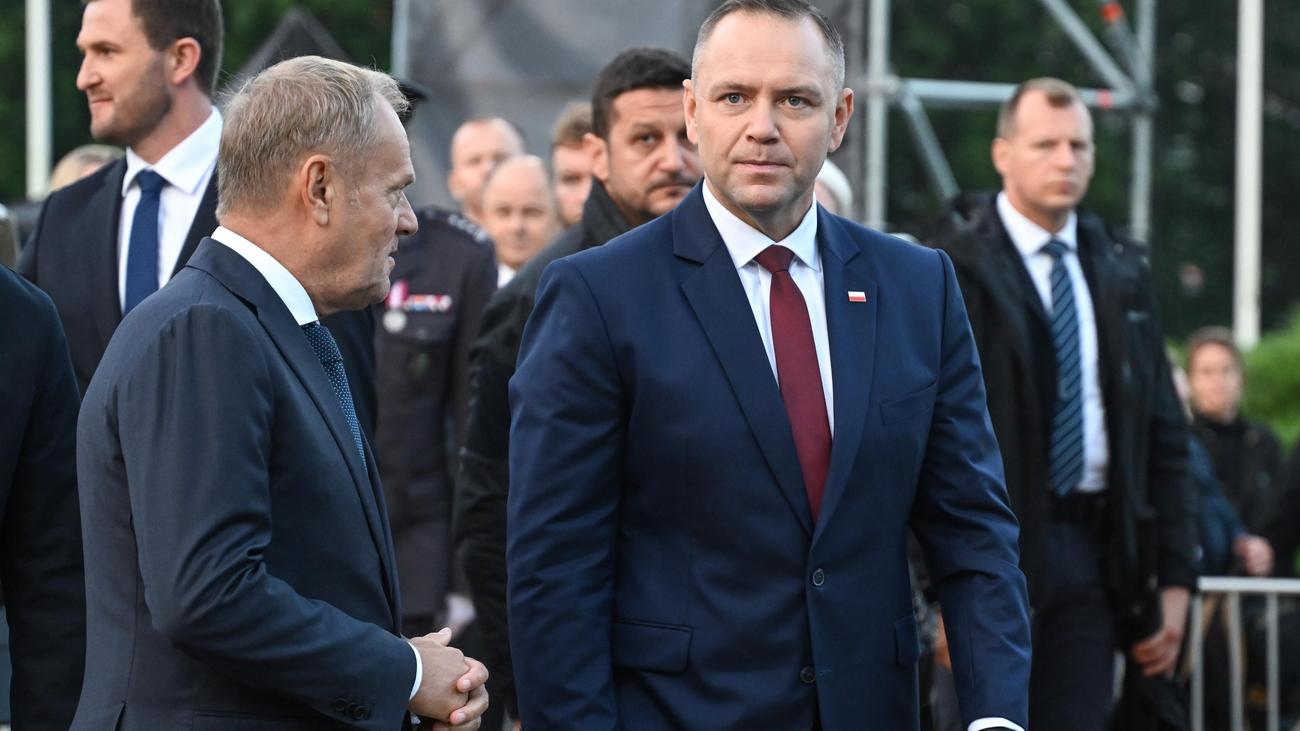
Poland’s President Vetoes EU Defense Funding, Sparking Political Crisis
Warsaw – A deepening political rift in Poland has emerged as President Karol Nawrocki vetoed legislation approving €44 billion in European Union loans intended to modernize the nation’s armed forces. The move, announced on Wednesday, throws into question Poland’s ambitious defense plans and underscores growing tensions between the nationalist-leaning president and the pro-EU government of Prime Minister Donald Tusk. Nawrocki argued that Poland’s security should not be dependent on decisions made abroad, a sentiment echoing concerns about potential infringements on national sovereignty. The veto immediately drew sharp criticism from Tusk, who accused the president of failing to act patriotically.
The EU’s proposed funding comes through the Security Action for Europe (SAFE) program, a broader initiative offering a total of €150 billion in loans to member states to bolster their defense capabilities amid escalating geopolitical risks, particularly in light of Russia’s aggression. Poland was slated to receive the largest share of these funds, aiming to procure advanced weaponry including anti-drone and anti-missile systems, helicopters, and naval vessels. According to plans outlined by the Polish Ministry of Defense, a significant portion of the investment was expected to benefit domestic arms manufacturers, stimulating economic growth and strengthening the national defense industry. Poland, as the largest country on NATO’s eastern flank and bordering Russia, Belarus, and Ukraine, views a robust military as crucial to its security.
Nationalist Concerns and Accusations of German Dominance
The veto is rooted in a broader ideological struggle within Polish politics. President Nawrocki, backed by the national-conservative Law and Justice (PiS) party, has consistently voiced skepticism about the EU’s defense initiatives. Jarosław Kaczyński, leader of PiS, has been a vocal opponent of the SAFE program, propagating a narrative that it is a veiled attempt to increase German dominance within the EU. Kaczyński alleges that German arms manufacturers stand to be the primary beneficiaries of the program, furthering a perceived agenda of centralized control. He reportedly stated, “They are offering us a Poland under a German boot, and we reject that German boot,” reflecting a deep-seated distrust of German influence.
This rhetoric taps into historical sensitivities and anxieties about foreign influence in Poland, a nation with a complex and often fraught relationship with its neighbors. The SAFE program, intended to enhance collective European security, has become a focal point for these nationalist sentiments. The debate highlights the challenges of forging a unified European defense policy in a context of diverse national interests and historical legacies.
Alternative Funding Proposal and Government Response
In response to the veto, President Nawrocki, alongside National Bank of Poland (NBP) Governor Adam Glapiński, has proposed an alternative funding mechanism. This plan suggests financing the arms buildup using the NBP’s foreign exchange and gold reserves, effectively avoiding interest payments and long-term debt obligations. The proposal, estimated to provide approximately 185 billion złoty (equivalent to the proposed SAFE loan amount), has drawn criticism from financial experts who warn of potential risks to the NBP’s financial stability and the Polish economy.
Prime Minister Tusk has firmly rejected Nawrocki’s alternative, signaling a determination to proceed with the EU funding despite the presidential veto. Tusk announced plans to pass a resolution finalizing the program for the Polish armed forces, asserting that the government will not allow the country’s defense modernization to be derailed. “In Europe today, everyone is wondering what happened, how this is possible,” Tusk remarked, expressing his frustration with the president’s decision. The European Commission has also indicated its commitment to working with Poland to implement the SAFE program, according to Reuters.
The situation underscores the delicate balance of power within Poland’s political landscape. The current government, led by Tusk, is attempting to re-engage with the EU and strengthen ties with Western allies, while President Nawrocki, aligned with the nationalist PiS party, represents a more skeptical and inward-looking perspective. This clash of ideologies is playing out against the backdrop of a rapidly changing security environment in Eastern Europe, where Poland finds itself on the front lines of potential conflict.
EU’s SAFE Program: A Broader Context
The EU’s SAFE program was launched in March 2023 as a response to the increased security threats facing Europe, particularly following Russia’s invasion of Ukraine. Politico reports that the program aims to incentivize member states to increase their defense spending to meet NATO’s target of 2% of GDP. The program offers loans with favorable terms, allowing countries to invest in military equipment and infrastructure without significantly straining their public finances.
Beyond Poland, several other EU member states are expected to benefit from the SAFE program, including Germany, France, and the Baltic states. The program is seen as a crucial step towards strengthening European defense capabilities and reducing reliance on the United States. Though, the program has also faced criticism from some quarters, with concerns raised about the potential for increased debt levels and the lack of transparency in the allocation of funds.
Economic Implications and Financial Risks
The debate over the SAFE program extends beyond geopolitical considerations to encompass significant economic implications. Financing a large-scale military modernization through debt carries inherent risks, potentially increasing Poland’s debt-to-GDP ratio and limiting its fiscal flexibility. The alternative proposal put forward by President Nawrocki, while avoiding debt, raises concerns about the potential depletion of the NBP’s reserves and the impact on the Polish złoty.
Financial analysts have cautioned that drawing down the NBP’s reserves to fund arms purchases could weaken the currency and fuel inflation. It could undermine the central bank’s independence and credibility. The government’s commitment to fiscal responsibility and maintaining a stable macroeconomic environment is therefore being closely scrutinized. The decision on how to finance Poland’s defense modernization will have far-reaching consequences for the country’s economic future.
The situation in Poland highlights the broader challenges facing European countries as they seek to balance the need for increased defense spending with the constraints of public finances. The SAFE program offers a potential solution, but its implementation requires careful consideration of the economic risks and the potential for political opposition.
As of March 13, 2026, the Polish government is expected to continue pursuing the EU funding despite the presidential veto, potentially leading to a constitutional challenge. The coming weeks will be critical in determining the future of Poland’s defense modernization plans and the broader implications for European security. Readers are encouraged to follow updates from the European Commission and the Polish government for the latest developments.
What are your thoughts on Poland’s defense strategy? Share your comments below and join the discussion.
Keep reading