
The fight to eradicate poliomyelitis in the Democratic Republic of Congo (DRC) has entered a critical phase, as health authorities scramble to close immunity gaps in some of the world’s most challenging geographical and political landscapes. In a region where conflict and infrastructure deficits frequently hinder medical outreach, the urgency of childhood immunization has never been more apparent.
For the medical community, the situation in the DRC is a stark reminder that the “final mile” of disease eradication is often the hardest. Polio, a highly infectious viral disease that can lead to irreversible paralysis, remains a persistent threat in the Congo Basin. The strategy to combat it requires more than just the availability of vaccines; it demands a sophisticated logistical operation capable of reaching children in remote rainforests and volatile conflict zones.
The Programme Elargi de Vaccination (PEV), the DRC’s Expanded Program on Immunization, continues to lead these efforts. By coordinating with global partners, the PEV aims to ensure that every child, regardless of their location or status as a displaced person, receives the necessary doses to prevent the spread of both wild poliovirus and circulating vaccine-derived poliovirus (cVDPV).
The scale of the challenge is immense. The DRC’s vast territory—characterized by dense jungles and limited road networks—makes traditional vaccination methods difficult to sustain. However, recent initiatives demonstrate a willingness to adapt strategies in real-time, shifting from traditional door-to-door outreach to school-based hubs and leveraging digital surveillance to track the virus’s movement.
The April 2026 Immunization Push
In a concerted effort to bolster pediatric immunity, the PEV launched a comprehensive vaccination campaign from April 15 to 19, 2026. This initiative was not limited to poliomyelitis; it integrated vaccinations against measles and rubella, recognizing that bundled health interventions are often more effective in reaching underserved populations. The campaign targeted 11 provinces across the DRC, focusing on areas where vaccination coverage had dipped below critical thresholds.
The integration of multiple vaccines into a single campaign is a strategic move designed to maximize the impact of every health worker’s visit. In many parts of the DRC, a child may only have one opportunity in several months to encounter a trained vaccinator. By addressing polio, measles, and rubella simultaneously, the PEV reduces the risk of multiple outbreaks occurring in the same community.
This April campaign represents a vital checkpoint in the DRC’s broader health strategy. According to the World Health Organization (WHO), maintaining high population immunity is the only way to prevent the resurgence of the virus, particularly in regions where sanitation and hygiene infrastructure are lacking, allowing the virus to circulate more easily through the environment.
Adapting Logistics in the Équateur Province
One of the most significant hurdles to eradication is the geography of the Équateur province. In cities like Mbandaka, health authorities have had to create difficult tactical decisions to ensure the vaccine reaches the target population. Recently, the PEV has shifted its approach in certain sectors, moving away from the labor-intensive door-to-door model in favor of school-based vaccination sites.
While door-to-door campaigns are generally considered the gold standard for ensuring no child is missed, the logistical constraints in Mbandaka—including difficult terrain and limited transport—have made this model unsustainable for certain phases of the response. By concentrating efforts in schools, health workers can vaccinate larger groups of children more efficiently, though this requires a secondary strategy to reach children who are not enrolled in formal education.
The Divisional Health Direction (DPS) of Mbandaka has emphasized the urgent require for reinforced logistical support. The “cold chain”—the system of refrigerators and insulated carriers required to keep vaccines at precise temperatures—is notoriously difficult to maintain in the humid, high-temperature environment of the Congo Basin. Without adequate transport and cooling equipment, the efficacy of the oral polio vaccine (OPV) can be compromised before it ever reaches a child’s mouth.
This logistical struggle is a recurring theme in global health. The Global Polio Eradication Initiative (GPEI) has frequently highlighted that the DRC’s geography is one of the most challenging in the world for vaccine delivery, necessitating a blend of traditional outreach and innovative, localized adaptations.
Prioritizing Displaced Populations in Sud-Kivu
In the eastern regions of the country, particularly Sud-Kivu, the challenge is not just geographical but humanitarian. Ongoing conflict has led to the displacement of thousands of families, creating pockets of highly vulnerable children who are often missed by routine immunization schedules. In these areas, the PEV has placed a heavy emphasis on reaching internally displaced persons (IDPs).
Displaced camps are high-risk environments for the spread of infectious diseases. Overcrowding and poor sanitation provide the ideal conditions for poliovirus to circulate. When children in these camps are unvaccinated, they not only risk permanent paralysis but also act as reservoirs for the virus, which can then be carried back into stable communities by moving populations.

Efforts in Sud-Kivu involve deploying mobile vaccination teams that follow the movement of displaced populations. This “follow-the-people” strategy is essential because IDP camps are often temporary, and families may move frequently due to security concerns. Ensuring that a child receives their full course of vaccinations despite their displacement is a primary goal for health workers in the east.
The focus on Sud-Kivu is part of a larger regional strategy to prevent the cross-border transmission of the virus. Because the DRC shares borders with several other nations, an outbreak in an unstable eastern province can quickly become a regional crisis, threatening the polio-free status of neighboring countries.
The Digital Frontier: Surveillance in Haut-Uele
While logistics and conflict present barriers, technology is providing new tools for the response. In the Haut-Uele province, the integration of digital tools is transforming how the PEV tracks the virus and manages vaccination data. The shift toward digital surveillance allows for “real-time” reporting, which is a massive improvement over the traditional paper-based systems that often suffered from delays and transcription errors.
Digital tools enable health workers to map “zero-dose” children—those who have never received a single dose of any vaccine. By identifying these clusters through digital mapping and GPS coordinates, the PEV can deploy resources with surgical precision, targeting the exact neighborhoods or villages where the risk is highest.
digital surveillance helps in the rapid identification of Acute Flaccid Paralysis (AFP), the clinical manifestation of polio. When a case of AFP is reported via a digital platform, laboratories can be alerted immediately, and “mop-up” vaccination campaigns can be launched in the surrounding area within days to stop further transmission.
This digital transformation is part of a broader trend in public health known as “precision epidemiology.” By combining satellite imagery, mobile data, and clinical reports, health organizations can move from a broad-brush approach to a targeted strategy that maximizes the limited resources available in the DRC.
Medical Insight: Understanding the Polio Threat in DRC
To understand why these campaigns are so critical, We see necessary to distinguish between the types of poliovirus currently affecting the region. While wild poliovirus (WPV) has been eradicated in most of the world, the DRC frequently deals with circulating vaccine-derived poliovirus (cVDPV).
cVDPV occurs in under-vaccinated communities where the weakened virus used in the oral polio vaccine (OPV) circulates for a long time. Over months of transmission from person to person in a population with low immunity, the virus can genetically mutate and regain the ability to cause paralysis. This creates a paradoxical situation where the very tool used to fight the disease can contribute to new outbreaks if vaccination coverage is not high enough to stop the virus from circulating.
This is why “coverage” is the most important metric for the PEV. It is not enough for some children to be vaccinated; a vast majority of the population must be immune to create “herd immunity.” When coverage drops, the virus finds a foothold, and the risk of cVDPV increases. The transition to the Inactivated Polio Vaccine (IPV), which is administered via injection and cannot cause vaccine-derived polio, is a key part of the long-term global strategy, but the oral vaccine remains essential for rapid, mass-scale campaigns due to its ease of administration and ability to provide mucosal immunity in the gut.
Key Challenges to Eradication in the DRC
| Barrier | Impact on Vaccination | Mitigation Strategy |
|---|---|---|
| Geography | Difficult access to remote rainforest villages. | School-based hubs and mobile river teams. |
| Conflict | Displacement of populations; unsafe zones for workers. | Targeted IDP camp outreach and security coordination. |
| Cold Chain | Vaccine spoilage due to heat and lack of electricity. | Solar-powered refrigeration and improved logistics. |
| Immunity Gaps | Pockets of “zero-dose” children. | Digital mapping and precision epidemiology. |
What Happens Next?
The conclusion of the April 2026 campaign is not the conclude of the effort, but rather a transition into the surveillance phase. Health authorities will now spend the coming weeks analyzing the coverage data to identify which children were missed and where the “immunity gaps” persist. These findings will inform the planning for the next round of supplementary immunization activities (SIAs).
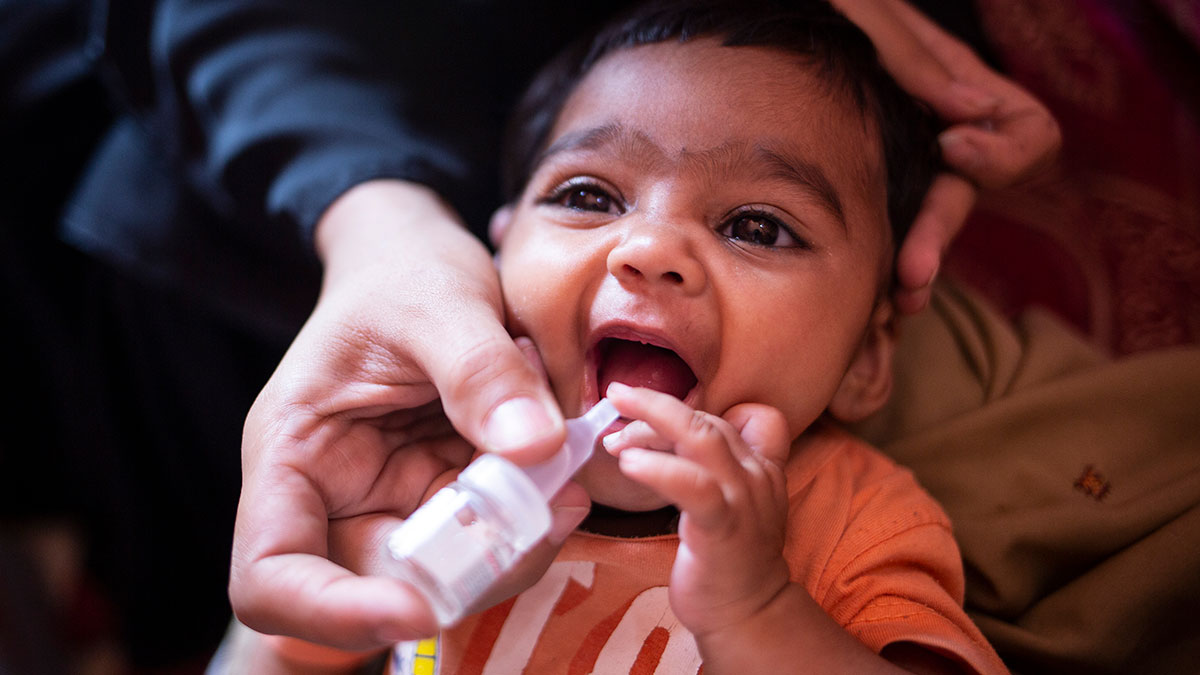
The next critical checkpoint will be the release of the post-campaign evaluation report by the PEV and its partners. This report will determine if the shift to school-based vaccination in Mbandaka successfully increased coverage or if a return to door-to-door outreach—supported by increased logistics—is required. The continued monitoring of AFP cases in Sud-Kivu and Haut-Uele will indicate whether the recent pushes have successfully interrupted the transmission of the virus.
As a physician and journalist, I believe the DRC’s struggle against polio is a litmus test for global health. If One can solve the logistical and security puzzles of the Congo Basin, we can solve them anywhere. The goal of a polio-free world is within reach, but it requires an unwavering commitment to the most vulnerable children in the most forgotten places.
We want to hear from you. Do you believe digital health tools are the key to solving last-mile delivery in developing nations, or should the focus remain on basic infrastructure? Share your thoughts in the comments below.