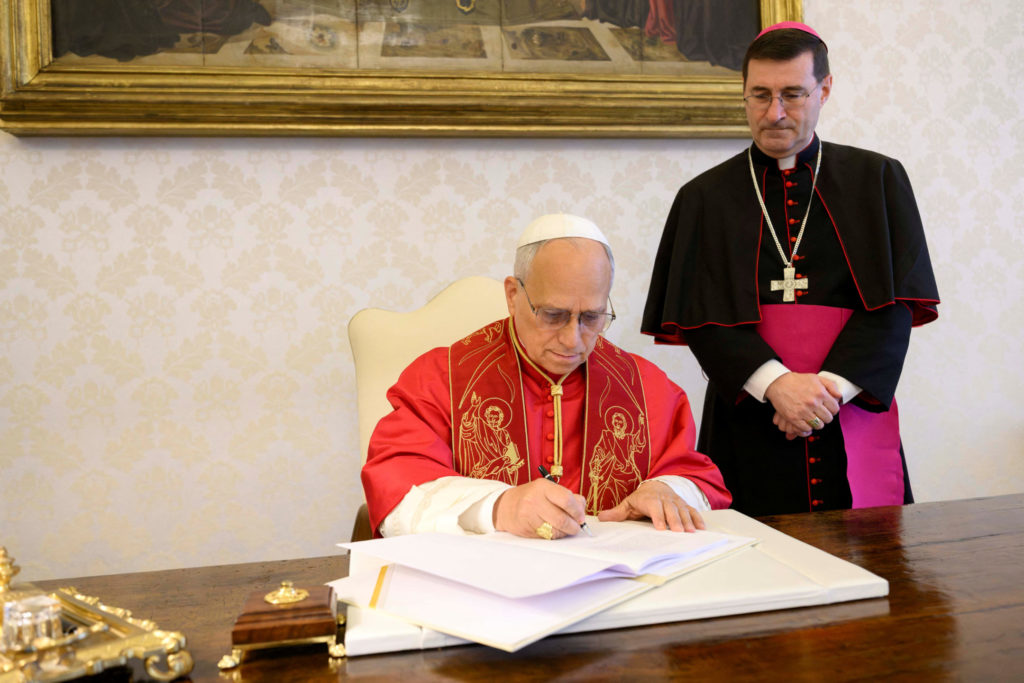
In a significant intervention regarding the rapid evolution of digital technology, Pope Leo XIV has issued his first papal encyclical, titled “Magnifica humanitas: On Safeguarding the Human Person in the Time of Artificial Intelligence.” In this document, presented at the Vatican on Monday, May 25, 2026, the pontiff calls for artificial intelligence to be “disarmed,” urging global leaders and policymakers to implement rigorous regulation to mitigate risks associated with the technology, including the potential for economic dislocation and the escalation of warfare. Pope Leo XIV’s encyclical marks a formal entry by the Holy See into the international debate surrounding the ethical governance of emerging technologies.
The encyclical, which follows the Pope’s election on May 8, 2025, emphasizes the necessity of placing human dignity at the center of technological progress. By advocating for the “disarming” of AI, the pontiff suggests a need for transparency and moral oversight in the development of autonomous systems, particularly those with the capacity to impact human labor markets and global security architectures. The presentation of this document, attended by Vatican officials including Cardinal Pietro Parolin and Cardinal Víctor Manuel Fernández, underscores the institutional weight the Vatican is placing on this issue. The Vatican’s official calendar confirms the Pope’s recent activities, including his recent public address at the Pentecost Mass on May 24, 2026.
The Ethical Imperative for AI Regulation
At the heart of “Magnifica humanitas” is the argument that technological advancement must not outpace ethical frameworks. Pope Leo XIV warns that without proactive regulation, the integration of artificial intelligence could exacerbate existing social inequalities and introduce new forms of instability. The document serves as a manifesto for those concerned that the current pace of AI development prioritizes efficiency and profit over human welfare. By addressing themes of economic dislocation, the Pope highlights the potential for automation to displace workers and disrupt the socioeconomic fabric of both developing and developed nations.
The call to “disarm” AI is particularly directed at the intersection of machine learning and military application. As autonomous weapon systems become a focus of global defense research, the Holy See is signaling that the moral implications of delegating life-and-death decisions to algorithms are incompatible with traditional ethical standards. This perspective aligns with broader concerns raised by international human rights organizations regarding the proliferation of lethal autonomous weapons, which many experts argue require a new treaty-based framework to prevent unintended conflict escalation.
Global Response and Institutional Context
The release of the encyclical occurs amidst a broader global discourse on AI safety. While various nations are currently drafting domestic legislation to govern data privacy and algorithmic bias, the Vatican’s contribution provides a moral and philosophical anchor for these efforts. By framing AI as a challenge to the “safeguarding of the human person,” the Pope seeks to elevate the conversation beyond technical specifications, focusing instead on the long-term impact of these tools on human agency and community life.
For businesses and developers, the encyclical serves as a reminder that the social license to operate is increasingly contingent upon demonstrating ethical responsibility. The document arrives as global markets continue to grapple with the dual nature of AI as both a driver of economic productivity and a source of systemic risk. The Vatican’s focus on these dangers suggests that the Church intends to remain an active participant in the ongoing international dialogue regarding the responsible stewardship of digital innovation.
Looking Ahead: The Path Toward Governance
As the international community moves toward establishing standards for artificial intelligence, the influence of the Vatican’s stance remains to be seen. The encyclical is expected to provide a foundational text for Catholic institutions worldwide as they develop their own guidelines for the integration of AI in education, healthcare, and humanitarian work. Observers suggest that this document will likely be referenced in future international forums, including upcoming sessions of the United Nations and other multilateral bodies tasked with drafting global AI safety standards.
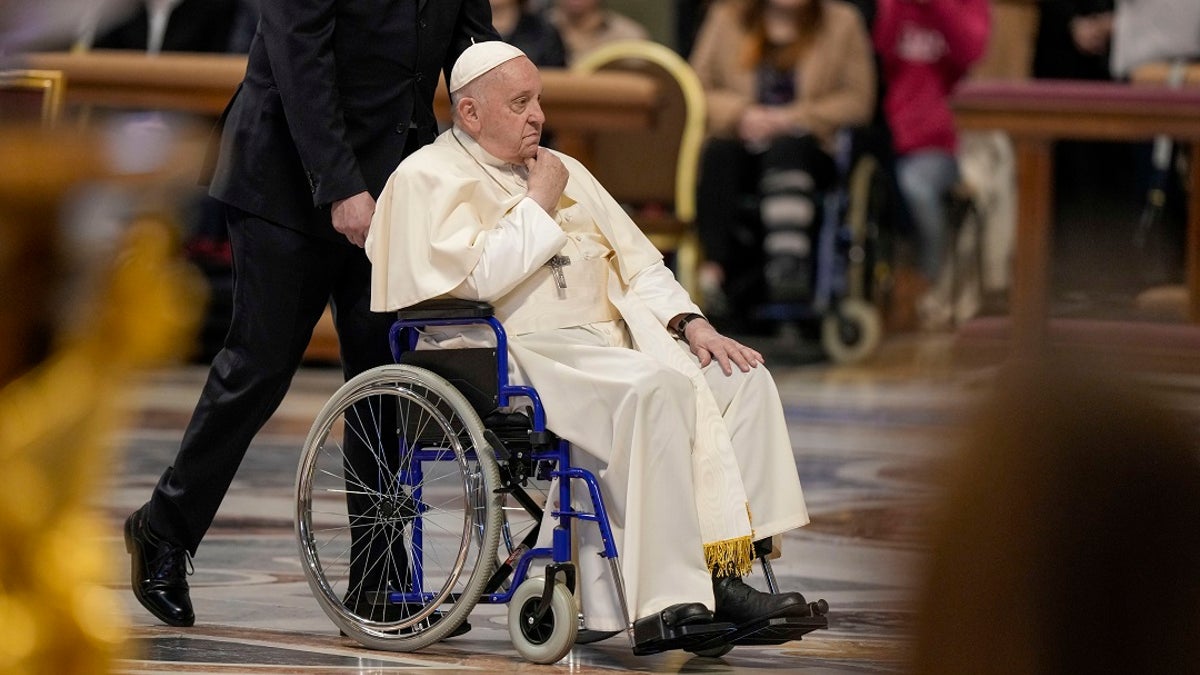
The Vatican has indicated that it will continue to monitor the development of AI through its various dicasteries. Further updates regarding the implementation of the principles outlined in “Magnifica humanitas” are expected to be shared through official Holy See channels in the coming months. We will continue to track the impact of this encyclical on global policy and corporate ethical standards as more information becomes available. We invite our readers to share their thoughts on the role of moral leadership in the tech sector in the comments section below.