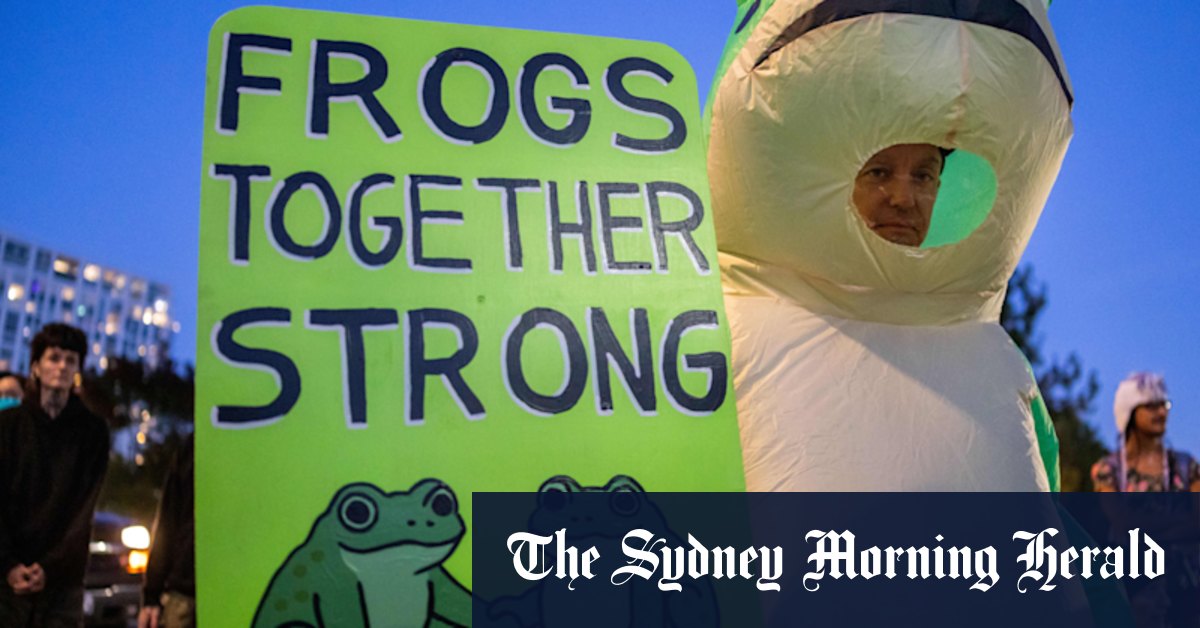
The “frog Protests” in portland: A Novel Tactic Against ICE and Federal authority
For months, nightly demonstrations have unfolded outside a Portland, Oregon immigration processing facility. These protests, initially small in scale, have recently gained national attention - not for their size, but for their style.A growing number of demonstrators are now appearing clad in full-body frog suits, a tactic born from a single incident and quickly evolving into a symbol of resistance.
But what’s behind this amphibious approach to protest? And why is it resonating now?
From Pepper Spray to a Movement
The origin story centers on 25-year-old Seth Todd. He became the face of the “frog” movement after a video went viral showing an ICE (Immigration and customs Enforcement) agent spraying pepper spray into the air vent of his frog suit. Todd, unfazed, quipped to The Oregonian that the spray was “definitely…spicier tamales.”
This incident, rather than deterring protestors, appears to have galvanized them. Le Monde reports todd intentionally framed the frog suits as a strategy. His goal? To counter the Trump management’s narrative of protestors as violent agitators.”No, we are protesting, but with humour,” he explained.
Why Frogs? A Tactical Choice
While Todd hasn’t fully explained his choice of costume, experts believe the tactic is surprisingly effective. Van Badham,an Australian activist,described it to ABC Statewide Drive Victoria as a “brilliant tactic” designed to preemptively disarm potential federal intervention.
Hear’s the reasoning:
* De-escalation: The absurdity of the frog suits inherently diffuses tension.
* Countering Justification for force: If protests appear peaceful, it removes the political justification for deploying troops or declaring martial law, a concern given Trump’s past attempts to mobilize federal forces in cities like Portland, Chicago, and Washington D.C.
* Media Attention: The unusual imagery is inherently newsworthy, drawing attention to the underlying cause.
As Badham points out, the perception of violence provides a pretext for escalating force. The frog suits aim to deny that pretext.
The Broader Context: ICE Protests and Federal Overreach
These protests are rooted in deep concerns about the treatment of immigrants by ICE and the Department of Homeland Security (DHS).Todd himself stated he’s protesting “the inhuman way that ICE…are treating our immigrants,” irrespective of their legal status. “They should be treated as a human being, because that’s what they are.”
The scale of ICE’s actions is meaningful. The DHS reported over two million removals or self-deportations as January 20th. This backdrop fuels the protestors’ determination.
You might recall that protests against ICE raids were relatively small compared to the Black Lives Matter demonstrations of 2020. However, the consistent, nightly presence in Portland, now amplified by the frog suits, is maintaining pressure.
A Complicated Symbol: The History of Pepe the Frog
The choice of a frog isn’t without irony. During his 2016 presidential campaign, Donald Trump retweeted a meme featuring himself as “Pepe the Frog.” This character was later designated a hate symbol by the Anti-Defamation League, highlighting the potential for symbols to be co-opted and re-contextualized.
The current “frog” protests are a purposeful reclaiming of the imagery,stripping it of its hateful associations and repurposing it as a symbol of peaceful resistance.
What Does This Mean for the Future?
The “frog protests” represent a fascinating evolution in protest tactics. They demonstrate a complex understanding of media,political strategy,and the power of symbolism.
As one Instagram user wryly observed, “Who’d have thought the war in Portland was just a twerk contest?!” While the comment is flippant, it underscores the power of the visual spectacle to capture attention and challenge perceptions.
Whether this tactic will spread to other cities remains to be seen. Though, it’s clear that the “frog protests” are more than just a quirky image – they’re a calculated effort to challenge authority, raise awareness, and advocate for a more humane approach to immigration.
**Sources
Worth a look