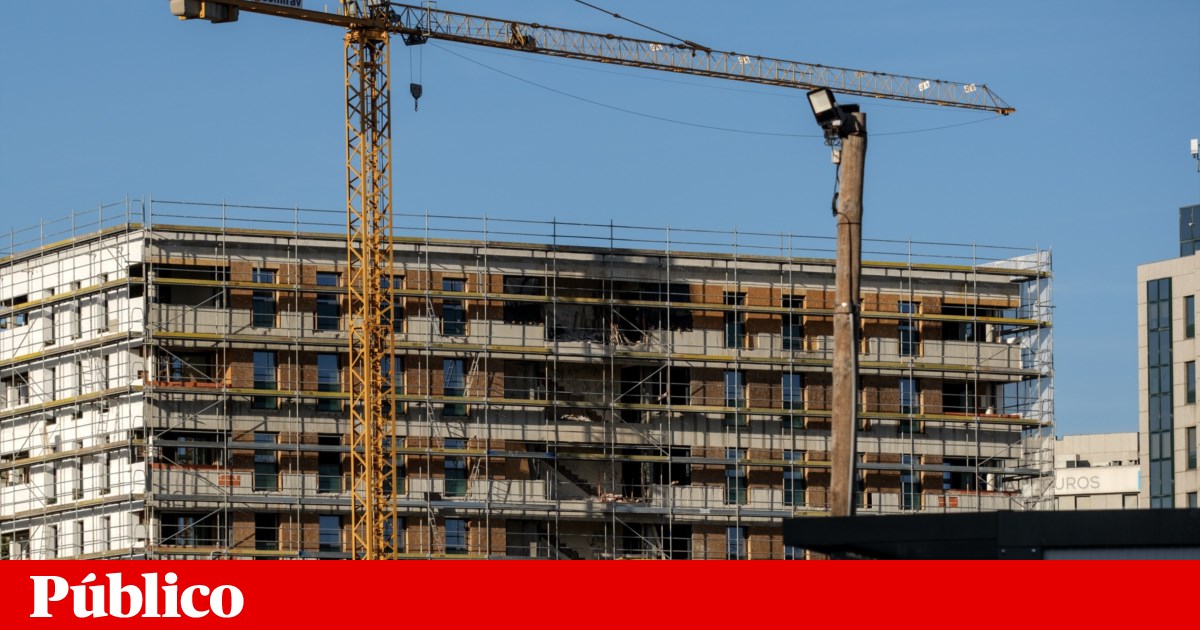
Portugal’s real estate market is experiencing a period of intense volatility, with home prices surging to levels that are challenging the accessibility of housing for local families. Recent data indicates a sharp upward trajectory in property values, reflecting a broader economic trend that has seen costs escalate significantly over the last decade.
According to the latest figures from the National Institute of Statistics (INE), the Portugal housing price index increased by 17.6% in 2025 IPHab Report. This represents a substantial leap of 8.5 percentage points compared to the growth observed in 2024. This acceleration is putting immense pressure on the domestic market, as the cost of acquiring a home continues to outpace many wage growth trends.
The surge is not limited to a single quarter; rather, it has been a sustained climb throughout the year. In the first quarter of 2025, the House Price Index (IPHab) grew by 16.3% year-on-year, followed by a 17.2% increase in the second quarter, and 17.7% in the third quarter INE Search Results. By the end of the year, the market showed a complex dynamic: while prices remained high, the number of transactions actually decreased by 4.7% in the final quarter of 2025 INE Housing Index.
Analyzing the Decade of Growth: 2015 to 2025
To understand the current crisis, one must look at the long-term trend. The Portuguese property market has undergone a massive transformation over the last ten years. While recent annual spikes are headline-grabbing, the cumulative effect is even more stark. Reports indicate that house prices in Portugal have grown by 180% between 2015 and 2025, effectively nearly tripling the cost of entry for many buyers.
This decade-long ascent has been characterized by a steady increase in demand and a chronic lack of supply. Families continue to drive the sales of homes in Portugal, a trend that has persisted across multiple years Jornal de Negócios. The growth has been particularly visible in the sector of existing homes, where the scarcity of available inventory has allowed sellers to push prices higher.
The impact of these increases is felt most acutely by the middle and lower-income brackets. As the Portugal housing price index climbs, the gap between average salaries and the cost of a mortgage widens, pushing many potential homeowners toward the rental market, which in turn puts further upward pressure on rental prices.
Quarterly Breakdowns and Transaction Trends
The trajectory of 2025 provides a clear window into how the market shifted throughout the year. The growth was not linear but rather an acceleration that peaked in the latter half of the year. The following data highlights the year-on-year changes in the House Price Index (IPHab) and the corresponding transaction volumes:
| Period | IPHab Growth (Year-on-Year) | Transaction Volume Change |
|---|---|---|
| Q1 2025 | 16.3% | +25.0% |
| Q2 2025 | 17.2% | +15.5% |
| Q3 2025 | 17.7% | +3.8% |
| Q4 2025 | 17.6% (Annual Average) | -4.7% |
The data suggests a “cooling” of transaction volume toward the end of the year, even as prices remained elevated. This divergence—where prices stay high while sales drop—often indicates that buyers are reaching their financial limit or that interest rates have made borrowing prohibitively expensive for a segment of the population INE Data.
What So for the Global Market and Local Buyers
For a global audience, Portugal’s situation serves as a case study in how specific economic drivers—such as foreign investment, tourism-driven short-term rentals, and a slow construction sector—can decouple property prices from local income levels. The fact that prices rose 17.6% in a single year Jornal de Negócios places Portugal among the most aggressive price increases within the European Union.
The stakeholders affected by this trend include:
- First-time Buyers: Facing a market where prices have increased 180% since 2015, many are forced to delay homeownership or move further away from urban centers.
- Existing Homeowners: While those with equity have seen their net worth increase, the lack of affordable alternatives makes upgrading to a larger home hard.
- The Rental Market: As buying becomes impossible, demand for rentals spikes, leading to higher monthly costs for tenants.
- Investors: The high growth rates have historically attracted capital, though the decline in Q4 transactions may signal a shift in investor sentiment.
The broader economic implication is a potential risk of a “housing bubble” if prices continue to rise while the number of actual transactions falls. Historically, a healthy market requires a balance between demand and supply; currently, the Portuguese market is heavily skewed toward demand, regardless of the rising costs.
Key Takeaways for Prospective Buyers
- Long-term Trend: Prices have nearly tripled (180% increase) over the last decade (2015-2025).
- Recent Acceleration: 2025 saw a significant jump in prices, averaging 17.6% growth INE.
- Market Shift: While prices are peaking, the number of transactions began to decline in the fourth quarter of 2025.
- Sector Focus: The increase has been most pronounced in existing homes rather than recent constructions.
As we move further into 2026, the focus remains on whether the government can implement policies to increase housing supply or if the market will naturally correct itself through a decrease in demand. For those tracking the market, the next critical data release from the National Institute of Statistics (INE) will provide the first comprehensive look at the early 2026 trends.
We invite our readers to share their experiences with the Portuguese property market in the comments below. Are you seeing similar trends in your region? Share this article to keep the conversation going.