
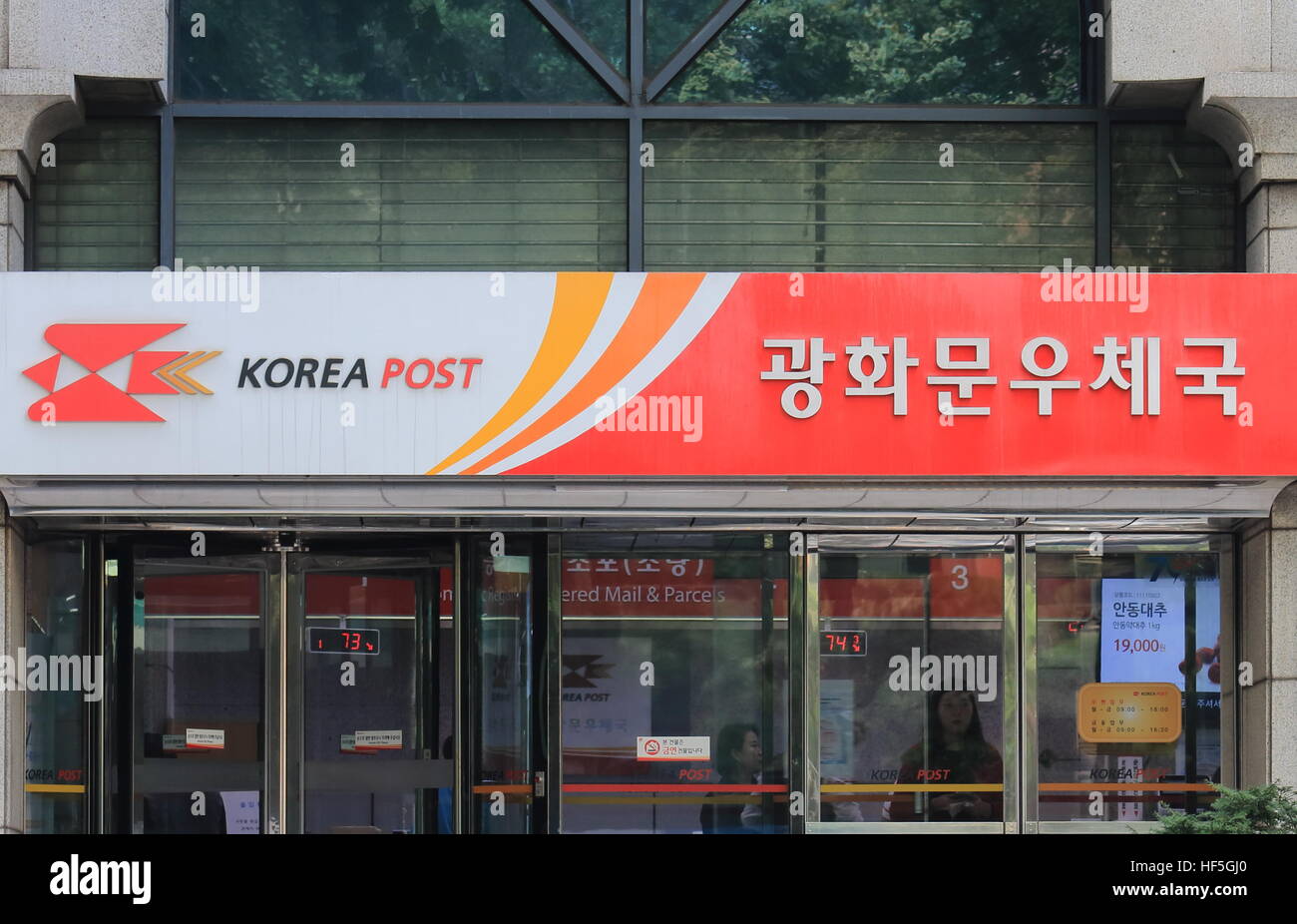
Korea Post provides a comprehensive suite of financial services, including savings accounts, fixed deposits, and installment savings, operating as a government-backed entity under South Korea’s Ministry of Science and ICT. While it performs many functions similar to a traditional commercial bank, it is technically a postal financial service rather than a bank licensed under the Banking Act, meaning its deposits are secured by the state rather than the Korea Deposit Insurance Corporation (KDIC).
The distinction between postal financial services and commercial banking remains a critical factor for depositors in South Korea. While commercial banks operate as private or state-controlled profit-seeking entities subject to strict banking regulations, Korea Post functions as a public service. This structural difference influences everything from interest rate volatility to the underlying mechanism of deposit protection, making it a unique pillar of the South Korean financial landscape.
For individual savers and institutional observers, understanding the operational boundaries of Korea Post is essential for assessing risk and liquidity. As the country’s postal network remains one of the most extensive in the world, its financial arm serves as a primary vehicle for financial inclusion, particularly in rural areas where commercial banking infrastructure may be less dense.
Is Korea Post a Bank? Understanding the Legal Distinction
Technically, Korea Post is not a bank. In the South Korean regulatory framework, “banks” are institutions specifically licensed under the Banking Act to conduct commercial banking activities. Korea Post, however, operates under the jurisdiction of the Ministry of Science and ICT, providing financial services as an extension of its postal mandate.
This distinction is not merely semantic; it dictates the regulatory oversight and the legal obligations of the institution. While commercial banks are supervised by the Financial Services Commission (FSC) and the Financial Supervisory Service (FSS) to ensure market stability and profitability, Korea Post’s financial operations are managed to support the broader public interest and the stability of the national postal system. This means that while it offers products like checking accounts and loans, its primary mission is service delivery rather than maximizing shareholder value.
Because it does not hold a traditional banking license, Korea Post does not participate in the same capital adequacy requirements as commercial banks. Instead, its solvency is tied to the creditworthiness of the South Korean government. This makes the “post office bank” a hybrid entity: a provider of retail financial products that operates with the security of a sovereign institution.
Core Financial Products: Savings, Fixed Deposits, and Installment Savings
Despite its non-bank status, the product lineup offered by Korea Post closely mirrors that of major commercial lenders. These products are designed to cater to various liquidity needs and risk appetites among the South Korean public.

- Savings Accounts (예금): These are liquid accounts that allow depositors to deposit and withdraw funds with relative ease. They serve as the primary tool for daily cash management and short-term liquidity.
- Fixed Deposits (정기예금): For depositors seeking higher returns, fixed deposits require a commitment of capital for a set period. In exchange for this lack of liquidity, Korea Post typically offers interest rates that are competitive with the broader market.
- Installment Savings (정기적금): These products are designed for long-term wealth accumulation. Customers commit to making regular, periodic contributions over a fixed term, making them a preferred tool for disciplined personal saving.
The accessibility of these products is a key driver of their popularity. Through a combination of physical post office branches and a robust digital banking platform, Korea Post ensures that its financial products are available to a wide demographic, from tech-savvy urban professionals to elderly citizens in remote provinces.
The Security of Deposits: State Guarantees vs. KDIC
The most significant advantage for many depositors using Korea Post is the nature of its deposit protection. In South Korea, deposits held in commercial banks are protected by the Korea Deposit Insurance Corporation (KDIC). Under current regulations, the KDIC guarantees deposits up to 50 million Korean Won (KRW) per person, per financial institution, in the event of a bank failure.
In contrast, deposits held at Korea Post are not covered by the KDIC. Instead, they are backed directly by the South Korean government. Because Korea Post is a government entity, the state assumes the responsibility for all deposits. This is often viewed by conservative investors as a higher tier of security than the KDIC guarantee, as the sovereign credit of the nation itself serves as the ultimate backstop.
This distinction becomes particularly relevant during periods of high market volatility or banking sector instability. While a commercial bank’s failure would trigger the KDIC’s payout mechanism—which can involve administrative delays and complex claims processes—a failure of the postal financial service would essentially be a sovereign default issue, which carries a vastly different risk profile. Consequently, Korea Post often attracts “flight-to-safety” capital during times of economic uncertainty.
Comparison of Korea Post and Commercial Banks
To clarify the functional differences for consumers and analysts, the following table outlines the primary distinctions between the two types of institutions.
| Feature | Korea Post Financial Services | Commercial Banks |
|---|---|---|
| Legal Status | Government Agency (Ministry of Science and ICT) | Private or State-owned Financial Institution |
| Regulatory Body | Ministry of Science and ICT | Financial Services Commission (FSC) |
| Deposit Protection | Direct Government Guarantee | KDIC (Up to 50 million KRW) |
| Primary Objective | Public Service and Postal Integration | Profitability and Market Competition |
| Network Focus | High Rural and Regional Density | Urban and Commercial Hub Focus |
Strategic Importance in Financial Inclusion
Beyond the technicalities of interest rates and legal status, Korea Post plays a vital role in the social fabric of South Korea. It acts as a primary agent for financial inclusion. In many mountainous or island regions, a commercial bank branch may be miles away, but a post office is almost always within reach.
This geographic advantage allows the government to distribute social welfare payments, pensions, and other state transfers efficiently. For the elderly population, which may face barriers to digital banking, the physical presence of postal workers and local post office staff provides a human interface for financial management that commercial banks have largely moved away from in favor of automation.
Furthermore, the integration of postal and financial services allows for a streamlined logistics-financial ecosystem. Small business owners in rural areas often utilize the post office for both shipping goods and managing business cash flows, creating a localized economic loop that supports regional stability.
Frequently Asked Questions
Is my money safer in a post office than in a bank?
While “safety” is subjective, Korea Post deposits are backed by the South Korean government, whereas commercial bank deposits are limited to a 50 million KRW guarantee by the KDIC. Many investors view the sovereign guarantee as the highest level of security available.
Can I use Korea Post for international money transfers?
Yes, Korea Post offers various remittance services, though the fees and speed may differ from specialized commercial banks or international transfer fintech companies. It is advisable to check the current rates via the official Korea Post portal.
Does Korea Post offer credit cards and loans?
Korea Post provides various credit and loan products, including mortgage loans and personal loans, though their terms and eligibility requirements differ from those of private commercial banks.
The next scheduled update regarding postal financial regulations or changes to the Ministry of Science and ICT’s oversight policies will be released through official government gazettes. For the most current interest rates and product terms, consumers should consult the official Korea Post website.
Have thoughts on the stability of government-backed savings versus commercial banking? Share your insights in the comments below and share this analysis with your network.