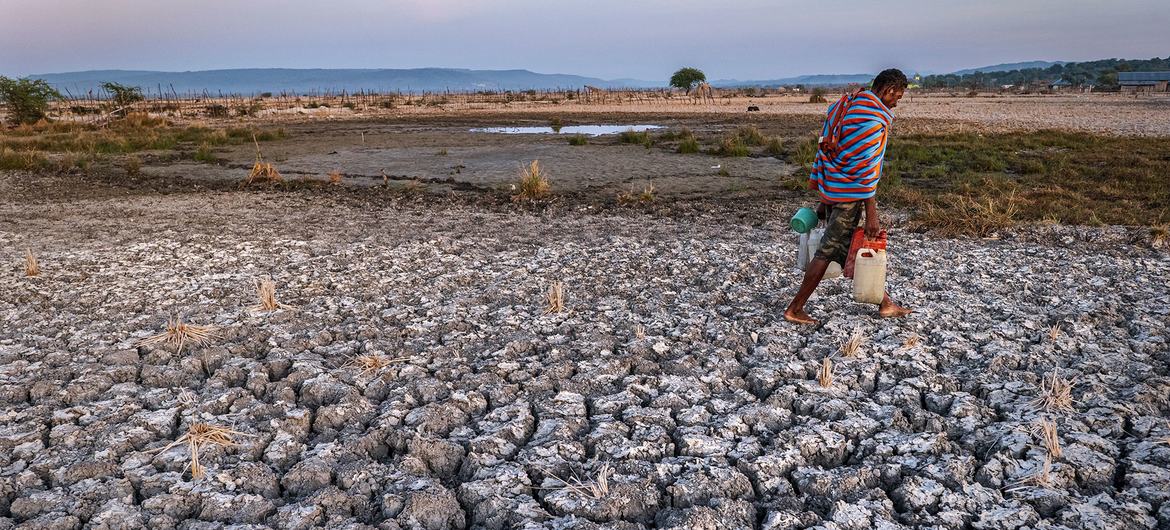
The climate Poverty Trap: How Environmental Shocks are Redefining Global Inequality
(Published October 17, 2025)
For decades, poverty has been understood as a socio-economic challenge – a lack of resources, chance, and access. But a groundbreaking new report from the UN Growth programme (UNDP) and Oxford University reveals a far more complex and alarming reality: poverty is no longer a standalone issue. It’s inextricably linked to, and dramatically worsened by, the escalating climate emergency. This isn’t just an environmental crisis; it’s a profound equity crisis, reshaping the landscape of global poverty and demanding urgent, holistic action.
Ahead of the crucial COP30 climate summit in Brazil next month, this report delivers a stark warning: the climate crisis isn’t contributing to poverty – it’s actively reshaping it.But what does this reshaping look like, and what can be done to break the cycle?
A Billion in the Crosshairs: The Scale of the Problem
The numbers are staggering. Globally, 1.1 billion people currently live in multidimensional poverty – a measure encompassing health, education, and living standards. But the report reveals a terrifying overlap: 887 million of these individuals are directly exposed to at least one climate hazard.
This isn’t a future threat; it’s happening now. A shocking 651 million people are enduring two or more simultaneous climate shocks, while 309 million face a relentless barrage of three or four at onc. Imagine trying to build a life, educate your children, or secure a livelihood while battling drought, floods, extreme heat, and air pollution – all at the same time.
These aren’t isolated incidents. They represent a systemic vulnerability, a climate poverty trap that’s tightening its grip on the world’s most vulnerable populations.
The Most Common Climate Shocks: A Deadly Quartet
The report identifies four primary climate hazards disproportionately impacting the world’s poor:
* High Heat: Increasing temperatures exacerbate existing health problems, reduce agricultural yields, and strain already limited resources.
* air Pollution: Linked to respiratory illnesses and cardiovascular disease, air pollution disproportionately affects those living in poverty with limited access to healthcare.
* Floods: Displacing communities, destroying infrastructure, and contaminating water sources, floods represent a devastating blow to livelihoods.
* Drought: Leading to crop failure, livestock loss, and food insecurity, drought pushes already vulnerable populations to the brink.
The insidious part? These hazards rarely occur in isolation. They compound each other, creating a cascade of challenges that are incredibly difficult to overcome.
Geographical Hotspots: where the Crisis is Most Acute
While the climate crisis is a global phenomenon, its impact is far from evenly distributed. The report highlights two key regions as especially vulnerable:
* South Asia: An amazing 99.1% of people living in poverty in South Asia are confronting at least one climate shock. The region also leads the world in the number of people facing multiple hazards, with 351 million enduring two or more.
* Sub-Saharan Africa: Home to 344 million poor people exposed to climate hazards,Sub-Saharan Africa faces a particularly dire situation due to limited adaptive capacity and existing vulnerabilities.
Interestingly, the report also points to a “hidden epicentre” of multidimensional poverty: middle-income countries. These nations are home to nearly two-thirds of the world’s poor and are experiencing a significant convergence of climate impacts and poverty. Roughly 548 million poor people in lower middle-income countries are exposed to at least one climate hazard,with over 470 million facing two or more.
The Future is Already Here: Temperature Increases and Poverty
The report doesn’t just document the current crisis; it projects a grim future. Countries with higher current levels of multidimensional poverty are predicted to experience the greatest temperature increases by the end of the century.This creates a vicious cycle: poverty increases vulnerability to climate change, and climate change exacerbates poverty.
As Sabina Alkire, Director of the Oxford Poverty and Human Development Initiative, explains, “Middle-income countries are a hidden epicentre of multidimensional poverty, being home to nearly two-thirds of all poor people.And this is also where the climate crisis and poverty are notably converging.”
Breaking the Cycle: A Call for Urgent Action
The findings of this report are a wake-up call. Addressing this complex,interconnected crisis requires a basic shift in approach.
Worth a look