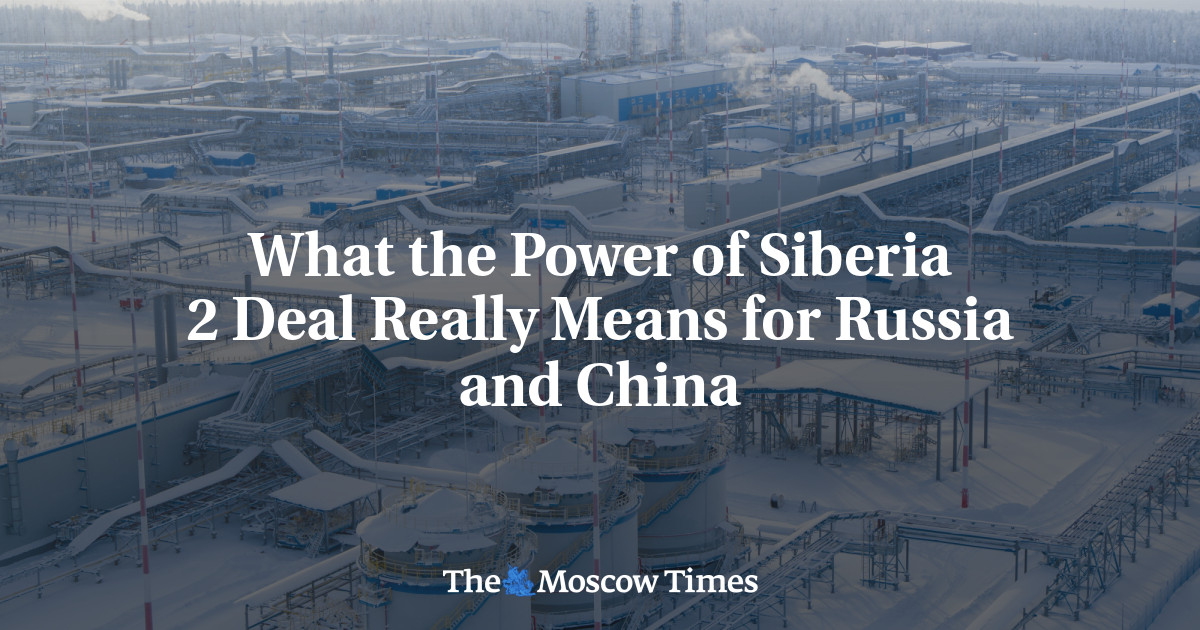
Power of siberia 2: A New Era in Russia-China Energy Cooperation
russia and China are forging ahead with plans for the Power of Siberia 2 gas pipeline, a project poised to reshape energy dynamics in Eurasia.This ambitious undertaking aims to dramatically increase Russian gas exports to China, offering significant benefits to both nations as geopolitical landscapes shift. let’s delve into the details of this crucial energy partnership.
Understanding the Pipeline’s Scope
The Power of Siberia 2 pipeline is designed to carry 50 billion cubic meters of natural gas annually from western Siberia to China. This represents a ample increase in capacity, effectively doubling Russia’s gas export potential to its eastern neighbor. Construction on the Russian side is estimated to take approximately three years, though the timeline for the Chinese segment remains less defined.
The Price Point: A Key Negotiation
Negotiations surrounding the pricing structure are central to the agreement. Moscow seeks terms mirroring those of the original Power of Siberia 1 pipeline, indexing prices to the Asian oil-product basket. Estimates place this pricing around $265-285 per cubic meter. President Putin recently affirmed that gas pricing will adhere to “market principles” and be determined by a specific formula, though specifics haven’t been disclosed.
How Each Nation Stands to Gain
This pipeline isn’t just about volume; it’s about strategic advantage for both Russia and China. Here’s a breakdown of the benefits:
For Russia:
Offsetting european Losses: The pipeline will help compensate for the significant decline in gas sales to Europe. Exports have plummeted from 157 billion cubic meters (bcm) in 2021 to a projected 39 bcm in 2025.
Infrastructure is Key: Unlike oil, which can be shipped via sea routes, gas transportation heavily relies on pipelines. this new infrastructure is vital for expanding export volumes. Mitigating production Decline: Russia’s natural gas output decreased by 3.2% year-on-year in the first half of 2025, reaching 334.8 bcm, largely due to the cessation of gas transit through ukraine.
Significant Revenue Stream: Analysts estimate the Power of Siberia 2 could generate annual revenue between $2.5 billion and $4.3 billion.While less than the $20 billion previously earned from European gas trade, it remains a substantial income source.
For China:
Energy Security: Expanded access to Russian gas provides a crucial buffer against potential supply disruptions stemming from Middle eastern instability or strained relations with the West.
Diversified Supply: Currently,Russia,Qatar,Australia,and the United States are China’s leading gas suppliers. Adding a significant Russian pipeline further diversifies China’s energy portfolio.
* Strategic Partnership: The project reinforces the growing strategic partnership between China and Russia, solidifying thier economic ties.
The Broader Context: A shifting Energy Landscape
Europe’s move away from Russian gas has fundamentally altered the energy landscape. Most European countries have ceased purchasing russian gas, contributing to the decline in Russia’s production. This shift underscores the importance of alternative markets for Russia,and China is emerging as the primary beneficiary.
The Power of Siberia 2 pipeline represents a pivotal moment in this evolving energy dynamic. It’s a testament to the enduring need for energy security and the growing importance of strategic partnerships in a complex global habitat. You can expect this project to have lasting implications for both nations and the broader energy market for years to come.