Madrid – A deepening alignment between Spain’s conservative People’s Party (PP) and the far-right Vox party has become increasingly apparent, underscored by the PP’s recent publication of a “framework” document outlining negotiation principles for potential coalition governments. This move, occurring as concerns rise over the influence of far-right ideologies within Spain, signals a significant shift in the political landscape and raises questions about the future direction of the country. The timing coincides with expressions of concern from Pope León XIV regarding the growing influence of the far-right in Spain, particularly its attempts to exploit the Church’s influence, as reported on February 23, 2026.
The seven-page document, released on Monday, details the PP’s proposals for governing arrangements in regional administrations, and notably incorporates many of Vox’s core tenets, particularly regarding immigration policy. Here’s a sensitive area, as the Catholic Church has consistently advocated for the regularization of undocumented immigrants, a position that directly contrasts with the PP’s traditionally more restrictive stance. The PP’s willingness to accommodate Vox’s position represents a marked departure from previous attempts to distance itself from the far-right, and suggests a pragmatic calculation regarding the necessity of securing power.
A Shift in Strategy: From Distance to Alliance
The PP’s embrace of Vox marks a significant evolution from the approach adopted by former party leader Pablo Casado. In 2022, Casado attempted to differentiate himself from Vox in his inaugural speech at the PP’s congress in Seville, stating he did not intend to “insult” Prime Minister Sánchez, but rather to defeat him. As reported by El País, this attempt at differentiation proved short-lived. Now, under the leadership of Alberto Núñez Feijóo, the party appears to have abandoned such reservations, openly acknowledging its reliance on Vox for potential governance. Feijóo reportedly discussed the document with Santiago Abascal, leader of Vox, signaling a direct and transparent negotiation process.
This shift comes after regional elections in May 2023 saw PP regional leaders pursue independent negotiations with Vox, a move that reportedly frustrated the national party leadership. Feijóo’s current strategy aims to centralize control over these negotiations, ensuring a unified approach and preventing further deviations from the national party line. This centralization of power is intended to present a cohesive front and demonstrate to voters a clear path towards a PP-Vox government.
The Echoes of 2019 and the Papal Concerns
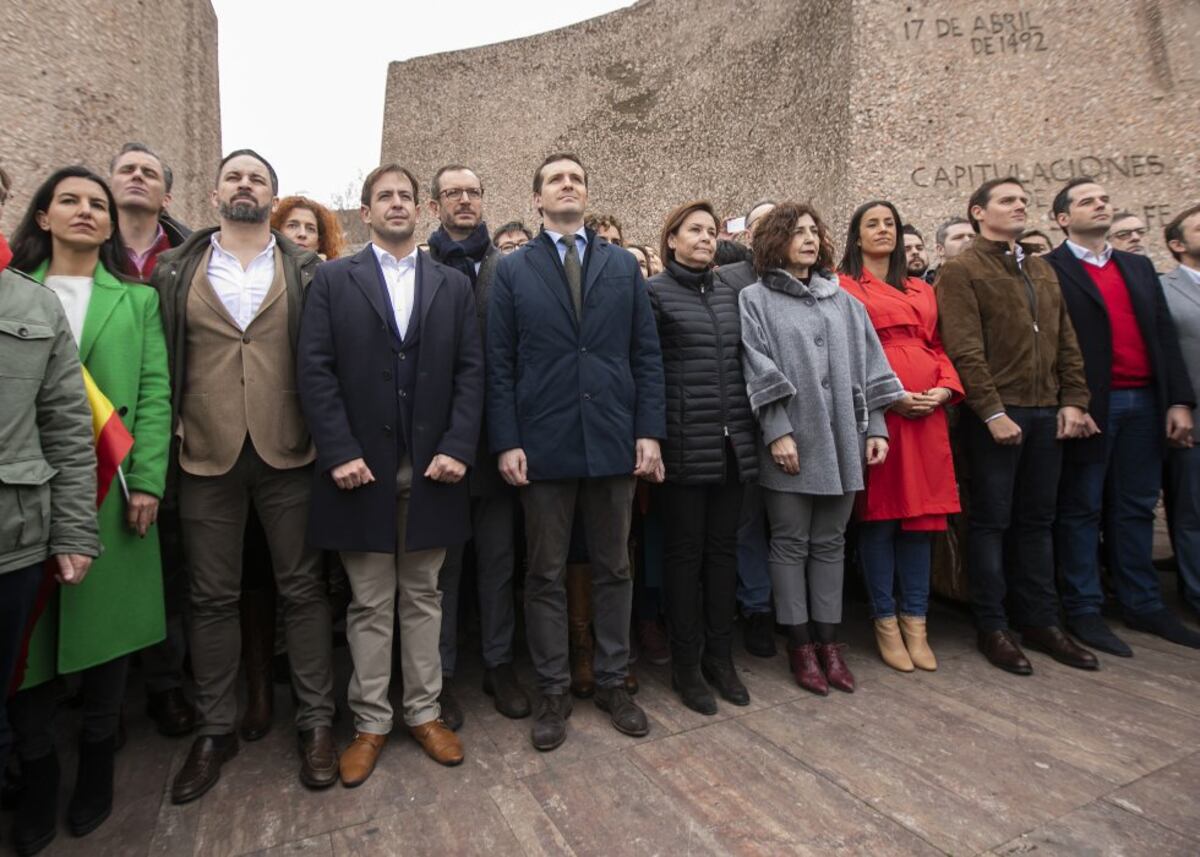
The current situation evokes memories of February 2019, when Casado famously posed for a photograph with Abascal at the Colón monument in Madrid. That image became a potent symbol for the left-wing opposition, the Spanish Socialist Workers’ Party (PSOE), and was widely used in their successful campaign during the April 2019 general election. El País reported that the PSOE effectively leveraged the image to portray the PP as being beholden to the far-right.
The context surrounding these political maneuvers is further complicated by recent concerns expressed by Pope León XIV regarding the rise of far-right ideology in Spain. The Pope reportedly voiced his anxieties to Spanish bishops, fearing that the far-right was attempting to instrumentalize the Church for its own political ends. According to El País, this concern highlights the potential for a clash between the Church’s social teachings and the policies advocated by Vox, particularly on issues such as immigration and social welfare.
Immigration as a Key Point of Contention
The PP’s willingness to align with Vox on immigration policy is particularly noteworthy. Vox has consistently advocated for stricter border controls, the deportation of undocumented immigrants, and the curtailment of social benefits for non-citizens. The Church, conversely, has been a vocal advocate for the rights of migrants and refugees, emphasizing the importance of compassion and solidarity. As El País reported in January 2026, the leader of the Spanish bishops’ conference explicitly supported the regularization of undocumented immigrants, recognizing their inherent dignity. This divergence in perspectives underscores the challenges inherent in a potential PP-Vox coalition.
The Road to Moncloa: A Calculated Risk?
The PP’s strategy appears to be predicated on the belief that a coalition with Vox is essential for securing a majority in the Spanish parliament and achieving its long-held goal of taking power at the Moncloa Palace, the official residence of the Spanish Prime Minister. Recent polls suggest that the PP and Vox combined could potentially win enough seats to form a government, although the exact outcome remains uncertain. The PSOE, led by Pedro Sánchez, is attempting to replicate the success of previous elections by portraying the PP-Vox alliance as a dangerous and extremist option.
Despite proclaiming its own political identity, the PP’s document implicitly acknowledges its dependence on Vox. The framework outlines areas of agreement on issues such as climate change, gender violence, and immigration – all areas where Vox holds strong and often controversial views. This suggests that the PP is willing to compromise on its own principles in order to secure Vox’s support. The question remains whether this calculated risk will pay off, or whether it will alienate moderate voters and ultimately hinder the PP’s chances of success.
The PP’s shift towards embracing Vox as well raises questions about the future of Spanish politics. The normalization of far-right ideas and the potential for a PP-Vox government could have significant implications for social policies, civil liberties, and Spain’s international standing. The coming months will be crucial in determining whether this alliance will reshape the political landscape or ultimately prove to be a short-lived experiment.
Key Takeaways
- The PP has published a framework document for negotiations with Vox, signaling a closer alignment between the two parties.
- The document incorporates many of Vox’s core tenets, particularly on immigration, potentially creating friction with the Catholic Church’s stance.
- This shift represents a departure from previous attempts by the PP to distance itself from the far-right.
- Pope León XIV has expressed concerns about the rise of far-right ideology in Spain and its potential impact on the Church.
- The PP believes a coalition with Vox is essential for securing power at the Moncloa Palace.
Looking ahead, the regional elections scheduled throughout 2026 will serve as crucial tests of the PP-Vox alliance. The results of these elections will provide valuable insights into the public’s appetite for a right-wing government and will likely shape the political dynamics leading up to the next general election. The ongoing negotiations between the PP and Vox will continue to be closely watched by both domestic and international observers, as they will have a profound impact on the future of Spain. Readers are encouraged to follow developments through reputable news sources and engage in informed discussion about the implications of this evolving political landscape.
Worth a look