One Year On: Assessing Prabowo’s Presidency and Rising Indonesian Protests
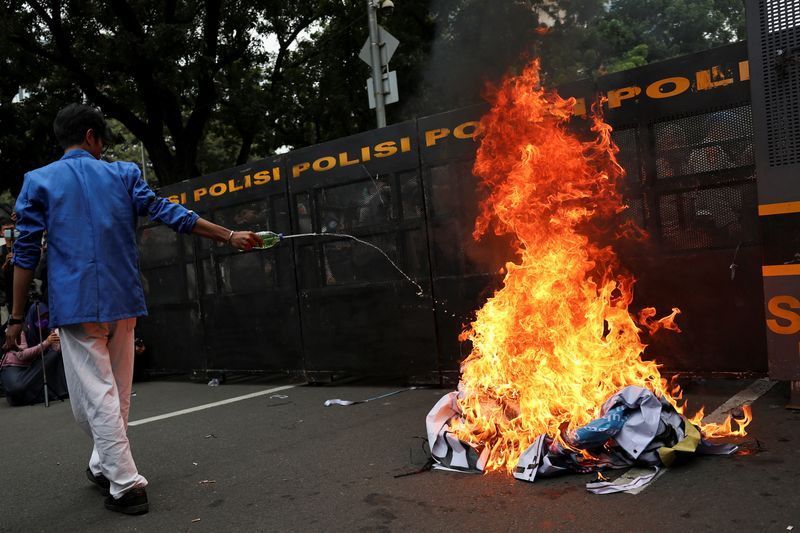
Indonesia is bracing for potential unrest as student groups prepare to demonstrate on the one-year anniversary of Prabowo Subianto‘s presidency, October 20th, 2024. This comes just two months after widespread,and at times violent,protests challenged the newly elected governance. The planned demonstrations, organized by the coalition of student bodies known as BEM SI, signal growing discontent with the direction of the country and raise critical questions about the effectiveness and inclusivity of Prabowo’s policies. But what exactly are the core issues fueling this opposition, and what does the future hold for Indonesia under Prabowo’s leadership?
A Year of Turbulence: Key Policies Under Scrutiny
Prabowo Subianto swept into office last year with a landslide victory, promising enterprising economic growth and social programs. His five-year term,extending until 2029,is predicated on achieving an 8% economic growth rate – a significant leap for Southeast Asia’s largest economy. To this end, the government has implemented several stimulus packages aimed at boosting economic activity.However, the path hasn’t been smooth.
A central pillar of Prabowo’s agenda is the expansive free school meals program, intended to provide nutrition to millions of students and pregnant women.While laudable in its intent, the program has been plagued by controversy. Recent reports detail outbreaks of food poisoning affecting thousands of students, raising serious concerns about implementation and oversight. This has become a focal point for criticism, highlighting a perceived lack of clarity and effective execution.
Beyond the school meals program, Prabowo’s administration has also introduced free health check-ups and initiatives aimed at improving education access for poorer Indonesians.Funding for these programs has largely been secured through cuts to other areas of government spending, including, notably, education itself – a move that has drawn sharp criticism from educators and opposition groups.
the Expanding Role of the Military: A Cause for Concern?
A significant shift under Prabowo’s leadership has been the increased involvement of the military in civilian projects. A former special forces commander, Prabowo has tasked soldiers with assisting in the implementation of the school meals program and even agricultural projects. While proponents argue this leverages existing resources and streamlines delivery, critics express concern over the militarization of civilian functions and potential implications for accountability and civilian oversight. This expansion of the military’s role is a key element driving the current wave of protests.
Recent Protests and Escalating Tensions
The seeds of the current unrest were sown in late August 2024, when student-led protests erupted across the nation, initially focused on government policies and perceived excessive perks enjoyed by lawmakers. The situation tragically escalated following the death of a delivery driver struck by a police vehicle during a protest, leading to further demonstrations and a rising death toll. This marked the most significant challenge to Prabowo’s authority since his election. The hashtag campaigns #1YearIsEnough and #1YearOfContinuousProblems, gaining traction on social media, demonstrate the widespread frustration fueling the movement.
Expert Analysis: A Lack of Public Participation
According to Wasisto Raharjo Jati, a politics researcher at Indonesia’s National research and Innovation Agency, a key issue plaguing Prabowo’s frist year has been a perceived lack of public participation in policy-making. “Generally, Prabowo’s government experienced some turbulence in the first year, especially with regards to a lack of openness and participation,” Jati stated. This sentiment is echoed by manny observers, who argue that a more inclusive and transparent approach is crucial for building public trust and ensuring the long-term success of Prabowo’s agenda.
Understanding the Underlying Issues: beyond the Headlines
The protests aren’t simply about specific policies; they represent a broader dissatisfaction with the perceived direction of the country. Concerns about corruption, economic inequality, and the erosion of democratic freedoms are all contributing factors. A recent study by the indonesian Institute for Public Policy (IIPP) – published September 2024 – found that 68% of Indonesians beleive corruption remains a major problem, and 52% feel their economic situation has not improved in the past year. https://www.iipolicy.org/ (Example Link – replace with actual IIPP report link).
Moreover, the increasing use of restrictive laws and the suppression of dissent are raising concerns about the state of civil liberties. Human Rights Watch reported in October 2024 that ther has been a noticeable increase in arrests and intimidation of
Worth a look