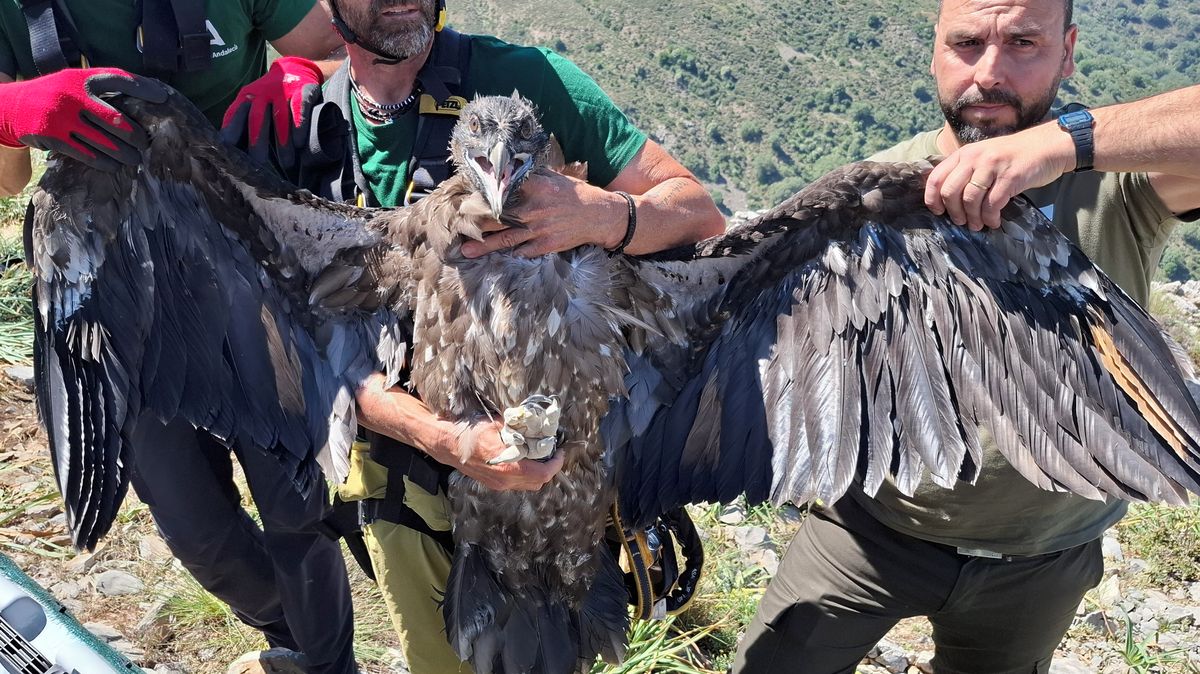
Conservationists in Spain’s Andalusia region have successfully employed a specialized tube-feeding technique to provide supplemental nutrition to a bearded vulture (Gypaetus barbatus) originally bred at the Prague Zoo. The intervention, conducted on a precarious rocky ledge, highlights the ongoing international collaboration to restore the endangered species to its natural habitat in southern Europe.
The bearded vulture, often referred to by its German name orlosup, represents a significant success story in European wildlife management. According to the Vulture Conservation Foundation, which monitors reintroduction efforts across the continent, these birds were once extinct in the Alps and parts of Spain due to human persecution and habitat loss. The Prague Zoo has served as a key participant in the European Endangered Species Programme (EEP), supplying captive-bred individuals to release sites in mountainous regions where the population remains fragile.
The Mechanics of High-Altitude Wildlife Rescue
The decision to provide supplemental feeding via a tube on a rocky ledge in Andalusia was driven by the specific needs of the juvenile bird, which required additional nutrients to survive the critical post-release period. Wildlife biologists utilize these specialized tubes to deliver high-calorie, easily digestible food directly into the bird’s crop, bypassing the need for the vulture to exert excessive energy hunting during its initial adaptation phase. This method minimizes human contact, ensuring the bird does not become habituated to people—a vital factor for successful reintegration into the wild.

The rugged terrain of Andalusia serves as one of the primary release zones for the species in Spain. By selecting remote, high-altitude ledges, conservation teams aim to mimic the natural nesting environments of the vultures. The Andalusian Regional Ministry of Sustainability and Environment maintains strict oversight over these sites, ensuring that human interference is limited only to essential life-saving interventions. The use of long-distance feeding apparatuses allows experts to monitor the health of the birds while remaining at a distance that prevents behavioral disruption.
International Cooperation in Conservation
The partnership between the Prague Zoo and Spanish conservation authorities is part of a broader strategy to maintain genetic diversity within the European bearded vulture population. Because the species has a low reproductive rate—typically fledging only one chick per year—every captive-bred bird transferred to the wild is considered a significant asset. The Vulture Conservation Foundation reports that successful reintroduction depends heavily on the survival of these young birds during their first two years of independence.
The Prague Zoo, known for its extensive breeding facilities, has contributed multiple individuals to the Andalusia project over the past decade. These efforts are coordinated through a trans-European network that tracks the movement of birds using GPS transmitters. Data from these devices allow researchers to determine if supplemental feeding is necessary based on the bird’s flight patterns and weight retention in the wild. When a bird shows signs of weakness, as was the case on the Andalusian ledge, the response team is mobilized to provide the required support.
Why Supplemental Feeding Matters for Biodiversity
The bearded vulture plays a unique role in the ecosystem as a scavenger that specializes in consuming bone marrow. By cleaning carcasses of remains that other scavengers cannot process, they provide a critical sanitation service in mountainous regions. However, their reliance on specific high-altitude habitats makes them particularly vulnerable to climate change and the decline of traditional livestock farming, which historically provided a steady supply of food.

Conservationists emphasize that supplemental feeding is intended as a temporary bridge. As the individual grows stronger and develops its foraging skills, the frequency of human-assisted feeding is reduced. The ultimate goal is for the Prague-bred vulture to integrate fully into the local population and eventually contribute to the wild breeding pool. This cycle of rescue, release, and monitoring serves as a model for other reintroduction projects globally, emphasizing that long-term success requires both high-quality captive breeding and active field management.
Monitoring of the current population in Andalusia continues, with wildlife officials scheduled to conduct their next aerial survey of the nesting sites in the coming months. For readers interested in the progress of the bearded vulture reintroduction programs, the Vulture Conservation Foundation provides regular updates on individual bird movements and survival statistics. We invite our readers to share their thoughts on the balance between human intervention and natural selection in endangered species recovery in the comments section below.