
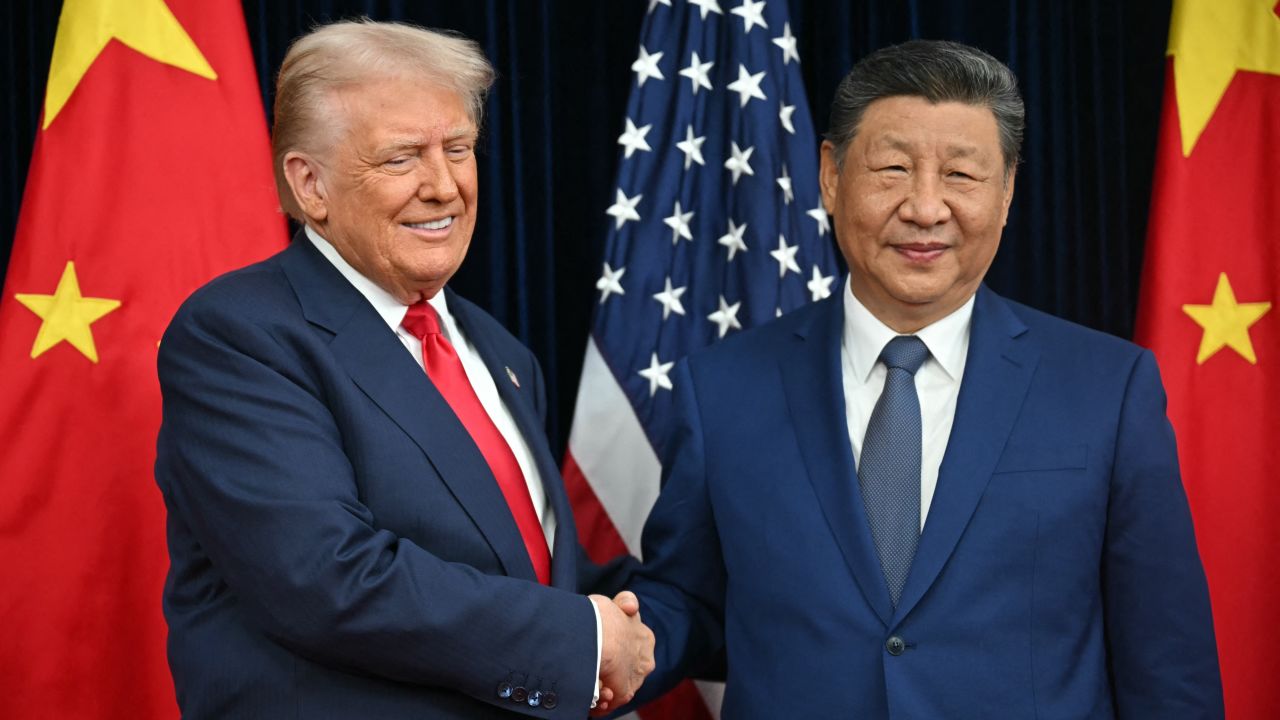
In a moment of carefully choreographed diplomacy, Chinese President Xi Jinping hosted then-U.S. President Donald Trump at the Temple of Heaven in Beijing, a gesture that blended ancient imperial tradition with the high-stakes pressures of 21st-century geopolitics. The visit, which took place during President Trump’s first state visit to China in November 2017, served as a vivid backdrop for the complex dance of courtship and competition that defined the early years of the Trump administration’s relationship with Beijing.
The Temple of Heaven, a masterpiece of Ming and Qing dynasty architecture, was not chosen by chance. As a site where emperors once prayed for bountiful harvests and the stability of the realm, the location provided a powerful symbolic setting. For President Xi, the tour was an opportunity to project Chinese cultural confidence and historical continuity; for President Trump, it was a high-profile introduction to the scale and legacy of the nation that would soon become his primary economic and strategic adversary.
While the images of the two leaders strolling through the park suggested a period of rapprochement, the visit occurred against a backdrop of simmering tensions. At the time, the United States and China were grappling with deep disagreements over trade imbalances, intellectual property theft, and the volatile security situation on the Korean Peninsula. The visit to the Temple of Heaven represented the “soft power” side of a diplomatic engagement that was, beneath the surface, fraught with systemic friction.
Understanding the significance of this encounter requires looking beyond the photographs. It was a moment of strategic signaling, where the architecture of the past was used to frame the ambitions of the future. By guiding the American president through one of Beijing’s most sacred sites, the Chinese leadership sought to establish a narrative of mutual respect and cultural understanding, even as the two superpowers began to pivot toward a more confrontational era of “great power competition.”
The Symbolic Architecture of the Visit
The tour of the Temple of Heaven was designed to showcase the pinnacle of Chinese cosmological thought and imperial governance. President Xi acted as the primary guide, explaining the significance of the site’s circular and square designs, which historically symbolized the connection between Heaven and Earth. The walk through the park allowed the two leaders to engage in informal dialogue away from the rigid confines of the Great Hall of the People, creating a visual narrative of personal rapport.

During the visit, the focus remained on the aesthetic and historical grandeur of the complex. The Temple of Heaven is a UNESCO World Heritage site, and its preservation serves as a point of national pride for the People’s Republic of China. By bringing a foreign head of state to this specific location, Beijing was not merely offering a sightseeing tour but was asserting its role as a guardian of a civilization that predates the modern nation-state by millennia.
Observers of diplomatic protocol noted that the pacing and routing of the tour were meticulously planned. The movement from the Hall of Prayer for Good Harvests to the Imperial Vault of Heaven was intended to convey a sense of harmony and order. In the world of high-level diplomacy, such settings are used to soften the edges of difficult negotiations, creating a psychological environment of openness before returning to the boardroom for discussions on tariffs and sanctions.
Cultural Diplomacy as a Strategic Tool
Cultural diplomacy, often referred to as “soft power,” is the practice of using a nation’s heritage, arts, and values to foster positive perceptions abroad. The visit to the Temple of Heaven was a textbook application of this strategy. By framing the relationship through the lens of shared appreciation for history and architecture, China attempted to build a bridge that could withstand the inevitable shocks of political and economic disputes.
For the United States, these cultural excursions are a standard part of state visit protocols, yet they carry different weights depending on the administration. President Trump’s approach to diplomacy often favored personal chemistry and “the art of the deal,” making these types of informal, high-visibility interactions particularly relevant. The imagery of the two leaders interacting in a serene, historic setting was intended to signal to the global community that the world’s two largest economies were capable of coexistence and cooperation.
However, the efficacy of cultural diplomacy is often limited when structural conflicts remain unresolved. While the visit to the Temple of Heaven provided a temporary veneer of harmony, it did not address the fundamental differences in governance, human rights, or economic models that continued to drive a wedge between Washington and Beijing. The “soft” elements of the visit were a complement to, not a replacement for, the “hard” negotiations regarding the South China Sea and trade deficits.
The Geopolitical Climate of November 2017
To fully grasp the context of the visit, one must recall the specific geopolitical pressures of late 2017. The most pressing issue on the global stage was the escalating crisis in North Korea. Pyongyang had conducted a series of provocative missile tests, and the Trump administration was employing a strategy of “maximum pressure.” The U.S. Was heavily reliant on China to use its influence over Kim Jong Un to bring the DPRK back to the negotiating table.

The visit to Beijing, including the Temple of Heaven tour, was partly aimed at securing this cooperation. President Xi’s willingness to host President Trump with such high honors—including a lavish state banquet and cultural excursions—was a signal that China was open to coordinating on security issues in Northeast Asia. The diplomacy of the moment was a delicate balance: the U.S. Needed Chinese leverage, and China wanted to avoid a chaotic collapse or sudden conflict on its border.
Simultaneously, the economic relationship was reaching a breaking point. The U.S. Trade Representative’s office was already investigating Chinese practices regarding technology transfer and intellectual property. While the Temple of Heaven visit projected a sense of peace, the groundwork was being laid for the trade war that would erupt in 2018. The contrast between the serene imperial gardens and the aggressive rhetoric regarding “unfair trade” highlighted the duality of the US-China relationship: a desire for stability coupled with an inability to reconcile competing economic interests.
From Harmony to Competition: The Aftermath
In hindsight, the visit to the Temple of Heaven represents one of the final chapters of a specific kind of engagement between the U.S. And China. Shortly after the 2017 state visit, the relationship shifted from a model of “managed competition” to one of open confrontation. The imposition of tariffs, the ban on various Chinese tech firms, and the escalating rhetoric over Taiwan and Hong Kong transformed the diplomatic landscape.
The transition was stark. The personal rapport that seemed to be cultivated during the Beijing tour was overshadowed by systemic rivalry. The “charm offensive” that characterized the November 2017 visit gave way to a period where cultural exchanges were viewed with suspicion and diplomatic visits became rarer and more transactional. The image of the two leaders walking through the Temple of Heaven now serves as a historical marker of a window that has since closed.
Analysts suggest that the 2017 visit failed to produce a long-term “grand bargain” because the issues at stake were too deeply embedded in the national identities and strategic goals of both countries. No amount of cultural appreciation could override the perceived threat that each nation posed to the other’s global standing. The Temple of Heaven, while timeless in its architecture, could not provide a timeless solution to the frictions of modern hegemony.
Key Takeaways from the Diplomatic Encounter
- Symbolism over Substance: The visit utilized the historical and spiritual significance of the Temple of Heaven to project an image of stability and mutual respect.
- Strategic Timing: The encounter occurred during a critical window where the U.S. Sought Chinese assistance in denuclearizing North Korea.
- The Soft Power Gap: While cultural diplomacy provided a positive visual narrative, it was unable to resolve the underlying structural conflicts regarding trade and intellectual property.
- Historical Pivot: The event marks one of the last major efforts to maintain a “friendly” diplomatic veneer before the onset of the comprehensive U.S.-China trade war.
Practical Context: Visiting the Temple of Heaven Today
For those interested in the site mentioned in these diplomatic archives, the Temple of Heaven remains one of Beijing’s most visited landmarks. It is a sprawling complex that includes the Hall of Prayer for Good Harvests, the Imperial Vault of Heaven, and the Circular Mound Altar. Today, it serves not only as a tourist destination but as a public park where local residents practice calligraphy, tai chi, and other traditional arts.

Visitors can explore the site to understand the architectural philosophy that President Xi highlighted during the 2017 tour. The site’s layout—integrating the square (representing earth) and the circle (representing heaven)—is a physical manifestation of the ancient Chinese belief in the harmony between humanity and the cosmos. Understanding this philosophy provides deeper insight into how the Chinese leadership views its place in the world and its role as a civilizational state.
Official information regarding ticketing, operating hours, and guided tours can be found through the Beijing Municipal Administration of Tourism or the official site of the Temple of Heaven. For international travelers, it is recommended to visit during the early morning hours to witness the local community’s engagement with the park, which offers a more authentic glimpse into the living culture that exists alongside the imperial monuments.
The next major checkpoint in the ongoing evolution of U.S.-China relations continues to be the high-level summits and working group meetings scheduled between the current administrations. While the actors have changed, the fundamental tension between cultural diplomacy and strategic competition remains the defining feature of the relationship.
World Today Journal encourages readers to share their perspectives on the role of cultural diplomacy in modern geopolitics in the comments section below.