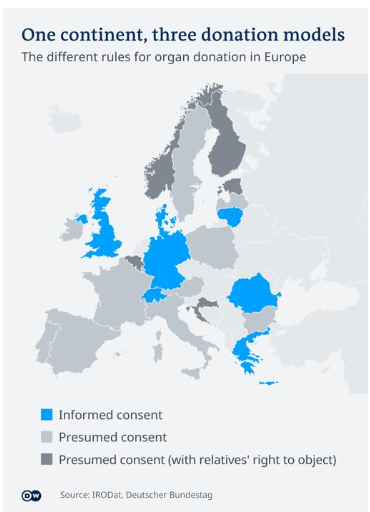
In the landscape of modern medicine, few transitions are as complex as the shift toward opt-out organ donation systems. Across Europe, nations have increasingly moved toward “presumed consent” frameworks, where individuals are considered potential donors unless they explicitly register an objection. While these legislative shifts are designed to address critical organ shortages, they have not eliminated the profound emotional weight placed on clinicians. For doctors, the policy change has not removed families from the decision-making process, nor has it spared medical teams from the necessity of navigating deeply sensitive bedside conversations during a patient’s final moments.
As a physician, I have witnessed firsthand that clinical practice often operates in the gray areas that legislation cannot fully reach. While the law may state that consent is presumed, the reality of hospital care requires a more human-centric approach. When we approach a grieving family, the legal framework often matters less than the immediate need for empathy, clarity, and respect for the family’s state of mind. The implementation of presumed consent models—often referred to as “soft opt-out” systems—frequently mandates that medical staff still consult with next-of-kin to ensure the deceased did not have unrecorded objections.
The Reality of Bedside Conversations
The core challenge for healthcare professionals lies in the discrepancy between legal status and family consensus. Even in countries with well-established opt-out laws, such as Spain or Austria, the practice of seeking family agreement remains a standard of care. Here’s not merely a matter of protocol; it is an acknowledgment of the ethical burden borne by families during the end-of-life process. According to the National Health Service (NHS) in the UK, which transitioned to an opt-out system in 2020, the support of the family is vital to the donation process, as they often hold the key to the patient’s final wishes that may not be reflected in a national registry.

For the medical team, the goal is to provide compassionate care that honors both the potential for life-saving transplantation and the dignity of the donor. When a family is in shock or mourning, the clinical conversation must balance the urgency of organ retrieval with the necessity of allowing the family to process their loss. This requires high-level communication skills, often involving transplant coordinators and specialized palliative care teams who bridge the gap between technical requirements and human emotional needs.
Policy vs. Practice: Why Families Still Decide
One might assume that an opt-out mandate would streamline the process by removing the need for family input. However, in practice, the legal status of “presumed consent” rarely overrides a family’s strong opposition to organ donation at the bedside. Clinicians are acutely aware that proceeding against a family’s wishes can cause lasting psychological harm to the survivors and damage public trust in the medical system. The “opt-out” mechanism functions more as a legislative nudge toward a culture of donation rather than a rigid legal requirement that bypasses the next-of-kin.
Data from the European Directorate for the Quality of Medicines & HealthCare (EDQM) suggests that communication remains the single most critical factor in donation success rates. Even in jurisdictions where the law is clear, the refusal rate remains a significant variable that is largely influenced by the quality of the interaction between the healthcare team and the family. This underscores a vital point: no policy can replace the need for trained, empathetic staff who can guide families through the complexities of end-of-life decision-making.
Key Factors Influencing Donor Decisions
- Cultural and Religious Beliefs: Families often hold deeply ingrained views that may not align with national legislation.
- Lack of Prior Discussion: Many patients never explicitly share their wishes regarding organ donation with their families, leaving them to guess during a crisis.
- The Burden of Grief: The suddenness of a death can impair the ability of family members to process the nuances of opt-out legislation.
- Clinical Sensitivity: The way in which the topic is broached by medical staff significantly impacts whether a family feels respected or pressured.
Moving Toward a Culture of Openness
To truly improve organ donation outcomes, we must look beyond the legislative mechanics of opt-out systems and focus on public awareness. The most successful programs are those that encourage open, proactive conversations within families long before a medical emergency occurs. When a patient has already expressed their wishes to their loved ones, the burden on the family—and the doctor—is significantly reduced. Medical institutions are increasingly emphasizing the role of the “organ donation conversation” as a public health imperative, urging individuals to register their choices and, more importantly, to share those choices with their families.

As we continue to refine healthcare policy across Europe and beyond, we must remember that the doctor-patient-family relationship is the bedrock of medical ethics. While legal frameworks provide the structure, the humanity of the bedside conversation remains the true catalyst for progress. Ensuring that families are supported, informed, and heard is not a hurdle to be overcome; it is an essential component of professional medical practice.
Looking ahead, the next significant checkpoint for this discourse will involve the periodic reviews of organ donation legislation by national health ministries, such as the upcoming evaluations expected in various European Union member states throughout 2025. These reviews will likely focus on how to better integrate family support services into the donation pathway. I encourage our readers to discuss their organ donation preferences with their families today and to consult their local health authority’s official registry to ensure their wishes are officially documented. Please share your thoughts and experiences in the comments below, as we continue to track these critical developments in public health.
Worth a look