The Story Behind the ‘Free’ Photograph: A Rare Glimpse into Prince’s Creative Process
For many, Prince remains an enigmatic figure, a musical genius whose creative process was often shrouded in mystery. But for artist and photographer Steve Parke, gaining access to the inner workings of Paisley Park in the late 1980s and early 1990s offered a unique perspective on the artist’s playful spirit and meticulous vision. A recently resurfaced photograph, captured during a 1989 shoot for Notorious magazine, encapsulates this dynamic: Prince, lying on his back, the word “Free” painted in gold across his stomach. The image, and the story behind it, reveals a side of Prince rarely seen – a man who embraced spontaneity, challenged expectations, and possessed a childlike joy in artistic expression.
Parke’s journey to becoming Prince’s in-house art director began serendipitously. Initially a photographer supporting Sheila E. During a Lionel Richie tour, he connected with her guitarist and offered a quick portrait sketched on a napkin. This small gesture led to an introduction to Prince, who, impressed by Parke’s artwork, invited him to paint a stage. “I was in the right place at the right time,” Parke recalled in an interview with The Guardian. That initial opportunity blossomed into a six-year tenure at Paisley Park, from 1988 to 1996, where Parke documented the artist’s evolving persona and contributed to his iconic visual aesthetic. He observed a Prince who was remarkably unconcerned with conventional notions of image, often appearing for photoshoots without makeup, yet consistently captivating.
From “1999” to “Free”: A Shift in Artistic Control
The photograph for Notorious magazine presented a unique challenge. The art director initially envisioned the word “1999” emblazoned across Prince’s abdomen, a nod to his then-current musical explorations. However, Prince resisted the suggestion, seeking something more resonant with his evolving artistic independence. “It was during the period he was talking about his freedom from record labels,” Parke explained. “He suggested the word ‘Free.’” This shift in concept reflects a pivotal moment in Prince’s career, as he increasingly asserted control over his music and image, challenging the constraints of the music industry. Prince’s pursuit of artistic freedom was a defining characteristic of his career, culminating in his highly publicized battle with Warner Bros. Records over ownership of his master recordings, a conflict that began in the early 1990s and continued for years. Rolling Stone detailed the complexities of this dispute, highlighting Prince’s frustration with the label’s control over his perform.
A Spontaneous Moment: Laughter and Gold Paint
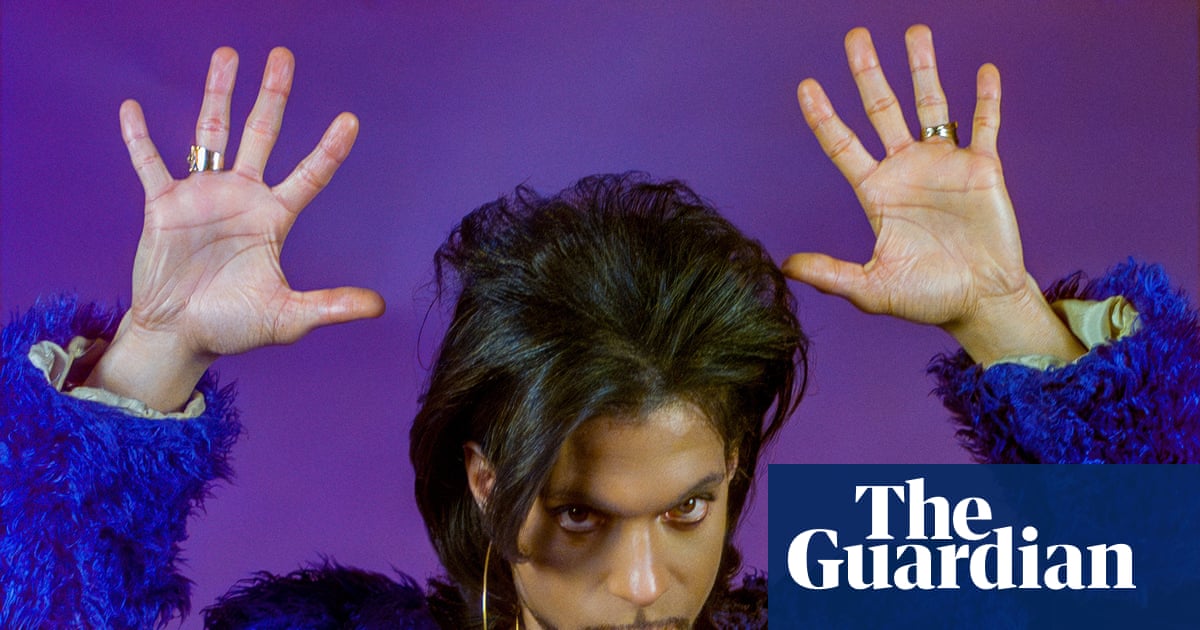
The shoot itself was remarkably unconventional. Setting up at Paisley Park before 8 a.m., an unusually early start, the team found themselves working with minimal equipment – a purple backdrop and a single movie light. The magazine’s art director, initially hesitant, suggested adding a shower curtain for diffusion. But the most memorable aspect of the session was Prince’s playful involvement in the creation of the image. “Prince told the guy mixing the gold paint: ‘Steve will do it,’” Parke recounted. “I was like: ‘What?’” He then found himself applying the paint directly to Prince’s stomach with his fingers. The cold temperature of the paint elicited a burst of laughter from Prince, a moment Parke captured with his camera. “He started laughing like a kid,” Parke said, “I was thinking ‘I hope the paint doesn’t run because I’ve got to clean my fingers off and start shooting.’”
Parke’s photographic approach was also notable. Being slightly taller than Prince allowed him to capture a flattering angle, and he observed that Prince often subtly adjusted his pose, dropping his chin and looking up, enhancing his already striking features. Prince even playfully questioned why people speculated he had undergone a nose job, a testament to his self-awareness and attention to his public image. The inclusion of model Desray Junca, who had previously appeared in Prince’s “The Greatest Romance Ever Sold” music video, added another layer to the composition, providing a visual counterpoint and a sense of collaboration.
Parke’s Legacy: Preserving a Visual History of Prince
Steve Parke’s work extends far beyond this single iconic photograph. As Prince’s in-house art director, he amassed a vast archive of images documenting the artist’s creative evolution. His upcoming book, Prince: The Two-Volume Special Edition, published by ACC Art Books on April 14, promises to offer an unprecedented glance into this collection, showcasing previously unseen photographs and providing further insight into Prince’s artistic process. ACC Art Books details the scope of the project, highlighting its comprehensive nature and the inclusion of material from Parke’s earlier volume, Black White Color.
Parke’s experience with Prince was unique, characterized by a level of trust and creative freedom that allowed him to capture the artist in a remarkably authentic light. He recalls a working relationship free from the typical constraints often imposed on those around the famously private musician. “When I first met him, nobody told me, ‘Don’t look him in the eyes’ or anything like that,” Parke shared. “I was 25 and tried to be my normal self, but professional, which suited the way we worked.” This ability to connect with Prince on a personal and professional level allowed Parke to document not just his image, but also his spirit – a spirit of innovation, independence, and playful creativity.
The “Free” photograph stands as a testament to this dynamic, a captivating image that encapsulates Prince’s artistic rebellion and his willingness to embrace the unexpected. It’s a reminder that behind the iconic persona lay a man who found joy in the process of creation, and who wasn’t afraid to laugh, even while covered in gold paint.
Steve Parke’s forthcoming books offer a deeper dive into his extensive archive, promising fans and scholars alike a richer understanding of Prince’s artistic legacy. The release of Prince: The Two-Volume Special Edition on April 14th is a significant event for those seeking to explore the visual world of one of music’s most enduring icons.
What are your favorite Prince photographs? Share your thoughts in the comments below, and be sure to share this article with fellow Prince fans!
Worth a look