
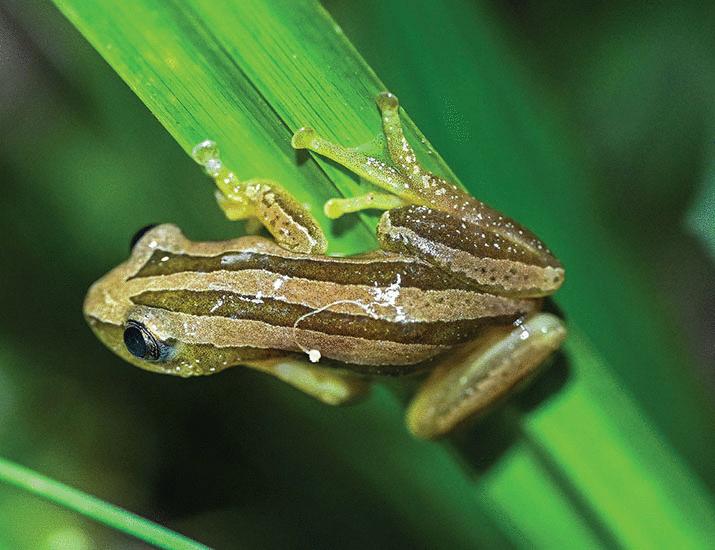
The delicate balance of African ecosystems may be under greater threat than previously recognized, as a new report highlights the precarious state of the continent’s amphibians. These creatures, which act as an overlooked sentinel at risk in Africa, provide critical early warning signs regarding the health of the environments they inhabit. Though, a lack of institutional support and funding is leaving these biological indicators vulnerable.
According to a report published in the journal Science on April 2, 2026, amphibians are serving as essential but neglected biological sentinels. The research, authored by Mwale Wakila Bienvenu, Yedidya Musangania Elikya, Akonkwa Shabani Emery, Paul Scholte, Amaël Borzée, and their colleagues, suggests that the failure to protect these species is not due to a lack of ecological importance, but rather systemic failures in biodiversity management Science.
As a physician and health journalist, I have seen how the health of wildlife often mirrors the health of human populations. When “sentinel species”—animals that are particularly sensitive to environmental changes—begin to decline, it often signals broader ecological collapses that can eventually impact public health and food security. In Africa, the neglect of these amphibians represents a significant gap in the continent’s ability to monitor and respond to environmental degradation.
Systemic Barriers to Amphibian Conservation
The report argues that the risk facing African amphibians is primarily driven by institutional weaknesses rather than a lack of ecological relevance. The authors point to chronic underinvestment and a significant deficiency in in-country expertise as the primary drivers behind the vulnerability of these populations.

These systemic barriers manifest in several critical ways that hinder effective conservation efforts:
- Weak Data Infrastructures: There is a lack of robust systems for the collection and analysis of species health, making it difficult for scientists to track declines in real-time.
- Fragmented Monitoring: Biodiversity monitoring systems across the continent are often disconnected, preventing a cohesive understanding of population trends and migration patterns.
- Limited Technical Capacity: There is a constrained institutional and technical capacity to implement and maintain effective conservation strategies on the ground.
Because these species have not been adequately incorporated into existing conservation frameworks across the continent, they remain under-monitored and exposed to threats that could have been mitigated with proper oversight ResearchGate.
Why Amphibians Serve as Biological Sentinels
To understand why the decline of amphibians is so concerning, one must understand their role as “sentinels.” Amphibians possess permeable skin and often live in both aquatic and terrestrial environments, making them exceptionally sensitive to pollutants, temperature shifts, and pathogens. When an amphibian population crashes, it is often the first indicator that a water source has become contaminated or that a climate shift is destabilizing the local habitat.
By providing this essential data on ecosystem health, amphibians act as a natural alarm system. When this system is ignored or allowed to fail due to underinvestment, the broader environment loses a critical diagnostic tool for detecting ecological distress before it becomes irreversible.
The Path Forward for Biodiversity Management
The findings presented by Bienvenu, Elikya, Emery, Scholte, and Borzée underscore the necessitate for a fundamental shift in how biodiversity is funded and managed in Africa. The report suggests that moving beyond fragmented monitoring toward a unified, well-funded data infrastructure is essential for the survival of these sentinel species.
Addressing the lack of in-country expertise is equally vital. By investing in local technical capacity, African nations can develop conservation strategies that are tailored to their specific ecological needs rather than relying on external frameworks that may not account for local nuances.
Key Takeaways from the Report
- Critical Role: African amphibians are vital biological sentinels that indicate overall ecosystem health.
- Primary Risks: The species are at risk due to systemic failures in funding and a lack of specialized local expertise.
- Institutional Gaps: Weak data infrastructure and fragmented monitoring systems prevent an effective response to population declines.
- Policy Failure: Current conservation frameworks have failed to adequately incorporate these sentinel species.
The failure to protect these animals is not a reflection of their lack of value, but a symptom of how biodiversity management is currently structured. Until there is a concerted effort to bridge the gap in technical capacity and financial investment, these critical sentinels will remain at risk.
The scientific community continues to monitor these population trends, and further updates on the implementation of conservation frameworks are expected as regional biodiversity strategies are reviewed. We encourage our readers to share this article to bring more visibility to the critical role of biological sentinels in global health and ecology.