
The crew of the Artemis II mission is now preparing for their journey home after completing a historic lunar flyby, marking the first time humans have ventured toward the Moon in half a century. Launched on April 1, 2026, the mission serves as a critical test of NASA’s deep space capabilities, demonstrating the systems necessary to sustain astronauts far beyond low-Earth orbit.
The four-person crew—Commander Reid Wiseman, Pilot Victor Glover, and Mission Specialists Christina Koch and Jeremy Hansen—is currently navigating the return leg of their 10-day mission. Having successfully tested the Orion spacecraft and the Space Launch System (SLS) rocket, the team has provided NASA with invaluable data on human endurance and spacecraft performance in deep space.
As of April 7, the mission has reached a pivotal transition. Recent updates indicate that on Flight Day 6, the crew wrapped up their historic lunar flyby, having eclipsed previous records for the farthest human spaceflight. The mission’s primary objective was not to land, but to perform a crewed lunar flyby to validate the safety and functionality of the hardware intended for future lunar surface landings.
The Journey Around the Moon
The Artemis II mission utilized a specific flight path known as a free-return trajectory. According to mission documentation, this trajectory is similar to the one flown by Apollo 13, though Artemis II traveled significantly further away from the lunar surface. The spacecraft reached a flyby distance of approximately 4,067 miles (6,545 kilometers) from the Moon.
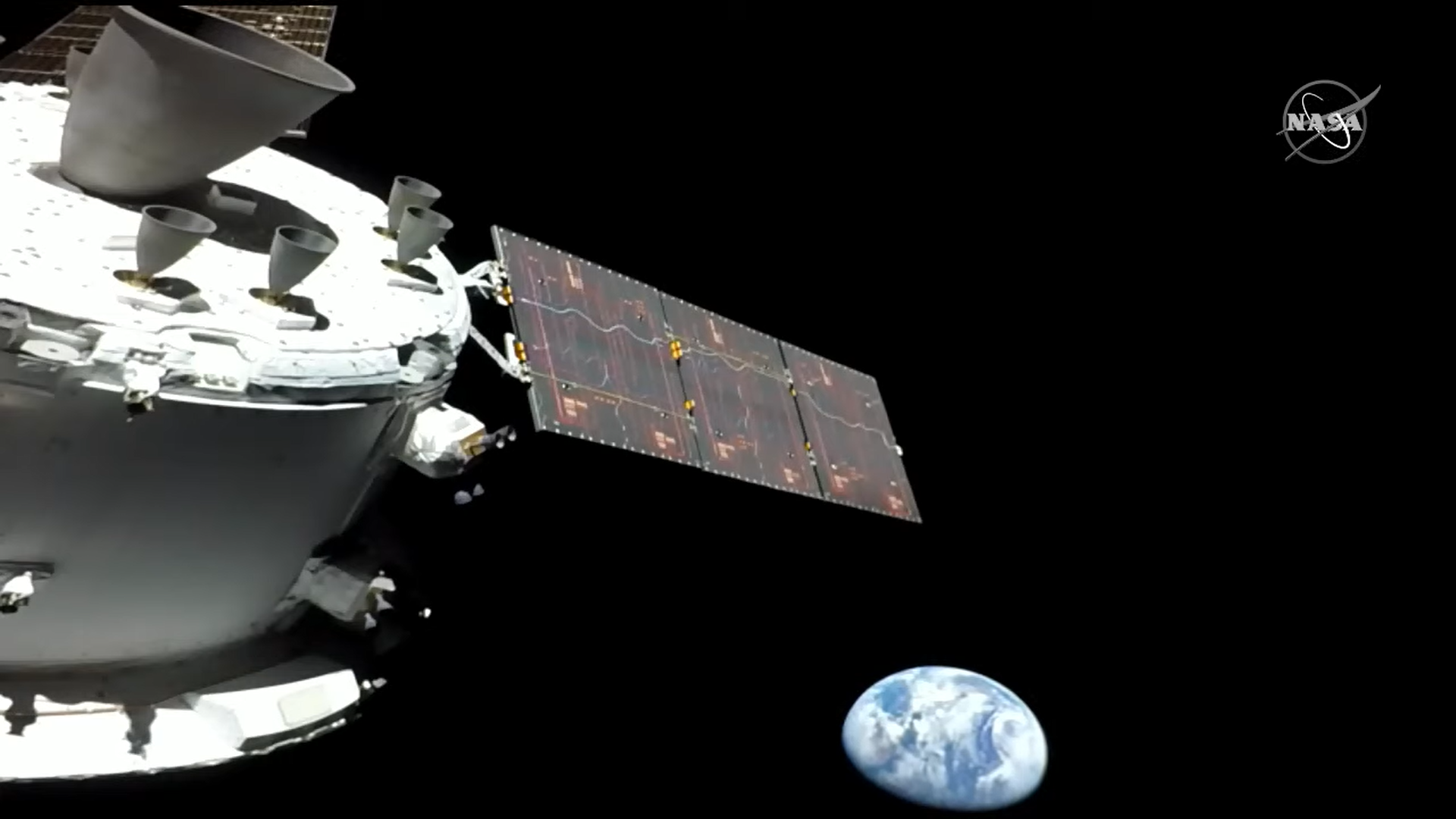
The progression of the mission has been marked by several key milestones. By Flight Day 5, the crew successfully completed a correction burn and conducted demonstrations of their suits to ensure readiness for the lunar flyby. These activities were essential to verify that the Orion spacecraft could maintain a stable environment and that the crew could operate effectively under the stresses of deep space travel.
The success of this flyby is a prerequisite for the subsequent Artemis III mission, which aims to return humans to the lunar surface. By testing the Orion spacecraft’s ability to carry and sustain a crew during a round trip to the Moon, NASA is paving the way for long-term lunar exploration and, eventually, crewed missions to Mars.
Technical Specifications of the Artemis II Flight
The mission relied on the most powerful rocket ever built, the Space Launch System (SLS), to propel the Orion spacecraft out of Earth’s atmosphere. The Orion vehicle consists of the Crew Module (CM-003 Integrity) and the European Service Module (ESM-2), the latter of which provides power and propulsion for the journey.
Technical data for the mission includes a planned total travel distance of 695,081 miles. The launch mass of the spacecraft was approximately 78,000 pounds (35,000 kg), while the projected landing mass is significantly lower at 20,500 pounds (9,300 kg). The spacecraft is powered by an 11 kW system, ensuring that the crew remains supported through the 10-day duration of the flight.
Mission Timeline and Key Milestones
| Event | Date/Time | Detail |
|---|---|---|
| Launch | April 1, 2026 | Liftoff from Kennedy Space Center, LC-39B |
| Flight Day 5 | April 5, 2026 | Correction burn and suit demonstrations |
| Flight Day 6 | April 6, 2026 | Completion of historic lunar flyby |
| Planned Landing | April 11, 2026 (UTC) | Splashdown in the Pacific Ocean |
The Final Leg: Return to Earth
The focus has now shifted to the reentry phase. The Artemis II crew is scheduled to return to Earth with a planned landing date of no earlier than (NET) April 11, 2026, at 00:21 UTC (which corresponds to April 10 at 5:21 p.m. PDT). The landing site is planned for the Pacific Ocean, where the Orion capsule will undergo a high-speed reentry into Earth’s atmosphere.
This reentry is one of the most dangerous portions of the mission. The spacecraft must hit a precise atmospheric window to use the air as a brake, slowing the capsule from thousands of miles per hour to a speed safe for parachute deployment. The heat shield of the Orion spacecraft, tested during the uncrewed Artemis I mission in 2022, will once again be tasked with protecting the crew from the extreme temperatures generated during descent.
The return of Reid Wiseman, Victor Glover, Christina Koch, and Jeremy Hansen will mark the successful completion of the first crewed flight of the Artemis program. Their experience will provide the final set of data needed to confirm that the Orion spacecraft is flight-ready for the more complex mission of landing humans on the lunar south pole.
Impact on Future Space Exploration
The Artemis II mission is more than a technical test. it is a symbolic and strategic step in the “Moon to Mars” architecture. By demonstrating that humans can safely navigate a free-return trajectory and survive a 10-day deep space mission, NASA has validated the core components of its exploration strategy.
The involvement of an international crew—including Jeremy Hansen from the Canadian Space Agency—underscores the global nature of the Artemis program. This collaboration is intended to build an international coalition for the establishment of a permanent human presence on the Moon via the Lunar Gateway and future surface bases.
The data gathered during this mission, specifically regarding the performance of deep space systems and the psychological and physiological effects on the crew, will be analyzed for months to come. This information will directly influence the design and operational protocols for the Artemis III mission and beyond.
The next confirmed checkpoint for the mission is the planned splashdown in the Pacific Ocean on April 11, 2026 (UTC). NASA is expected to provide real-time updates as the crew begins their final approach to Earth.
We invite our readers to share their thoughts on this historic achievement in the comments below. Do you believe the return to the Moon is the necessary first step for a mission to Mars?
Keep reading
- NJ Community Demands Answers After Over 400 Cancer Cases Linked to Old Landfill
- Cialis Now Available Over-the-Counter in Japan: First Prescription-Free ED Medication Launches
- Moving to Washington: A Dream Journey to Olympia (news-usa.today)
- Emmerdale Summer Spoilers and Sadie King Return Update (archyde.com)