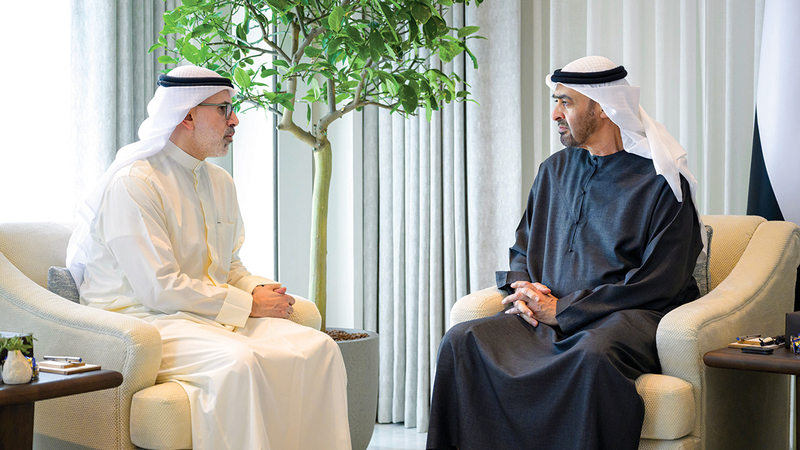
President Sheikh Mohamed bin Zayed Al Nahyan of the United Arab Emirates received Kuwaiti Foreign Minister Sheikh Jarrah Jaber Al-Ahmad Al-Sabah on April 6, 2026, to discuss critical regional security concerns and the strengthening of bilateral ties. The meeting, held in Abu Dhabi, focused heavily on the ongoing threats to regional stability and the necessity of coordinated defenses between the two Gulf nations.
Central to the discussions were the Iranian terrorist attacks and their severe implications for the security and stability of the region and the wider international community. Both leaders addressed the continuing nature of these aggressions, which have specifically targeted civilians, critical infrastructure and civil facilities within the UAE, Kuwait, and other neighboring states according to official reports.
The diplomatic exchange began with Sheikh Jarrah Jaber Al-Ahmad Al-Sabah conveying greetings and well-wishes from His Highness Sheikh Mishal Al-Ahmad Al-Jaber Al-Sabah, the Amir of Kuwait, who expressed his hopes for the continued security and prosperity of the United Arab Emirates. In return, President Sheikh Mohamed bin Zayed Al Nahyan extended his own greetings to the Amir of Kuwait, wishing the nation and its people further growth and prosperity under his leadership.
Addressing Regional Security and Iranian Aggression
A primary objective of the meeting was to analyze the fallout of Iranian terrorist activities in the region. The leaders discussed how these attacks represent a direct threat to regional and international stability, emphasizing that the targeting of civilian infrastructure is a critical escalation that requires a unified response.
Beyond the immediate threats, the discussions focused on the strategic efforts both the UAE and Kuwait are undertaking to safeguard their national sovereignty. The two countries reviewed the joint measures being implemented to defend their borders, protect their citizens, and ensure the integrity of their respective territories as detailed in official accounts of the meeting.
The Impact on Infrastructure and Civilians
The dialogue specifically highlighted the danger posed to “civilians and civil infrastructure,” indicating that the scope of these attacks extends beyond military targets. This focus underscores a shared concern over the vulnerability of essential services and the safety of non-combatants in the face of ongoing regional tensions.
Strengthening UAE-Kuwait Bilateral Cooperation
Whereas security was the urgent priority, the meeting also served as a platform to reinforce the “brotherly relations” that define the partnership between Abu Dhabi and Kuwait City. President Sheikh Mohamed bin Zayed and the Kuwaiti Foreign Minister explored various avenues to evolve their cooperation and joint action.
The goal of this enhanced cooperation is to serve the mutual interests of both nations, ensuring that diplomatic and economic ties continue to yield benefits for the populations of both countries. The discussions aimed at creating a framework for more integrated perform and shared strategies to navigate the complex geopolitical landscape of the Middle East.
Key Areas of Diplomatic Focus
- Mutual Security: Coordinating defense strategies to counter external threats and terrorist activities.
- Sovereignty: Joint efforts to protect territorial integrity and national security.
- Regional Stability: Mitigating the dangerous repercussions of regional conflicts on international peace.
- Bilateral Growth: Developing joint work initiatives to foster economic and social prosperity.
Key Takeaways from the Abu Dhabi Meeting
- Date of Event: The meeting took place on April 6, 2026.
- Primary Threat: Continuous Iranian terrorist attacks targeting civilians and infrastructure in the UAE and Kuwait.
- Diplomatic Exchange: Exchange of high-level greetings between President Sheikh Mohamed bin Zayed and Amir Sheikh Mishal Al-Ahmad Al-Jaber Al-Sabah.
- Strategic Goal: Enhancing joint defense mechanisms to protect national sovereignty and regional stability.
As the regional security situation remains fluid, the UAE and Kuwait continue to align their foreign policies to counter threats to their sovereignty. Further official updates regarding joint defense agreements or diplomatic responses to regional aggression are expected to be released through the official channels of the UAE and Kuwaiti governments.
World Today Journal encourages readers to share this report and leave their comments below regarding the evolving security dynamics in the Gulf region.
Keep reading