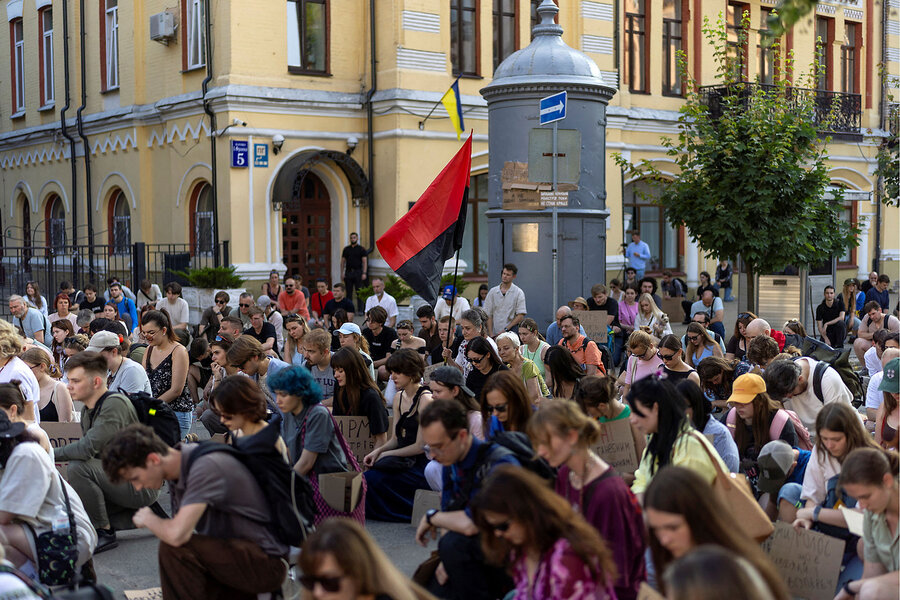
Protests have emerged in several Ukrainian cities following the recent cabinet reshuffle, as citizens express concern over the dismissal of key government officials during the ongoing conflict. The reorganization, which saw the departure of multiple ministers, has prompted public debate regarding the continuity of defense and diplomatic strategies as the nation continues to manage the impact of the full-scale invasion by Russia.
The cabinet changes, which were formally approved by the Verkhovna Rada of Ukraine on September 5, 2024, involved the resignation or dismissal of several high-ranking figures, including Foreign Minister Dmytro Kuleba and Deputy Prime Minister for Reintegration Iryna Vereshchuk, according to official parliamentary records reported by Reuters. While Mykhailo Fedorov remains in his position as the Minister of Digital Transformation, the broader structural shift has led to public scrutiny regarding the administration’s decision-making process during a period of national emergency.
Parliamentary Approval and Ministerial Changes
The reshuffle was characterized by President Volodymyr Zelenskyy as a move to provide “new energy” to the government. According to a report by the BBC, the dismissals were part of a planned effort to refresh the cabinet midway through the war. Among those who left their posts were the Minister for Strategic Industries, the Minister of Justice, and the Minister of Environmental Protection.
Despite the government’s framing of the move as a necessary administrative update, the timing of the departures—specifically the exit of Dmytro Kuleba, who had been a prominent face of Ukrainian diplomacy since 2020—drew significant attention from the public and international observers. The process was confirmed by the Ukrainian parliament, which voted to accept the resignations as part of the broader administrative realignment, as noted in updates from the Kyiv Post.
Public Response and Concerns over Governance
For many citizens, the cabinet changes represent a period of uncertainty. In Kyiv and other urban centers, demonstrators have gathered to demand transparency regarding why experienced ministers were replaced at such a critical juncture. The core of the frustration, as reported by various local outlets, stems from a desire for stability in the defense and foreign policy sectors.
The protests underscore a complex relationship between the Ukrainian public and the executive branch. While the government maintains that the changes are intended to streamline operations, critics have argued that the removal of officials during active hostilities could disrupt long-term international negotiations and defense procurement efforts. The Financial Times reported that the scale of the reshuffle was the largest since the start of the full-scale invasion, affecting roughly one-third of the cabinet.
The Role of Digital Leadership and Future Outlooks
Mykhailo Fedorov’s continued tenure as the Minister of Digital Transformation has been viewed by analysts as a signal of the government’s commitment to maintaining its technological infrastructure. Fedorov has been central to the development of the “Diia” digital service application, which has become a primary interface for citizens to access state services, humanitarian aid, and war-related information. According to the official Ministry of Digital Transformation portal, the platform remains a cornerstone of the state’s resilience strategy.

The next major checkpoint for the administration will be the implementation of the new ministers’ agendas, as the parliament monitors their progress in addressing the ongoing economic and security challenges. The government is expected to provide further briefings on its strategic priorities in the coming weeks, which will likely serve as a focal point for both domestic and international observers.
Citizens and interested stakeholders can track official parliamentary sessions and legislative updates through the official website of the Verkhovna Rada of Ukraine. As the situation evolves, the government faces the dual task of managing public expectations and maintaining the continuity of its defensive efforts.
Keep reading