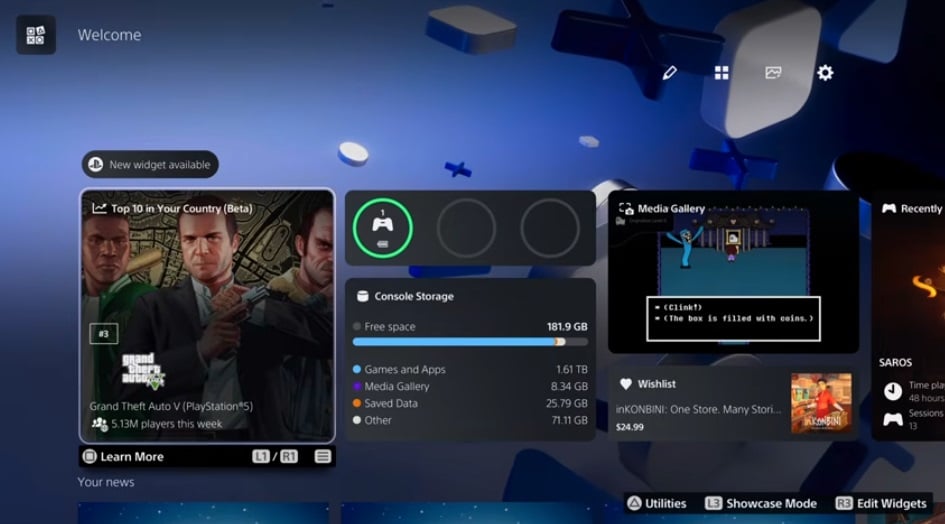
Sony is introducing a new layer of transparency to the PlayStation 5 ecosystem, rolling out a beta feature that allows users to see a real-time ranking of the most played games on the platform. For the first time, the console’s interface is beginning to reveal the specific number of players currently engaged in top titles, most notably the enduring juggernaut Grand Theft Auto V.
This shift toward data-driven social discovery marks a significant change in how Sony presents game popularity. While “Trending” sections have existed in various forms across digital storefronts, the move to provide exact player counts brings the PS5 closer to the transparent data models seen on PC platforms, giving gamers a concrete look at which worlds are currently the most populated.
For a title like GTA 5, which has maintained a dominant presence in the industry for over a decade, this feature serves as a live testament to the game’s longevity. By integrating these metrics directly into the dashboard, Sony is effectively turning player density into a discovery tool, encouraging users to jump into the games that are seeing the highest current activity.
The Mechanics of the PS5 Player Count Ranking
The new ranking system is currently being deployed as a beta feature, meaning We see appearing for a subset of users rather than the entire global install base. This phased rollout allows Sony to test the UI impact and data stability before a wider release. The feature manifests as a curated list that highlights the most active games, accompanied by a numerical indicator of how many people are playing at that moment.
This functionality is designed to reduce the friction between discovering a popular game and joining a session. By seeing that thousands of other players are currently active in a specific title, users are provided with immediate social proof of the game’s viability and the likelihood of finding active multiplayer lobbies. This is particularly valuable for live-service games where “dead” servers are a primary concern for the community.
Industry analysts suggest that providing this data is a strategic move to increase engagement within the PlayStation Store and the console’s home screen. By highlighting what is “hot” in real-time, Sony can leverage the “bandwagon effect,” driving more traffic toward high-performing titles and potentially boosting the visibility of emerging hits that are spiking in popularity.
GTA 5 and the Power of Persistent Popularity
It is little surprise that Grand Theft Auto V is the focal point of this new feature. Since its original release, the title has defied standard gaming lifecycles, remaining a top-seller and a top-played game across multiple console generations. The integration of a live player count allows Sony to showcase the sheer scale of the GTA Online community in a way that static “best-seller” lists cannot.
The persistence of GTA 5 is driven by Rockstar Games’ consistent stream of updates and the game’s versatility as a social hub. By making the player count visible, Sony is effectively highlighting the game’s status as a digital “third place”—a social environment where players congregate not just to complete missions, but to interact in a persistent shared world.
This transparency also provides a benchmark for other developers. As more titles move toward the “games-as-a-service” (GaaS) model, the ability to see real-time player counts for competitors can provide insights into the timing of content drops, seasonal events, and the overall health of the multiplayer market on the PS5.
Why Real-Time Data Matters for Console Gaming
Historically, console manufacturers have been more guarded with their player data than PC platforms. On Steam, for example, the SteamDB tracker provides a granular look at concurrent players, which has become a primary metric for judging a game’s success or decline. Sony’s decision to bring a version of this to the PS5 suggests a move toward greater openness.

For the average consumer, this data serves several practical purposes:
- Validation of Purchase: New buyers can see if a game still has a healthy community before investing.
- Social Coordination: Players can identify peak times to play with friends or find new teammates.
- Trend Tracking: Users can spot rising hits that are gaining momentum before they hit the mainstream “top charts.”
this feature aligns with Sony’s broader goal of making the PS5 a more connected social experience. By emphasizing the collective experience—showing that you are one of thousands currently exploring Los Santos or battling in a competitive shooter—the console reinforces the feeling of being part of a global gaming community.
The Broader Strategy: Enhancing the PS5 Ecosystem
The introduction of the player ranking beta is part of a series of iterative updates to the PlayStation 5 user interface. Sony has been steadily refining the “Activities” cards and game hubs to provide more utility and less clutter. Adding live data to these rankings is a logical evolution of the “Game Hub” concept, transforming it from a static menu into a dynamic information center.
This move also places Sony in a more competitive position against other ecosystem holders who use social metrics to drive engagement. As the line between console and PC gaming continues to blur, providing the same level of data transparency is essential for maintaining a modern, user-centric interface.
Looking forward, Sony could expand this feature to include more detailed statistics, such as regional popularity or trends over the last 24 hours. If the beta proves successful, the “Most Played” ranking could become a permanent fixture of the PlayStation Store, serving as a live leaderboard for the entire platform.
As this feature continues its limited rollout, users are encouraged to keep their system software updated to the latest version to see if the ranking has reached their region. Sony has not yet provided a definitive date for the full global launch of the player count feature, but its presence in the beta suggests a wide release is the ultimate goal.
We will continue to monitor the rollout of this feature and provide updates as more data becomes available regarding its implementation across different territories. Share your thoughts in the comments: Do you find live player counts helpful when choosing what to play, or do you prefer to discover games without the influence of popularity metrics?