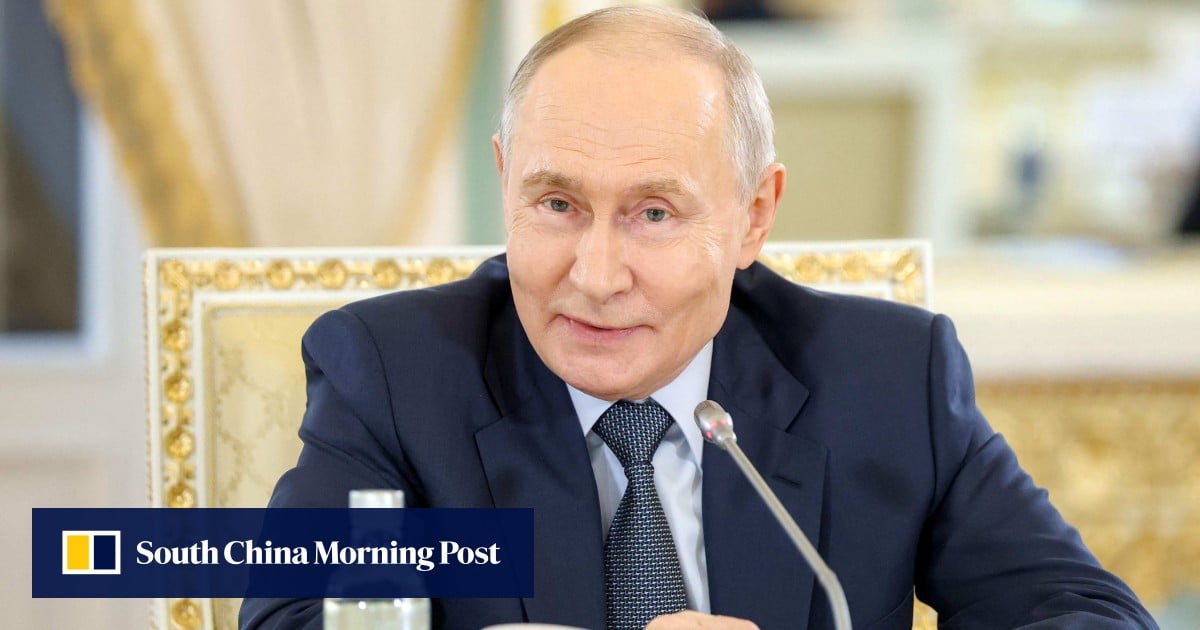
In recent remarks delivered on the sidelines of the St. Petersburg International Economic Forum, Russian President Vladimir Putin addressed the ongoing conflict in Ukraine, suggesting that proposals put forward by U.S. President Donald Trump regarding a potential peace settlement could theoretically end the hostilities. However, the Russian leader emphasized that the path to a resolution remains blocked by a lack of willingness from Kyiv to reach a compromise, asserting that Moscow remains prepared to continue its military campaign until its objectives are achieved.
The comments come as the conflict enters its third year of full-scale warfare, following Russia’s February 2022 invasion of Ukraine. While President Putin acknowledged that he had heard the rhetoric from the U.S. Administration concerning a potential peace deal, he remained skeptical of the current diplomatic climate. His insistence on battlefield victory underscores the deep divide between the Kremlin’s stated terms for peace and the position of the Ukrainian government, which continues to demand the full restoration of its internationally recognized borders.
The Diplomatic Stagnation
President Putin’s assertion that he sees no current signs of compromise from Kyiv reflects the broader stalemate that has characterized the conflict for months. According to official Kremlin transcripts, the Russian leadership maintains that any sustainable peace must account for the “realities on the ground,” a phrase Moscow uses to refer to the territories currently under its military occupation. Conversely, the Ukrainian government, led by President Volodymyr Zelenskyy, has consistently rejected any ceasefire that would leave Russian forces in control of Ukrainian sovereign land, citing the risk of a frozen conflict that would allow Russia to regroup for future aggression.
The role of the United States remains a central point of contention. While President Trump has frequently claimed he could settle the war within “24 hours” if elected, he has provided few specific details on the mechanisms of such a deal. International analysts often point to the complexity of the security guarantees required by both sides, noting that any agreement would necessitate significant concessions that neither government currently appears willing to entertain.
Military Realities and Strategic Goals
The ongoing fighting has resulted in profound humanitarian consequences and significant shifts in the geopolitical landscape of Europe. The conflict has triggered the largest refugee crisis in the region since World War II, with millions of Ukrainians displaced either internally or across international borders, as documented by the United Nations High Commissioner for Refugees. On the battlefield, the intensity of the fighting continues to fluctuate, with both sides experiencing heavy losses in equipment and personnel, though official casualty figures remain difficult to independently verify due to the sensitivity of the information provided by the warring parties.
President Putin’s statement that Russia is ready to “fight on to victory” serves as a signal to both his domestic audience and international observers that the Kremlin remains committed to its long-term strategic goals. Despite heavy Western sanctions—which have been documented by the U.S. Department of the Treasury as targeting key sectors of the Russian economy—the Russian state has largely pivoted its industrial output toward military production to sustain the war effort.
Looking Ahead: The Path Toward Resolution
As the international community watches for any shifts in policy, the focus remains on whether any third-party mediator—or a change in the U.S. Administration’s approach—can bridge the gap between Moscow and Kyiv. The upcoming months will be critical, particularly as military analysts observe the impact of seasonal weather patterns on ground operations and the continued flow of international military aid to Ukraine.
The next major checkpoint for this evolving situation will likely occur during the next scheduled session of the United Nations Security Council, where members are expected to discuss the status of the conflict and the potential for reviving dormant diplomatic channels. As of June 2026, there have been no official announcements regarding high-level, direct negotiations between Russian and Ukrainian representatives aimed at a permanent ceasefire.
We invite our readers to share their perspectives on this developing story in the comments section below. For ongoing updates on this conflict and its global implications, continue to follow our reporting at the World Today Journal.
Worth a look