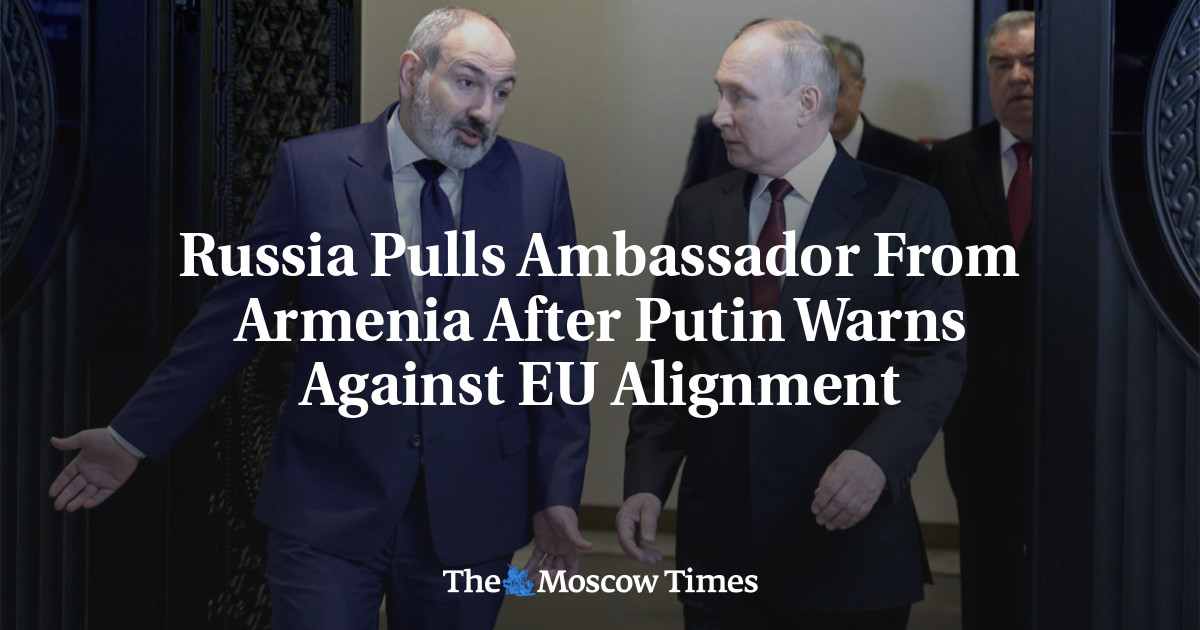
The diplomatic landscape between Moscow and Yerevan has reached a precarious inflection point, as recent geopolitical posturing suggests a deepening rift over Armenia’s shifting foreign policy orientation. As Armenia seeks to diversify its international partnerships, including deepening cooperation with the European Union, the Kremlin has signaled increasing unease regarding the South Caucasus nation’s strategic trajectory. This tension has been punctuated by reports of changing diplomatic personnel and high-level warnings that echo the broader, often volatile, regional power struggles defining Eastern Europe and the Caucasus.
For observers of Eurasian politics, the current friction is not merely a matter of bilateral protocol but a reflection of the intense competition for influence in a region traditionally viewed by Moscow as its sphere of interest. As the Armenian government, led by Prime Minister Nikol Pashinyan, navigates the complexities of post-conflict reconstruction and democratic reform, the pressure to maintain traditional security architectures while exploring Western integration has placed the country in an increasingly difficult position.
Evolving Security Dynamics and the Shift Toward Brussels
Armenia’s recent efforts to seek closer ties with the European Union—including discussions regarding potential visa liberalization and increased economic cooperation—have been met with sharp rhetoric from Russian officials. The Kremlin has historically viewed its role as the primary security guarantor in the region, a position underpinned by the presence of Russian border guards and the 102nd Military Base in Gyumri. However, following the 2023 dissolution of the Nagorno-Karabakh Republic and subsequent shifts in regional security, Yerevan has expressed growing skepticism regarding the efficacy of the Collective Security Treaty Organization (CSTO), which it effectively froze its participation in as of early 2024.
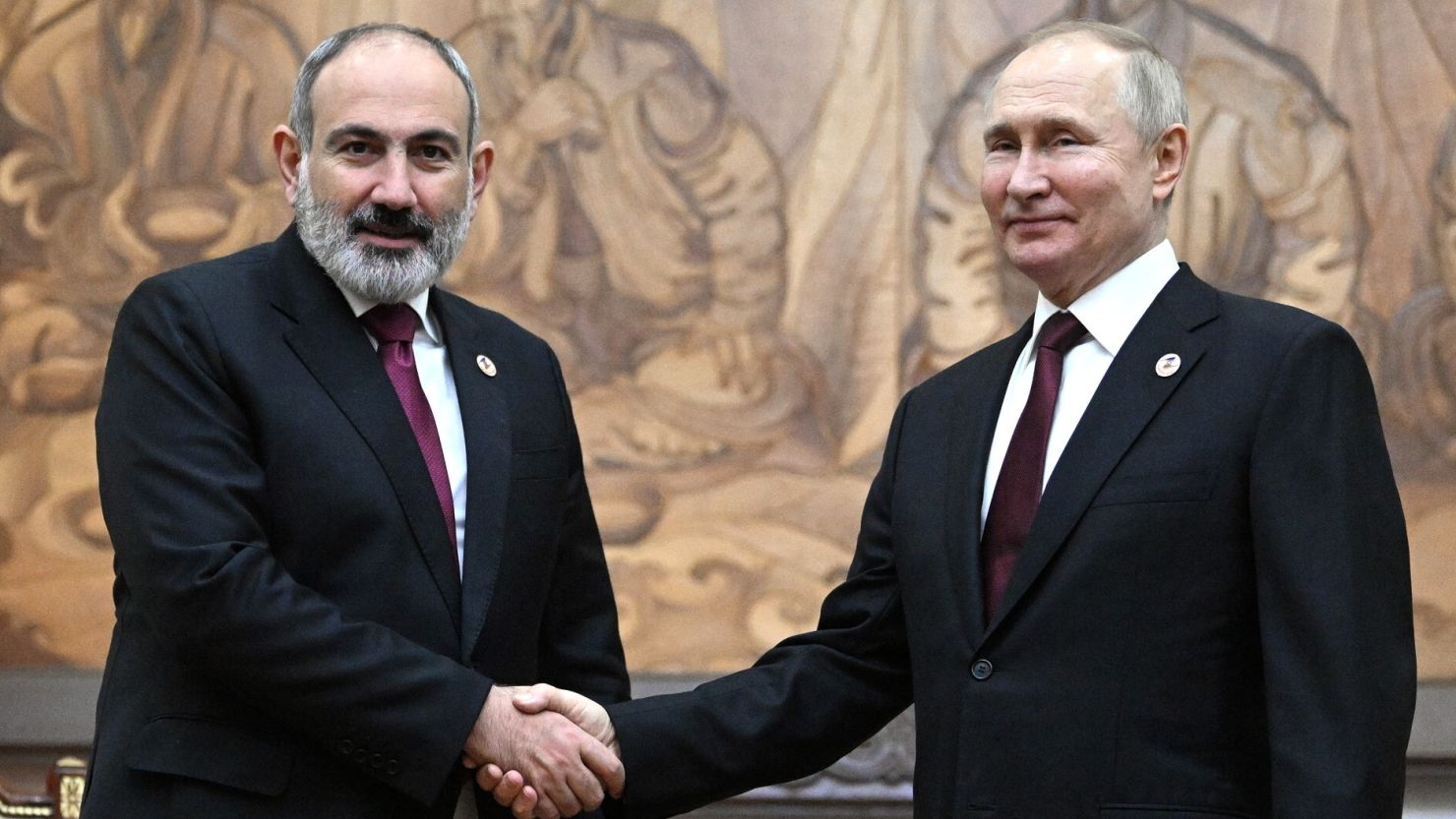
This pivot has not gone unnoticed. The European Union has responded by deploying an observer mission, the EUMA (European Union Mission in Armenia), to monitor the border with Azerbaijan. According to official European External Action Service documentation, the mission aims to contribute to stability in the border areas and build confidence. Yet, for Moscow, such Western presence is frequently characterized as an encroachment on its traditional security domain, leading to heightened diplomatic friction.
Diplomatic Ripples: Assessing the Ambassadorial Situation
The discourse surrounding the status of diplomatic representation often serves as a barometer for the health of interstate relations. While various outlets have reported on the fluidity of the ambassadorial presence between Russia and Armenia, it is essential to distinguish between standard diplomatic rotations and structural shifts in policy. The Kremlin has utilized various diplomatic channels to express its dissatisfaction with Yerevan’s outreach to Brussels, warning that such moves could have destabilizing consequences for the region.
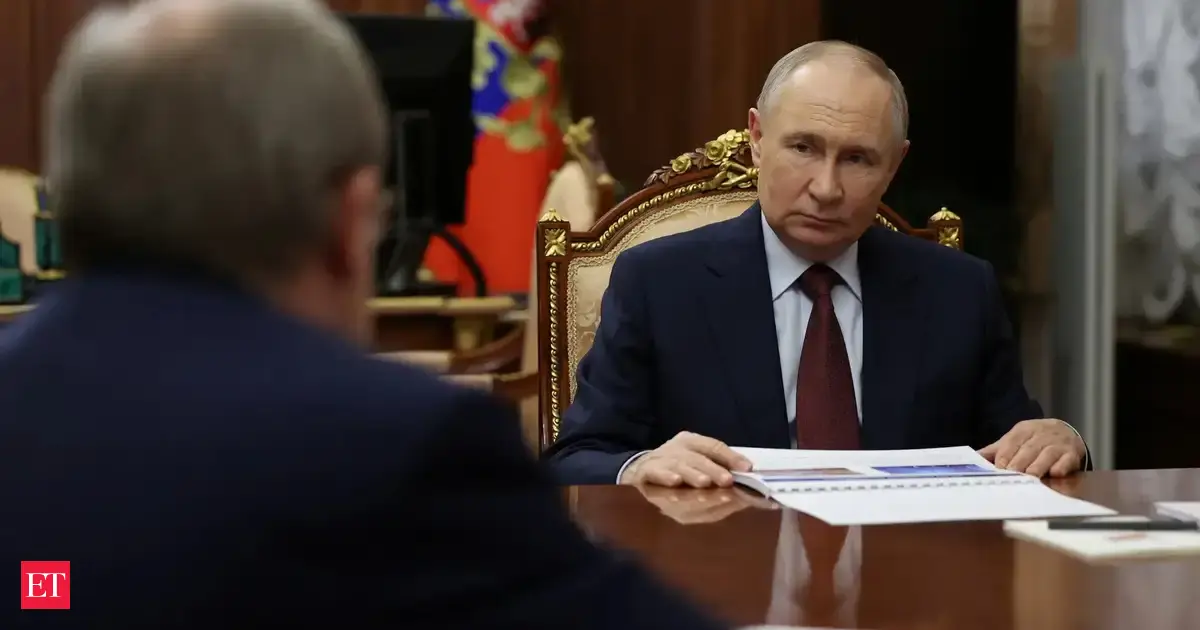
These warnings often invoke the specter of “color revolutions” or the loss of sovereignty, tropes that have been central to Russian foreign policy rhetoric regarding former Soviet states. However, Prime Minister Pashinyan has consistently maintained that Armenia’s democratic path and its desire for European integration are sovereign decisions aimed at ensuring the country’s long-term prosperity and security. The challenge for Yerevan remains managing these relations without triggering the economic or security repercussions that have afflicted other nations attempting to depart from Moscow’s orbit.
Key Factors in the Armenia-Russia Standoff
- CSTO Participation: Armenia’s decision to suspend active participation in the Russian-led military alliance signifies a fundamental shift in its security doctrine.
- EU Integration: Ongoing negotiations regarding the Comprehensive and Enhanced Partnership Agreement (CEPA) continue to serve as a framework for Armenia-EU relations.
- Border Stability: The role of the European Union Mission in Armenia (EUMA) remains a primary point of contention in Moscow’s assessment of regional security.
- Economic Interdependence: Despite political tensions, Armenia remains economically linked to the Eurasian Economic Union (EAEU), complicating the scope of a rapid pivot to the West.
The Regional Context: Implications of a Changing Caucasus
The broader regional context, defined by the ongoing conflict in Ukraine and its international fallout, has limited the space for maneuver for smaller states. Russia’s preoccupation with the war in Ukraine has, in some analysts’ views, provided an opportunity for countries like Armenia to seek alternative security partners. Conversely, it has also increased the risks of Russian retaliation or pressure, as Moscow seeks to demonstrate that it remains a dominant power capable of shaping the outcomes of its neighbors.
As Yerevan continues to explore deeper integration with the European Union, the international community is watching closely to see how the Kremlin will exert its influence. Whether through economic pressure, regional security maneuvering, or diplomatic isolation, the toolkit available to Moscow is significant. However, Armenia’s commitment to democratic governance and its pursuit of international legitimacy through European institutions suggest a strategic choice that prioritizes long-term institutional alignment over short-term security guarantees from traditional allies.
Looking Ahead: What Happens Next?
The situation remains fluid. The next major checkpoint for these relations will likely be the upcoming summits of the Eurasian Economic Union, where regional leaders are expected to convene. Any formal updates regarding the status of the Russian ambassador to Armenia will be published via the official channels of the Russian Ministry of Foreign Affairs and the Armenian Ministry of Foreign Affairs.
For those tracking these developments, it is crucial to rely on primary sources and verified reporting to filter out the noise of regional propaganda. As the situation evolves, we will continue to provide updates on how these diplomatic shifts impact the lives of citizens in the South Caucasus and the broader stability of the region. We invite our readers to share their insights and engage in a respectful discussion regarding these complex geopolitical developments in the comments section below.
Keep reading