
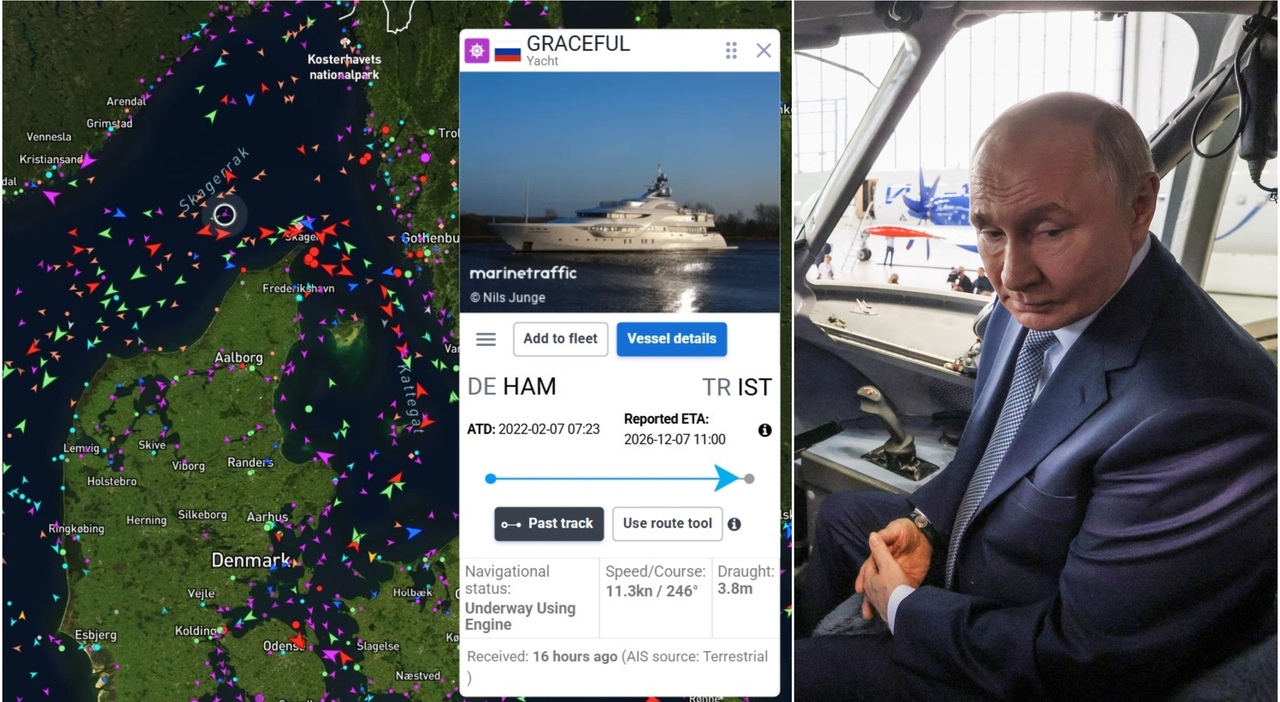
The 82-meter superyacht Graceful, frequently linked to Vladimir Putin, has resumed maritime activity following a four-year period. Recent sightings of the vessel in the Baltic Sea, accompanied by a naval escort, have prompted scrutiny regarding its movements. While reports have speculated on the vessel’s intent, international maritime tracking data confirms the yacht has shifted from its stationary status.
The Graceful, estimated to be worth approximately 100 million, has long been a subject of interest for international observers. The vessel’s recent departure and its subsequent transit through the Baltic Sea represent a departure from the behavior observed since the yacht had its transponder turned off for 4 years.
Tracking the Movements of the Graceful
For several years, the Graceful remained largely stationary, keeping its Automatic Identification System (AIS) transponder inactive. However, recent movements have re-engaged the attention of regional naval forces. The vessel was observed navigating the Baltic Sea under the escort of a destroyer.
The transition to active navigation has raised questions among maritime security analysts. The use of a naval escort during such transits is generally reserved for vessels of significant importance. Analysts note that while the yacht is a private luxury vessel, its association with the highest levels of the Russian government makes it a symbolic target. The decision to sail in waters monitored by Denmark suggests a calculated effort to reposition the asset.
Sanctions and Asset Security
The Graceful is one of several luxury vessels that have faced increased scrutiny. The European Union’s restrictive measures regarding the Russian Federation remain the primary legal framework under which such assets are monitored. Despite these measures, the physical seizure of assets is legally complex, often requiring proof of direct ownership by sanctioned individuals, which can be obscured through intricate corporate structures and offshore shell companies.
The movement of the Graceful serves as a reminder of the cat-and-mouse game played between those seeking to protect assets and international authorities enforcing sanctions. By keeping the transponder off for extended periods, the vessel’s operators effectively neutralized the ability of open-source intelligence (OSINT) communities to track it in real-time. The recent decision to sail in a manner that allows for visual identification by naval assets indicates a shift in operational security protocols.
Why the Baltic Transit Matters
The Baltic Sea is a strategically sensitive area. The presence of a destroyer escorting a luxury yacht in these waters is viewed by regional observers as a demonstration of continued presence and the ability to project power, even while managing the logistics of private asset relocation. The transit highlights the tension between the necessity of protecting high-value assets and the risks of operating in a highly militarized maritime environment.

For international observers, the primary challenge remains the verification of ownership. While various investigative reports have linked the Graceful to the Russian leader, the official ownership records are often held by entities that do not explicitly name state officials. Consequently, while the vessel is widely perceived as a state-linked asset, the legal process to hold it accountable under current international sanctions regimes remains a difficult and ongoing process for authorities in the affected jurisdictions.
As of this reporting, the vessel’s final destination remains unconfirmed. Maritime observers continue to watch the Baltic Sea for further updates on the Graceful’s route. We will continue to track official statements from regional naval commands and maritime regulatory bodies regarding the status of the vessel. Please share your thoughts in the comments section below or join the conversation on our social media channels as we monitor this developing story.