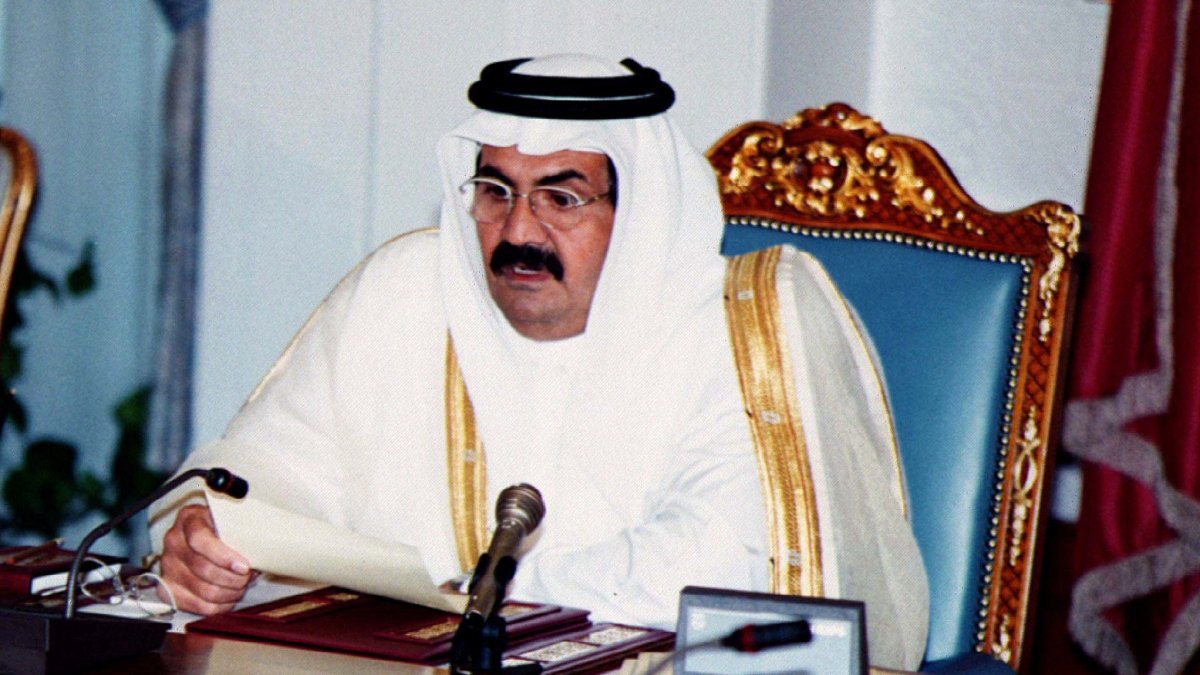
Sheikh Hamad bin Khalifa Al Thani, the former Emir of Qatar known as the Father Emir, died on July 12 at the age of 74. His tenure as head of state from 1995 to 2013 transformed Qatar from a quiet Gulf peninsula into a global diplomatic hub and energy powerhouse, according to official state records and historical archives.
The passing of Sheikh Hamad marks the end of an era defined by the strategic use of liquefied natural gas (LNG) wealth to fund massive infrastructure, education, and international mediation. He stepped down voluntarily in 2013, handing power to his son, Sheikh Tamim bin Hamad Al Thani, in a rare transition of power for the region.
Under his leadership, Qatar established itself as a neutral ground for conflicting political entities and a major investor in global real estate and sports. His legacy is anchored in the creation of the Qatar Investment Authority (QIA) and the pursuit of a “soft power” strategy that culminated in the successful bid for the 2022 FIFA World Cup.
The 1995 Transition and Economic Pivot
Sheikh Hamad assumed power in 1995 after a bloodless palace coup, replacing his father, Sheikh Khalifa bin Hamad Al Thani. This shift signaled a move toward a more aggressive and modernized approach to governance and international relations. According to reports from the Reuters news agency, his primary focus was the monetization of Qatar’s massive natural gas reserves.

He oversaw the development of the North Field, the world’s largest non-associated natural gas field. By investing heavily in LNG technology, he ensured Qatar could export gas to markets in Asia and Europe, decoupling the nation’s economy from a sole reliance on oil. This economic foundation allowed the state to build the Qatar Investment Authority, a sovereign wealth fund that now holds assets globally, including significant stakes in London’s financial district and European sports clubs.
The Father Emir’s vision extended beyond finance to the physical landscape of Doha. He initiated the construction of the Corniche, the development of the West Bay skyline, and the establishment of the Education City project, which brought prestigious American and European universities to the Gulf.
Diplomacy and the Al Jazeera Era
One of the most defining and controversial aspects of Sheikh Hamad’s legacy was the founding of Al Jazeera in 1996. As the first independent Arabic-language news channel, Al Jazeera broke the state-controlled monopoly on information in the Middle East. According to analysis from the BBC, the network provided Qatar with unprecedented diplomatic leverage, allowing the small state to punch above its weight in regional politics.

This “mediation diplomacy” saw Qatar act as a bridge between the West and various Islamist movements, as well as a negotiator in conflicts across the region. Sheikh Hamad positioned the country as a necessary interlocutor for the United States, particularly during the wars in Iraq and Afghanistan. This strategy, while successful in raising Qatar’s profile, often drew criticism from neighboring Gulf states and Western allies who viewed the approach as contradictory.
The Father Emir’s commitment to diplomacy was not limited to politics. He championed the “Qatar-UNESCO” partnership and funded various humanitarian initiatives through the Qatar Fund for Development, focusing on poverty alleviation and education in the Global South.
The 2013 Succession and Final Years
In a move that surprised many regional observers, Sheikh Hamad announced his abdication on June 25, 2013. He transferred full authority to his son, Sheikh Tamim, stating that the transition was intended to ensure the stability and continuity of the state. This voluntary transfer of power is cited by political analysts as a key moment in Qatari political history, avoiding the succession crises often seen in absolute monarchies.
Following his abdication, the Father Emir remained a respected advisor to the current Emir. He continued to represent the state in high-level diplomatic circles and maintained his role as a symbol of the nation’s modernization. His final years were marked by a focus on the legacy of the 2022 World Cup, a project he had championed long before the official bid was won.
The impact of his leadership is visible in the current state of the Qatari economy. Data from the International Monetary Fund indicates that Qatar maintains one of the highest GDPs per capita in the world, a direct result of the industrialization and energy policies enacted during the Father Emir’s reign.
Timeline of Key Milestones
| Year | Event | Impact |
|---|---|---|
| 1995 | Assumption of Power | Initiated modernization and economic reform. |
| 1996 | Launch of Al Jazeera | Shifted regional media landscape and increased diplomatic influence. |
| 2004 | Creation of QIA | Institutionalized the management of national wealth. |
| 2010 | FIFA World Cup Bid Won | Launched massive national infrastructure overhaul. |
| 2013 | Abdication | Smooth transition of power to Sheikh Tamim. |
The death of the Father Emir leaves a void in the historical memory of the state, but the structures he built—from the gas terminals to the diplomatic channels—remain the bedrock of the current administration’s policy. The state has announced a period of official mourning to honor his contributions to the nation’s sovereignty and global standing.

Official funeral arrangements and public memorials are expected to be announced by the Amiri Diwan in the coming days. Readers can follow official updates via the Qatari government portal.
World Today Journal welcomes your thoughts on the legacy of Sheikh Hamad in the comments below. Please share this report with your network to keep the global community informed.
Worth a look