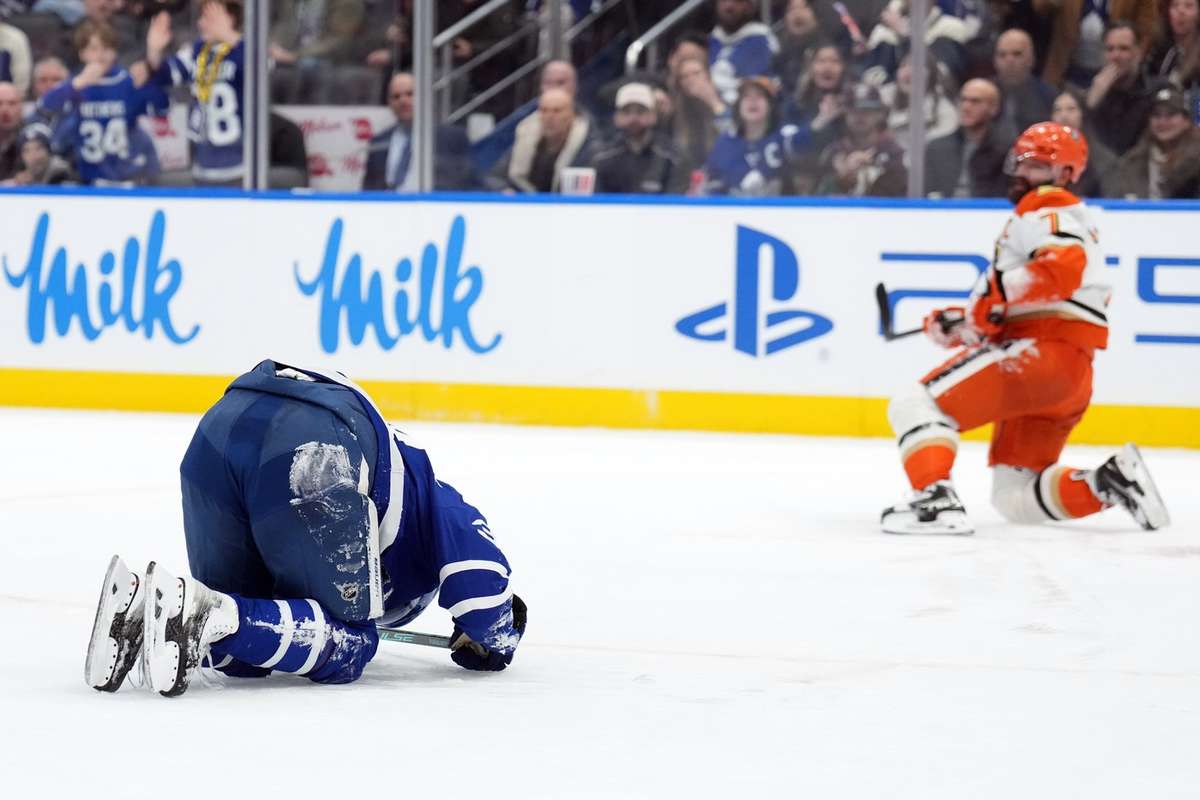
NHL Faces Scrutiny After Controversial Hit Leaves Maple Leafs Star Injured
The National Hockey League is once again grappling with concerns over player safety following a hard hit by Anaheim Ducks defenseman Radko Gudas on Toronto Maple Leafs captain Auston Matthews during a game on March 13, 2026. The incident, which occurred late in the second period, resulted in Matthews leaving the game and subsequently being diagnosed with a torn MCL, effectively ending his season. Gudas received a five-minute major penalty and a game misconduct, but the league is expected to deliver further disciplinary action. This incident adds to a growing narrative surrounding Gudas’s aggressive playing style and raises questions about the balance between physicality and player safety in professional hockey.
The play unfolded as Matthews positioned himself for a pass from William Nylander. As the puck arrived, Gudas drove into Matthews with a knee-on-knee contact, sending the star forward crashing to the ice. While Gudas maintained he was going for a legal body check, replays clearly showed direct contact with Matthews’s knee, leading to immediate concern. Matthews was able to skate off the ice under his own power, but was clearly in discomfort and did not return for the remainder of the game. The Maple Leafs, already facing a challenging season, have now lost a key offensive player and a team leader.
Matthews’ Injury and the Immediate Aftermath
The severity of Matthews’s injury was confirmed shortly after the game, with the Maple Leafs announcing a torn MCL. This injury will require surgery and a lengthy rehabilitation process, ruling him out for the remainder of the 2025-2026 NHL season. The loss of Matthews is a significant blow to Toronto’s playoff hopes and a disappointment for hockey fans worldwide. Prior to the injury, Matthews had been experiencing a frustrating scoring drought, having gone 12 games without a goal despite registering 47 shots on net. The incident with Gudas brought that streak to an abrupt and painful end.
Toronto Maple Leafs coach Craig Berube expressed his frustration with the hit, stating, “It was a dirty play. The league will appear at it, and we’ll see what happens.” Berube also voiced his disappointment that no immediate retaliation occurred from his team. Morgan Rielly, a Maple Leafs defenseman who was on the ice at the time of the incident, took responsibility for not immediately responding to the hit, stating, “I should have reacted. I didn’t know how he hit him at the time, but it was dirty. I take responsibility for not being the first one to address it with Gudas.”
Gudas’s History of Suspensions and the League’s Response
This is not the first time Radko Gudas has found himself in hot water with the NHL’s disciplinary committee. According to publicly available records, Gudas has been suspended four previous times in his NHL career, totaling 21 games. The NHL announced a five-game suspension for Gudas on March 14, 2026, following a hearing with the Department of Player Safety. The league cited Gudas’s actions as “reckless” and “dangerous,” emphasizing the potential for serious injury. This suspension underscores the league’s commitment to addressing dangerous plays and protecting player safety.
A Pattern of Aggressive Play
The incident with Matthews is not an isolated one in Gudas’s career. Fans and analysts have long noted his physical and often aggressive style of play. Notably, Gudas was involved in an incident during the 2014 Olympic Winter Games in Sochi where his hit sidelined Canadian captain Sidney Crosby for the remainder of the tournament. While Gudas was not penalized for that hit, it contributed to his reputation as a player who pushes the boundaries of legal play. Crosby himself, however, publicly stated that he did not fault Gudas for the hit, acknowledging it was a hard, but not malicious, play.
Anaheim Ducks coach Joel Quenneville defended Gudas, characterizing the hit as “not a deliberate play, just a reflex.” However, this explanation has done little to quell the outrage from Maple Leafs fans and those concerned about player safety. The incident has sparked a renewed debate about the role of physicality in hockey and the responsibility of players to avoid dangerous hits. The NHL is under increasing pressure to balance the excitement of a physical game with the necessitate to protect its players from serious injury.
The Broader Implications for Player Safety
The Radko Gudas incident underscores the ongoing challenges the NHL faces in ensuring player safety. The league has implemented various rule changes and disciplinary measures in recent years, but dangerous hits continue to occur. The debate centers around finding the right balance between allowing physical play – a core element of hockey’s appeal – and protecting players from preventable injuries. The severity of Matthews’s injury, and Gudas’s history of suspensions, will undoubtedly fuel further discussion and potentially lead to additional changes in the league’s rules and enforcement policies. The NHL’s commitment to player safety will be closely scrutinized in the coming weeks, and months.
The league’s response to this incident will be closely watched by players, coaches, and fans alike. The five-game suspension is a significant penalty, but many believe a more substantial punishment is warranted given Gudas’s repeated offenses and the serious nature of Matthews’s injury. The incident serves as a stark reminder of the risks inherent in professional hockey and the importance of prioritizing player safety.
The next step will be to monitor Matthews’s recovery and the NHL’s ongoing review of the incident. The league is expected to continue evaluating its rules and disciplinary procedures to prevent similar injuries in the future. The conversation surrounding player safety is far from over, and the Radko Gudas incident has undoubtedly added another layer of complexity to this critical issue.
What are your thoughts on the incident and the NHL’s response? Share your opinions in the comments below, and please share this article with others interested in the ongoing discussion about player safety in professional hockey.
Worth a look
- One Year After National Women’s Health Strategy: No Clear Plan and Lacking Urgency
- Zentralklinik Bad Berka Marks Milestone with 1,750th Minimally Invasive Mitral Valve Surgery
- Mariano Navone Faces Valentin Vacherot in 2026 Canadian Open Second Round (time.news)
- Spain’s Pedro Sánchez Faces EU Backlash After Ceuta Migrant Crisis (archyworldys.com)