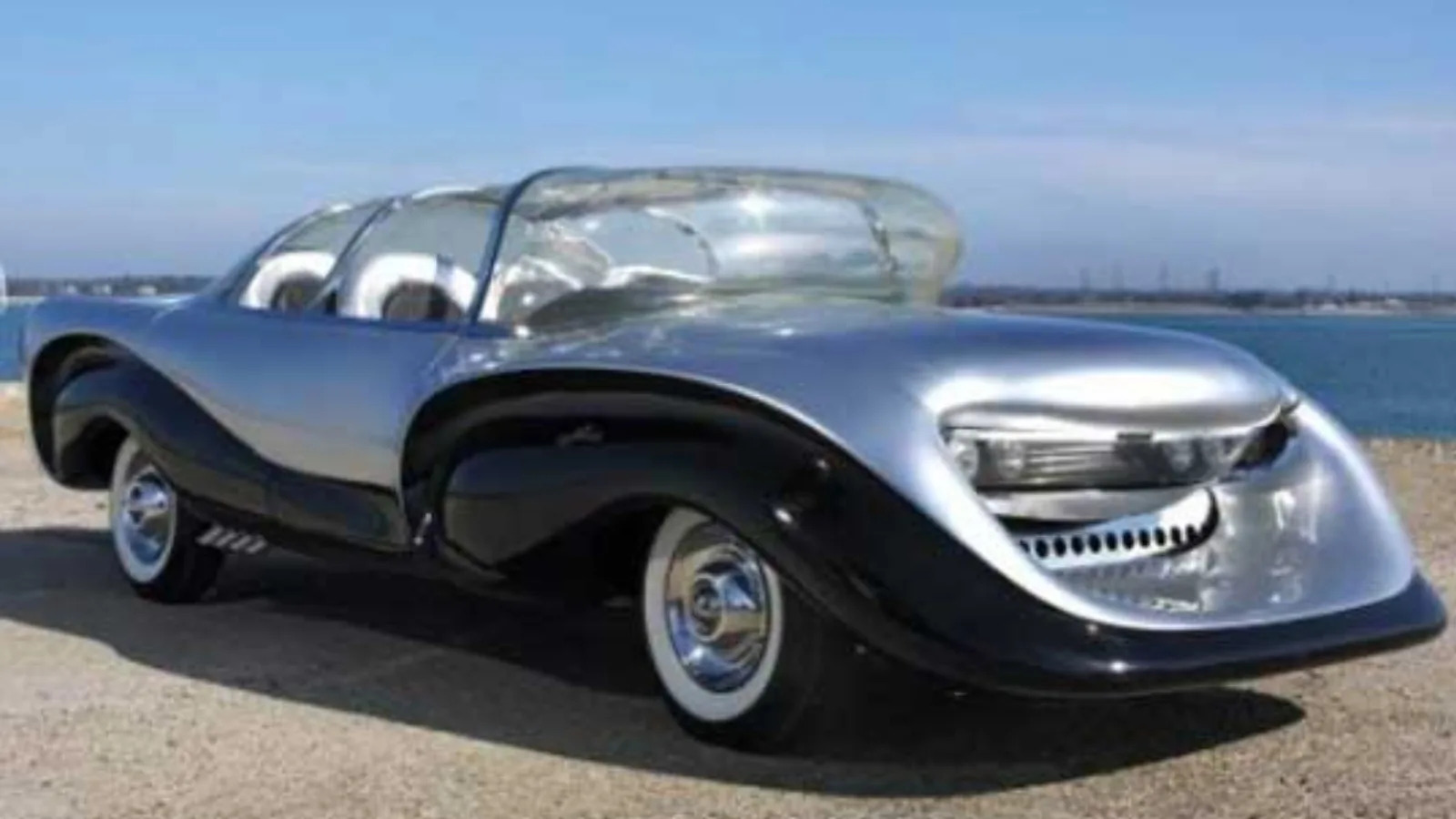
The story of the Aurora, a strikingly unusual automobile conceived by a Catholic priest in the late 1950s, is a fascinating blend of safety innovation, ambitious design, and financial hardship. Often dubbed “the ugliest car ever built,” this one-of-a-kind prototype spent decades abandoned on a Connecticut farm before being rediscovered and painstakingly restored by a devoted enthusiast. The Aurora represents a pivotal, if largely forgotten, moment in automotive safety history, predating official Experimental Safety Vehicle (ESV) programs and showcasing a forward-thinking approach to vehicle design.
Father Alfred A. Juliano, a man with a background in art and a lifelong passion for automobiles, envisioned a vehicle that prioritized passenger safety above all else. His creation, built between 1957 and 1958, wasn’t simply a cosmetic exercise. it incorporated a range of innovative features intended to mitigate the risks of highway travel. The Aurora’s story is a testament to one man’s dedication to improving automotive safety, even in the face of significant obstacles. The vehicle’s unusual appearance, however, proved to be a major hurdle in attracting investment and ultimately led to its demise as a commercial venture.
The Aurora was constructed on a Buick chassis, with the option of being powered by engines from Chrysler, Cadillac, or Lincoln. Its most distinctive feature was a fiberglass body, chosen for its corrosion resistance and dent-proof qualities, and a panoramic “astrodome” roof offering a 360-degree view. But beyond aesthetics, the car was packed with safety features that were remarkably ahead of their time. According to the New York Times, the Aurora included a built-in roll cage, seat belts, a padded instrument panel, a collapsible steering wheel, and side-impact bars. It even featured hydraulic jacks for straightforward tire changes and a unique front-end “cow catcher” designed to minimize pedestrian injuries. The estimated retail price of $12,000 in 1957 would have placed it just below the top-of-the-line Cadillac Eldorado Brougham, which cost $13,000.
A Priest’s Vision for Automotive Safety
Father Juliano’s interest in automotive design stemmed from a scholarship he’d reportedly won from General Motors to study with Harley Earl, a renowned automotive designer, before entering the priesthood. Although he pursued his religious calling, his passion for cars never waned. He believed that significant improvements could be made to existing automobiles to enhance safety, and the Aurora was his attempt to translate that belief into reality. The Aurora Motor Company, partially funded by his congregation in Branford, Connecticut, was established to bring his vision to life. However, the project proved to be far more expensive than initially anticipated, and the car failed to gain traction with potential buyers.
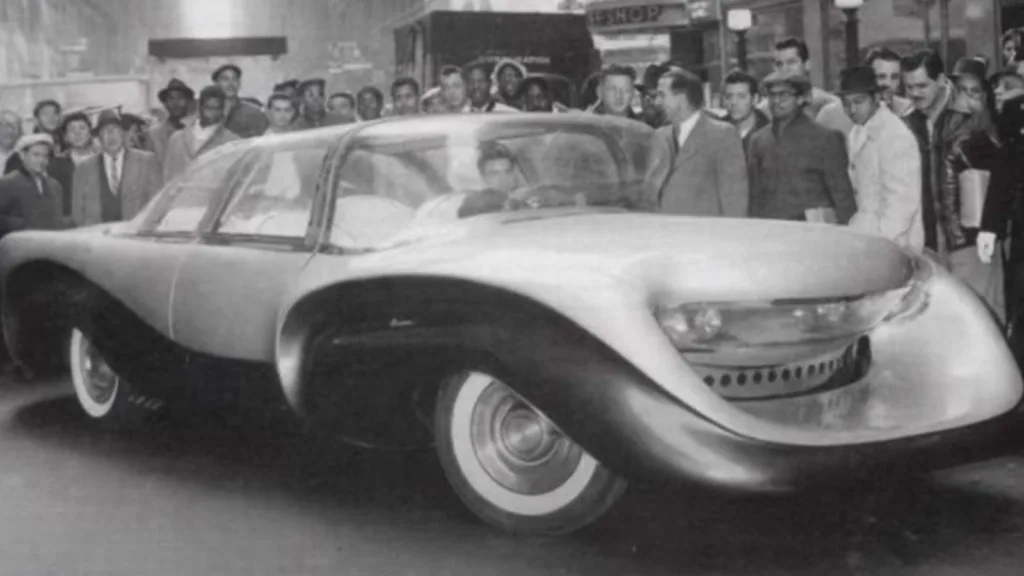
The construction of the Aurora was a labor-intensive process, taking three years to complete after two years of design work. The fiberglass body, built over a plywood superstructure, was lauded for its high quality and craftsmanship. As detailed in a report by the New England Auto Museum, the Aurora prototype was unveiled in Manhattan in November 1957, but the journey wasn’t without its challenges. The Buick engine hadn’t been started in four years, and the car broke down multiple times during the trip, raising questions about the company’s financial stability.
From Prototype to Abandonment
Financial difficulties ultimately led to the demise of the Aurora Motor Company. Father Juliano found himself burdened with debt as the car failed to attract investors. He reportedly used the Aurora itself as collateral to secure loans, but was unable to repay them. The vehicle was eventually repossessed and left abandoned at a Connecticut repair shop, where it languished for decades, slowly deteriorating in the elements. The dream of a safer automobile, born from a priest’s ingenuity, seemed destined to remain just that – a dream.
Rediscovery and Restoration
The Aurora’s story took an unexpected turn in 1993 when Andy Saunders, a British car enthusiast, stumbled upon the forgotten prototype. Saunders, captivated by the car’s unique design despite its dilapidated condition, had been searching for the Aurora for years after seeing a picture in a book. He tracked down the repair shop in Connecticut and purchased the vehicle for $1,500, plus an additional $2,000 for shipping to England. As reported by the New York Times, Saunders described the car as “ugly, but… I had to own it.”
The restoration process was a monumental undertaking, taking eleven years to complete. Much of the fiberglass body had deteriorated, requiring Saunders to painstakingly reconstruct it using original parts and new materials. The project demanded significant skill and dedication, but Saunders was determined to bring Father Juliano’s vision back to life. The YouTube video documenting the restoration process provides a detailed look at the challenges and triumphs of this remarkable endeavor.
A Legacy of Safety Innovation
By 2004, the restored Aurora was unveiled to the world, garnering significant attention at the Goodwood Festival of Speed. The car received extensive media coverage, including a feature in the New York Times and articles in numerous automotive publications. The Aurora, once dismissed as an unsightly failure, was now celebrated as a pioneering example of automotive safety engineering. It stands as a unique artifact in automotive history, representing a bold attempt to prioritize safety long before it became a mainstream concern. The Aurora’s story serves as a reminder that even seemingly outlandish ideas can contribute to progress and innovation.
Today, the Aurora remains a testament to Father Juliano’s vision and Andy Saunders’ dedication. It’s a tangible link to a time when automotive safety was just beginning to gain prominence, and a reminder that the pursuit of safer vehicles is an ongoing process. The Aurora, despite its unconventional appearance, is arguably the first Experimental Safety Vehicle ever made, paving the way for future advancements in automotive safety technology.
As of February 2026, the Aurora continues to be showcased at automotive events and remains a captivating subject for enthusiasts and historians alike. Further information about the car’s history and restoration can be found through various automotive enthusiast communities and online resources. We encourage readers to share their thoughts and experiences with this remarkable vehicle in the comments below.
Keep reading