
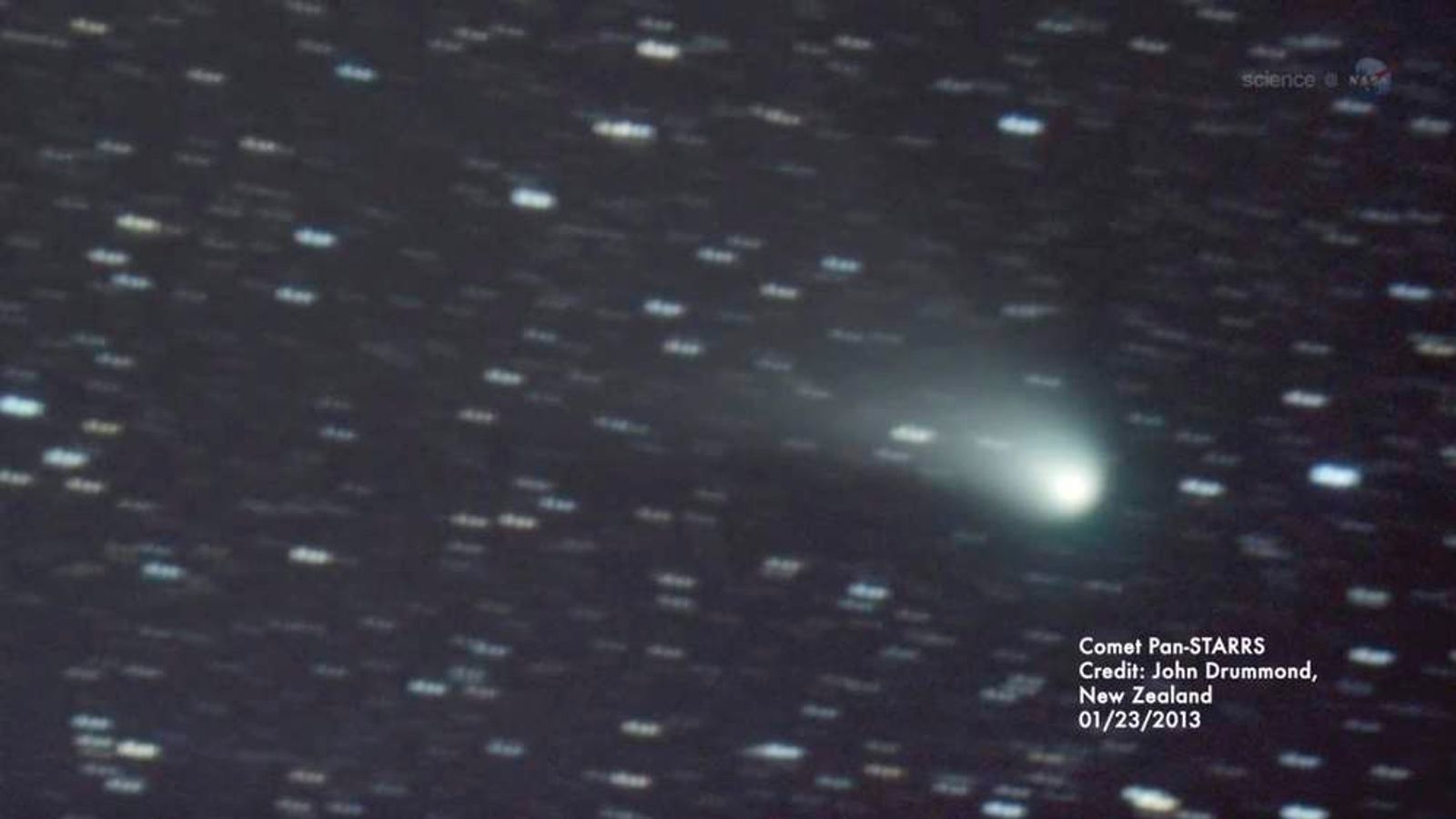
Stargazers and astronomy enthusiasts are turning their eyes toward the night sky this month as the world tracks the Comet C/2025 R3 (PANSTARRS) visibility April 2026. As the celestial object makes its way through our solar system, it has captured the attention of the global community due to its rare trajectory and the potential for it to be seen without the aid of professional equipment.
The comet is currently navigating a path that brings it relatively close to our planet, offering a unique window for observation. While many comets remain faint whispers of light visible only through powerful telescopes, recent reports suggest that C/2025 R3 could potentially be visible to the naked eye, making it a significant event for amateur astronomers and casual observers alike.
As of Monday, April 13, 2026, the comet is positioned in the constellation of Pegasus, situated at a distance of 122,370,770.3 kilometers from Earth, with a current Right Ascension of 23h 22m according to real-time tracking data from TheSkyLive.
Current Trajectory and Orbital Data
Tracking a comet requires precise calculations of its orbit and position relative to Earth. Comet C/2025 R3 (PANSTARRS) has provided a fascinating case study in orbital mechanics as it traverses the constellation of Pegasus. The distance of approximately 122.3 million kilometers places it in a position where its brightness can be closely monitored by both ground-based observatories and space-based instruments via TheSkyLive.
For those attempting to locate the object, the Right Ascension of 23h 22m serves as a critical coordinate for aligning telescopes and binoculars. The comet’s movement through the star field of Pegasus allows observers in various hemispheres to attempt a sighting, provided the weather conditions are clear and light pollution is minimal.
A Rare Celestial Visitor
Beyond the technical coordinates, there is significant intrigue surrounding the origin and cycle of this comet. Various reports have characterized C/2025 R3 as an “ancient comet,” with some claims suggesting that this particular visitor has not appeared in our vicinity for approximately 170,000 years. While such a long orbital period would make it a once-in-a-civilization event, these specific figures regarding the 170,000-year cycle remain reported claims and have not been independently verified by official planetary defense or astronomical agencies in the provided data.
Regardless of the exact length of its orbit, the potential for naked-eye visibility is what drives the current excitement. A comet becomes visible to the unaided eye when its nucleus is sufficiently heated by the sun, causing the release of gases and dust that create a bright coma and a trailing tail. If C/2025 R3 continues to brighten as it approaches its perihelion, it could become one of the most photographed celestial events of the year.
Tips for Observing Comet C/2025 R3
To maximize the chances of spotting the comet, observers should prioritize locations far from urban centers. The constellation of Pegasus is the primary area of interest, and using a star map or a mobile astronomy app can help pinpoint the comet’s specific coordinates relative to the surrounding stars.
While the potential for naked-eye visibility exists, using a pair of binoculars is highly recommended for those who cannot observe the object clearly. Binoculars amplify the light from the comet’s coma, making it easier to distinguish from distant stars and allowing the observer to see the characteristic “fuzzy” appearance of a comet.
Quick Reference: Comet C/2025 R3 Status
| Parameter | Detail |
|---|---|
| Constellation | Pegasus |
| Distance from Earth | 122,370,770.3 km |
| Right Ascension | 23h 22m |
| Visibility Potential | Reported potential for naked-eye observation |
As the comet continues its journey, astronomers will continue to monitor its magnitude—the measure of its brightness. Any sudden increase in activity, such as an “outburst” of gas, could significantly increase its visibility on short notice.
The scientific community continues to track the comet’s path to better understand its composition and the history of the outer solar system from which it arrived. Updates on the comet’s brightness and position are expected as it moves further along its trajectory.
We will continue to monitor official astronomical updates regarding the comet’s brightness and its closest approach to Earth. Stay tuned for further reports on the best viewing windows for your specific region.
Did you manage to spot Comet C/2025 R3 in the night sky? Share your photos and observations in the comments below or join the conversation on our social media channels.