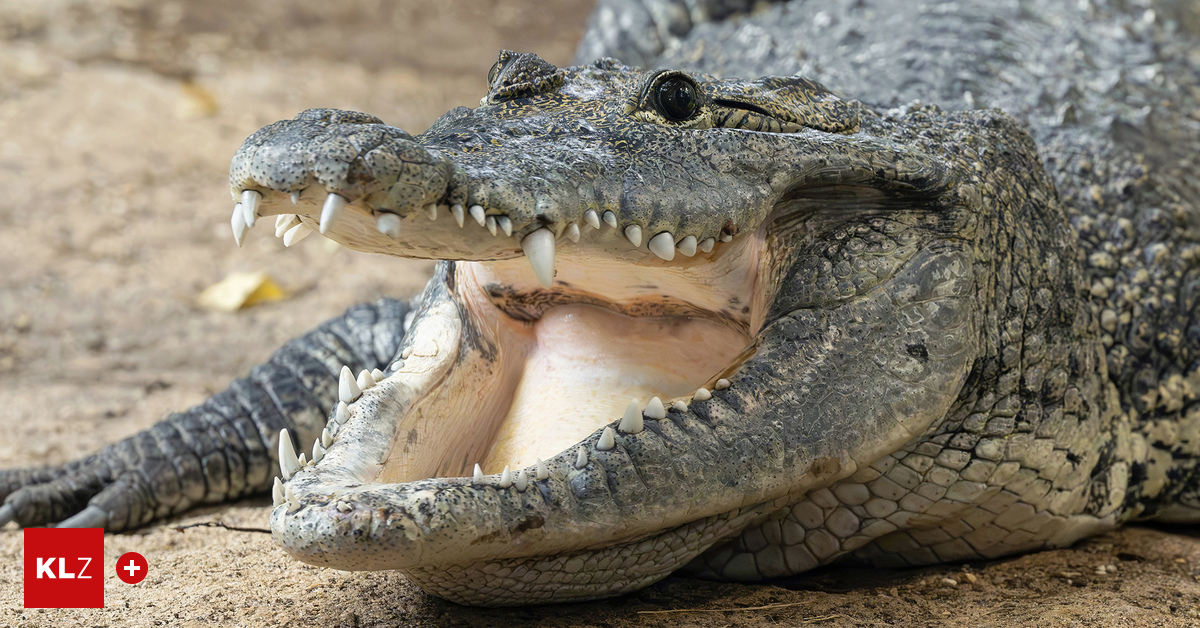
A 30-year-old male Morelet’s crocodile, once the subject of national headlines in Germany, has officially relocated to Vienna. The confiscated crocodile in Tiergarten Schönbrunn has found sanctuary in the zoo’s terrarium house after a decade of unconventional living in a private allotment garden.
The reptile, which measures 2.3 meters in length and possesses nearly 70 sharp teeth, was transferred to the Austrian capital following its seizure by authorities in Thuringia, Germany. According to reports from ORF, the animal had been kept privately in a “Schrebergarten” (allotment garden) for 10 years before officials intervened.
The transition marks a significant change in lifestyle for the crocodile, which is now integrating into the “Krokopavillon” at Tiergarten Schönbrunn. The move was facilitated by the reptile rescue station in Munich, ensuring the animal received professional care during its journey from Germany to Vienna.
From a German Garden to the Vienna Zoo
The crocodile’s path to Vienna began when its previous owners could no longer provide the necessary conditions for its care. Markus Baur, the head of the reptile rescue station in Munich, explained that the animal was confiscated by authorities once the owners were unable to meet the required housing standards. Baur expressed relief that a permanent and professional home was secured for the reptile at Tiergarten Schönbrunn.
The arrival of the male crocodile is particularly timely for the zoo. The facility’s previous male Beulenkrokodil passed away in September of the preceding year, leaving a female without a companion. The new arrival has reportedly established a friendship with the resident female, restoring a breeding pair to the collection.
Genetic Importance and Species Conservation
Beyond the rescue of a single animal, the acquisition is a strategic win for zoological conservation. Tiergarten Director Stephan Hering-Hagenbeck noted that Morelet’s crocodiles are rare in zoological gardens. Due to the fact that of this rarity, the new pair is considered “genetically especially valuable” for the continued survival of the zoo population.
The history of the species highlights the volatility of wildlife conservation. Historically, Morelet’s crocodiles—native to Belize, Guatemala, and southern Mexico—were hunted nearly to extinction approximately 40 years ago due to the demand for their leather. However, targeted breeding and reintroduction efforts by institutions such as the Zoo Atlanta helped stabilize the population. Hering-Hagenbeck stated that the species is no longer classified as endangered.
Quick Facts: The New Schönbrunn Resident
| Attribute | Detail |
|---|---|
| Age | 30 years |
| Length | 2.3 meters |
| Physical Feature | Nearly 70 sharp teeth |
| Previous Location | Allotment garden in Thuringia, Germany |
| Current Habitat | Terrarienhaus (Krokopavillon), Vienna |
What This Means for Animal Welfare
The case of the Thuringian crocodile serves as a stark reminder of the complexities surrounding the private ownership of exotic reptiles. The legal seizure of the animal underscores the role of government authorities and specialized rescue stations in ensuring that high-maintenance species are moved from inadequate private settings to professional institutions capable of meeting their biological and environmental needs.

For the global community and zoo visitors, the presence of this pair in Vienna provides an opportunity to observe a species that has made a remarkable recovery from the brink of extinction. The genetic diversity brought by the confiscated male ensures that Tiergarten Schönbrunn can contribute meaningfully to the broader network of zoological reptile management.
The crocodile is now settled in its new environment, where it will receive specialized care and the companionship of its new mate. You’ll see currently no further scheduled official updates regarding the pair’s integration, but their presence remains a key highlight of the zoo’s reptile house.
Do you have thoughts on the rescue of exotic animals from private care? Share your comments below or share this story with your network.
Related reading