
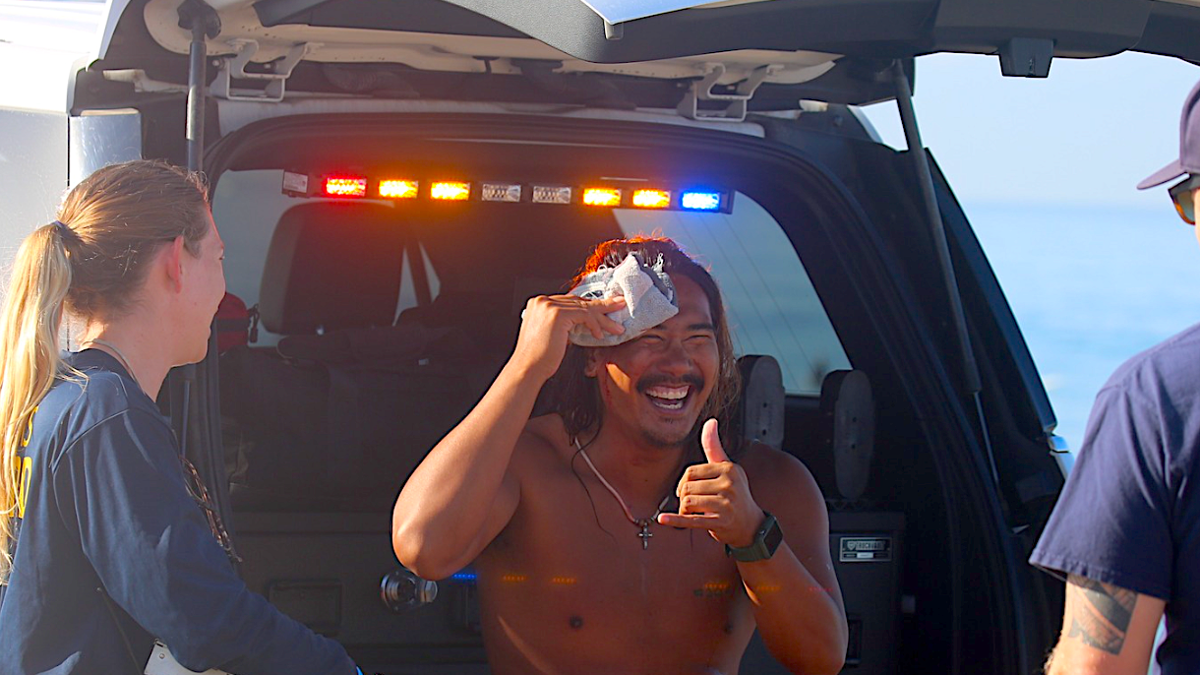
Surfers are accustomed to sharing the ocean with a variety of marine wildlife, from dolphins and seals to the more daunting possibility of sharks. Although, a recent and highly unusual encounter at Bolsa Chica State Beach in Huntington Beach, California, has shifted the focus from the depths of the ocean to the sky.
A surfer, identified only as Justin, was targeted by a group of pelicans while waiting in the lineup. The encounter, described as an attack by “marauding” birds, is a stark departure from the typical behavior of these coastal birds, which usually coexist peacefully with beachgoers and athletes.
According to reports, the incident left the surfer with minor injuries. He was treated on-site by lifeguards, with images showing him recovering with an icepack on his forehead. Despite the shock of the event, Justin was seen smiling in photos following the encounter, suggesting that while the experience was harrowing, the physical damage was limited.
The Anatomy of a Rare Pelican Attack
The incident was documented by surf photographer Dave Gibbs, who captured images of the birds flocking around the lineup. In some instances, the pelicans were so aggressive that they interfered with other surfers as they rode waves. Gibbs captioned the images by noting that the birds were “all over” the surfer, describing the sensation as if he were “a big fish.”
While pelicans are a common sight in Southern California waters, attacks on humans are considered extremely rare. Experts suggest that such behavior is typically not predatory in nature but is instead triggered by specific environmental stressors. Common catalysts for avian aggression include extreme hunger or the birds feeling threatened in their immediate space.
In this specific case, the birds were competing for fish or perceived the surfer as a threat to their foraging grounds. The brown pelican typically hunts by diving from heights of up to 60 feet, plunging headfirst into the water to catch fish in its pouch as reported by Surfer.
Understanding Avian Behavior in Huntington Beach
The Bolsa Chica area is a known hub for wildlife, including the Bolsa Chica Ecological Reserve. While the recent attack is an anomaly, the region has seen various wildlife-related activities. For instance, officials at the reserve have previously noted spikes in rattlesnake sightings during certain periods according to manager Melissa Borde.
The unpredictability of wildlife in these coastal zones often stems from the intersection of human recreational areas and critical animal habitats. When animals feel cornered or are desperate for food, their natural caution can be replaced by aggression. In the case of the pelicans at Bolsa Chica, the proximity of the birds to the surfing lineup created a high-tension environment where a simple misunderstanding of movement could lead to a strike.
Key Factors in Wildlife Encounters
- Foraging Competition: Birds may attack if they believe a human is interfering with a concentrated school of fish.
- Territorial Defense: Pelicans may act defensively if they feel their personal space or nesting areas are being encroached upon.
- Environmental Stress: Hunger or habitat disruption can lead to erratic behavior in normally docile species.
Safety and Precautions for Surfers
For those frequenting the waters of Huntington Beach and beyond, this incident serves as a reminder that awareness of the surrounding environment extends beyond the water’s surface. While the risk of a pelican attack is statistically negligible, the impact can be sudden and disorienting.
Surfers are encouraged to maintain a respectful distance from wildlife and avoid sudden, erratic movements that could be interpreted as a threat by birds or other animals. If birds begin to flock aggressively around a lineup, it may be prudent to move locations or exit the water until the birds disperse.
The immediate response of the Bolsa Chica lifeguards ensured that Justin received the necessary care to manage his injuries. The use of cold compresses and immediate assessment is the standard protocol for minor wildlife strikes to reduce swelling and prevent infection.
As of now, there are no official advisories restricting surfing at Bolsa Chica State Beach due to this incident, as the attack is viewed as an isolated event rather than a systemic threat to public safety.
We encourage our readers to share their experiences with marine wildlife in the comments below. Have you ever encountered unexpected animal behavior while surfing or swimming? Let us know in the comments and share this story with your fellow ocean enthusiasts.