
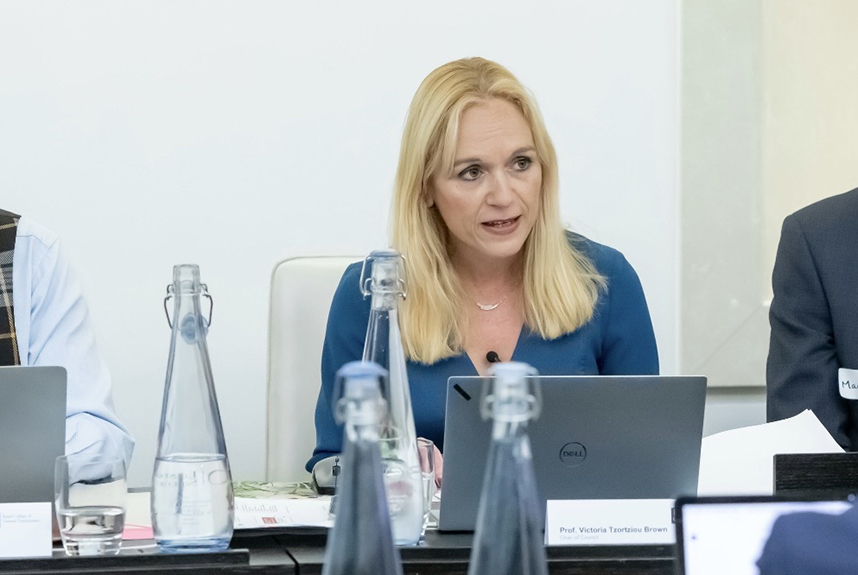
The Royal College of General Practitioners (RCGP) has issued a formal warning to policymakers, stating that upcoming Health Bill legislation must explicitly define how funding will transition from hospital-based settings to community-led “neighbourhood” services. The professional body argues that without a clear mechanism to ensure that financial resources follow the actual delivery of care, the ambitious shift toward neighbourhood-based NHS reforms risks becoming an unfunded mandate that places unsustainable pressure on primary care providers.
As the National Health Service (NHS) undergoes a structural evolution toward integrated care, the core of the debate lies in the movement of resources. While the strategic intent of recent reforms is to move care closer to home—reducing the reliance on acute hospital settings and focusing on preventative, community-based interventions—the RCGP contends that the current legislative framework lacks the granular detail required to facilitate this shift. The concern is that while “work” may move to the neighbourhood level, the “wealth” remains tethered to traditional hospital-centric models.
This warning comes at a critical juncture for UK healthcare policy. As the government seeks to address long-standing issues of elective backlogs and emergency department pressures, the “neighbourhood” model is being proposed as a primary solution. However, medical leaders are making it clear: a change in geography for healthcare delivery cannot succeed without a corresponding change in the financial architecture that supports it.
The Financial Disconnect: Policy Intent vs. Resource Allocation
The central tension identified by the RCGP is the gap between high-level policy objectives and the practicalities of budget management. Under the current framework of Integrated Care Systems (ICSs), local authorities and NHS bodies are tasked with managing health and care needs across broader populations. While the goal is to integrate services, the RCGP warns that the financial mechanisms used by NHS England and local Integrated Care Boards (ICBs) must be redesigned to allow for fluid movement of funds.

Currently, much of the NHS budget is historically allocated to acute trusts—the institutions that run hospitals. When a patient’s care is successfully diverted from a hospital to a community clinic or a GP surgery, the “savings” are often realized by the hospital, but the “cost” of providing that community care is borne by primary care networks and local services. Without a legislative mandate that ensures the money follows the patient and the service, community providers may find themselves performing more complex work with stagnant or diminishing budgets.
The RCGP argues that the Health Bill must provide a roadmap for this transition. This includes defining how “neighbourhood” budgets are calculated and how they can be accessed by non-hospital providers to manage chronic conditions, mental health, and social care integration. Without this clarity, the RCGP fears that the shift to neighbourhood care will be a “hollow reform”—one that changes the vocabulary of the NHS without changing its capacity to deliver.
Understanding the “Neighbourhood” Model
To understand why this funding debate is so vital, one must look at what the “neighbourhood” model actually entails. In the context of recent NHS restructuring, a neighbourhood is the smallest unit of integrated care. It’s designed to bring together GPs, district nurses, mental health teams, social workers, and community pharmacists to work as a single, cohesive unit.
The logic behind this model is three-fold:
- Prevention: By managing health within the community, clinicians can intervene earlier, preventing minor issues from escalating into acute emergencies that require hospital admission.
- Personalization: Care is delivered in a context that understands the local demographics, social determinants of health, and specific community needs.
- Efficiency: Reducing the “revolving door” of hospital admissions by providing robust support for patients once they are discharged back into their communities.
However, as medical experts have noted, all three of these pillars require significant upfront investment. Building a “neighbourhood” team requires more than just a change in organizational charts; it requires physical infrastructure, digital integration between different providers, and, most importantly, a stable and predictable stream of funding that is not dependent on the leftovers of hospital budgets.
The Risk of “Unfunded Mandates” in Primary Care
One of the most significant risks highlighted by the RCGP is the creation of “unfunded mandates.” In public policy, an unfunded mandate occurs when a government requires a specific action or service to be provided but fails to provide the necessary resources to implement it. For general practitioners and community health teams, the “mandate” is to take on more complex, multi-morbid patients to ease the pressure on hospitals.
If the Health Bill does not codify the movement of funds, primary care becomes the “catch-all” for any patient who cannot be accommodated in a hospital. This could lead to several systemic failures:
1. Workforce Burnout: General practitioners are already reporting high levels of burnout. Expecting them to absorb more complex care without additional staffing or resource support could accelerate the exodus of clinicians from the profession.
2. Decreased Quality of Care: When resources are stretched too thin, the ability to provide thorough, preventative care diminishes, potentially leading to poorer long-term health outcomes for the population.
3. Widening Health Inequalities: Neighbourhoods in more deprived areas often require more intensive community support. If funding is not explicitly directed to where the work is being done, these areas will struggle to build the very community services intended to reduce inequality.
The Role of Integrated Care Boards (ICBs)
A key component of the debate involves the role of Integrated Care Boards (ICBs). These bodies are responsible for planning and commissioning health services in each area of England. The RCGP’s warning implies that the Health Bill must provide ICBs with clear, legally binding instructions on how to redistribute funds to support the neighbourhood shift.

There is a concern that ICBs may naturally gravitate toward funding “safe” and established hospital services rather than investing in the “innovative” and sometimes harder-to-measure community services. Legislative clarity is needed to ensure that the mandate for neighbourhood-based care is backed by a mandate for financial redistribution.
Key Takeaways: The RCGP’s Position
- Legislative Clarity Needed: The Health Bill must explicitly state how funding will move from hospitals to community services.
- Avoid Unfunded Mandates: Primary care cannot absorb the workload of the neighbourhood shift without a corresponding increase in resources.
- Structural Financial Reform: Funding models must move away from hospital-centricity to support integrated, neighbourhood-level delivery.
- Protecting Patient Outcomes: Proper funding is essential to ensure that “preventative care” remains a reality rather than a theoretical concept.
What Happens Next?
The implications of the RCGP’s warning are significant for both clinicians, and patients. For patients, the success of the neighbourhood model means more accessible, localized care. For clinicians, it means the difference between a sustainable working environment and a system in perpetual crisis.
As the Health Bill moves through the legislative process, stakeholders will be watching closely to see if the government addresses these financial concerns. The focus will likely remain on how the “Global Sum” for primary care is adjusted and how Integrated Care Boards are empowered—and required—to invest in the community.
Next Official Update: Further details regarding the specific clauses of the Health Bill and the government’s response to the RCGP’s recommendations are expected during the upcoming parliamentary sessions. We will continue to monitor official UK Parliament filings and RCGP statements for updates on these legislative developments.
What do you think about the shift toward neighbourhood-based care? Is the NHS focusing enough on community resources? Share your thoughts in the comments below and share this article with your professional network.