
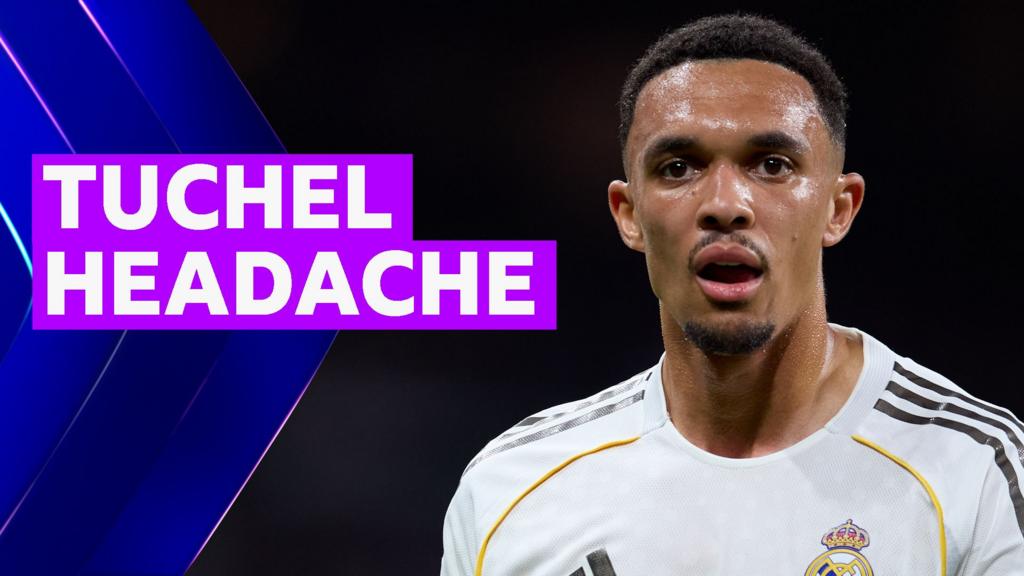
The debate surrounding Trent Alexander-Arnold’s role and consistency continues to ignite passionate discussions among football analysts. Following a high-stakes Champions League quarter-final first leg between Real Madrid and Bayern Munich, former player and pundit Stephen Warnock offered a strong endorsement of the defender, suggesting he would be taking him to the World Cup based on his performance.
The clash between the Spanish giants and the German powerhouse served as a focal point for examining how Alexander-Arnold handles the pressures of elite European football. Even as his technical ability and delivery from the flank remain undisputed, his overall impact in these marquee fixtures often becomes a polarizing topic for those watching from the studio.
This particular encounter highlighted the duality of Alexander-Arnold’s game. As pundits Rory Smith and Stephen Warnock analyzed the match, the conversation shifted toward whether the player’s offensive contributions outweigh the risks he occasionally presents in defensive transitions.
Analyzing the Impact of Alexander-Arnold and Harry Kane
The Champions League quarter-final first leg was not just a test of tactics, but a showcase of individual quality. Along with Alexander-Arnold, the influence of Harry Kane was a primary subject of analysis. Kane’s presence provided Bayern Munich with a significant edge over Real Madrid, acting as a constant threat that forced the Madrid defense to remain vigilant.
For Alexander-Arnold, the match was a display of what pundits describe as his best and worst attributes. His ability to carve open defenses with precision passing remains a world-class trait, yet the volatility of his defensive positioning often leaves him open to criticism. This dichotomy is central to the ongoing debate about his suitability for the highest level of international competition.
While Warnock’s praise focused on the positives, other voices in the game have been less forgiving. The scrutiny following the Bayern Munich performance extended beyond the immediate tactical analysis, with some observers questioning the maturity of certain plays during the match.
Contrasting Perspectives: Warnock vs. Keane
The divide in opinion regarding Alexander-Arnold’s performance is best illustrated by the contrast between Stephen Warnock and Roy Keane. While Warnock was emphatic in his support, stating he would include the player in a World Cup squad, Roy Keane took a significantly sharper tone. Roy Keane criticized a Real Madrid star for a performance against Bayern Munich, describing certain actions as “childish.”
This clash of opinions reflects the wider discourse surrounding Alexander-Arnold. To some, he is a revolutionary talent whose offensive output redefines the role of a full-back. To others, the defensive lapses are too costly to ignore in a tournament setting where one mistake can lead to elimination.
The “childish” label used by Keane suggests a frustration with a perceived lack of discipline or tactical maturity, contrasting sharply with Warnock’s view that the player’s ceiling and impact are indispensable for a national team setup.
The Perpetual Debate of the Modern Full-Back
Alexander-Arnold represents the evolution of the modern defender, often operating more as a playmaker than a traditional right-back. This shift in role is why he remains a player who, as noted in some analyses, may never change the minds of his critics. The tension between his creative brilliance and his defensive vulnerabilities is a constant theme in his career.

In the context of the Champions League, where the margins are razor-thin, these attributes are magnified. When Alexander-Arnold succeeds, he dictates the tempo of the game and creates scoring opportunities from deep. When he struggles, the gap he leaves behind becomes a primary target for opposing attackers.
The consensus among pundits like Smith and Warnock suggests that while the “worst” parts of his game are visible, the “best” parts are so rare and valuable that they justify the risk. This is the core of Warnock’s argument for his World Cup inclusion: the belief that his ability to unlock a defense is a tool that no other player can provide with the same efficiency.
Key Takeaways from the Analysis
- High Praise: Stephen Warnock believes Alexander-Arnold’s quality justifies a place in a World Cup squad.
- Critical View: Roy Keane labeled certain performances in the match as “childish,” highlighting a gap in perceived maturity.
- Tactical Influence: Harry Kane was noted as a decisive factor giving Bayern Munich an edge over Real Madrid.
- The Duality: Analysts agree that Alexander-Arnold continues to display both the highest peaks and notable lows in the same match.
As the competition progresses and international windows approach, the scrutiny on Alexander-Arnold’s defensive reliability will likely persist. However, his ability to influence the biggest games in club football ensures he remains at the center of the conversation.
With the second leg of the quarter-finals and subsequent tournament stages approaching, the football world will be watching to see if Alexander-Arnold can silence the critics or if the “childish” errors highlighted by Keane will continue to shadow his brilliance.
We invite our readers to share their thoughts in the comments below: Does Alexander-Arnold’s offensive genius outweigh his defensive risks for a World Cup squad?