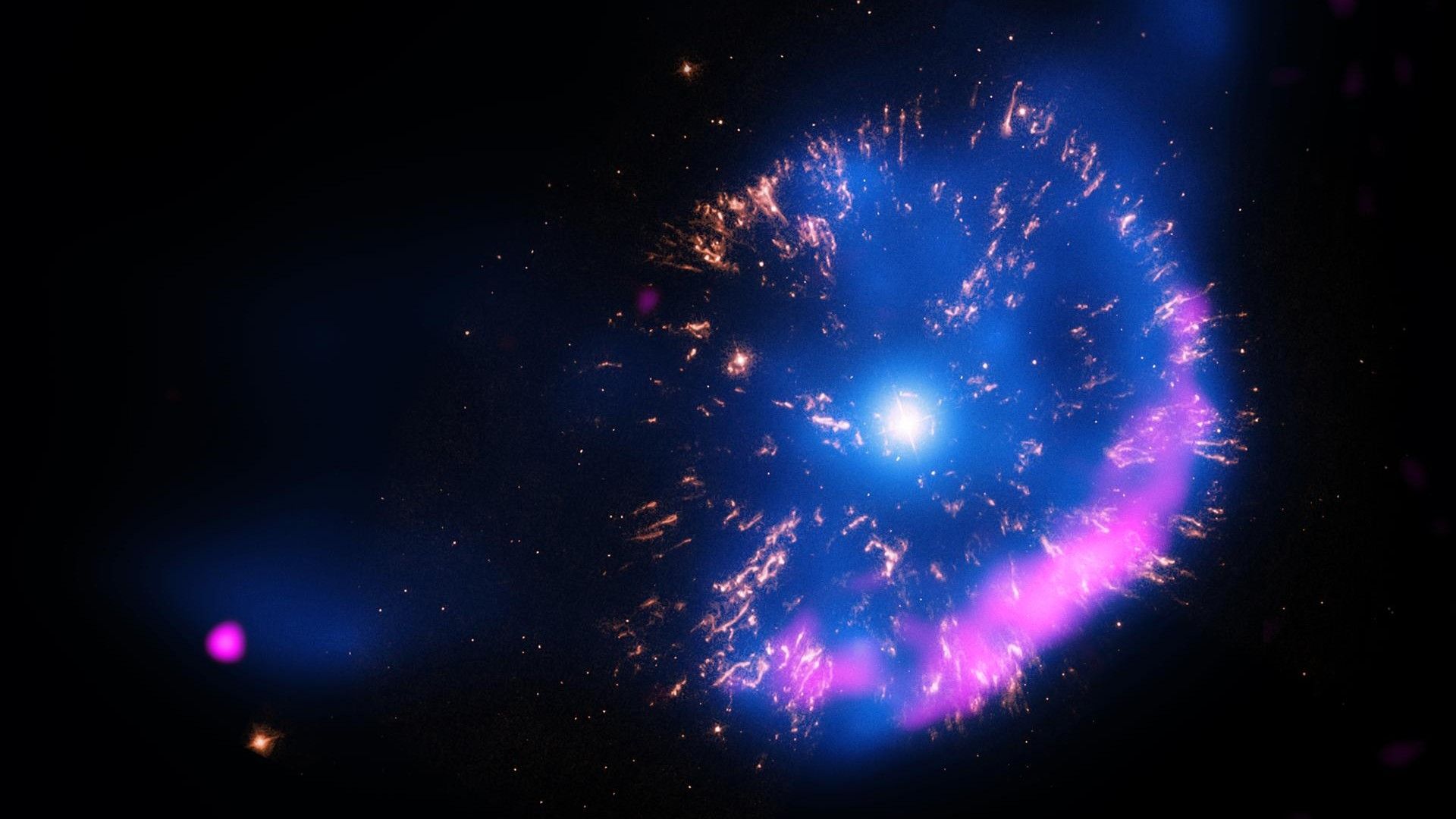
A Stellar collision in the Making: Witnessing the Dramatic Finale of V Saggitae
For those captivated by the cosmos, a unique celestial event is unfolding in the constellation Sagitta.A binary star system named V Saggitae is rapidly evolving toward a spectacular, and possibly daytime-visible, supernova. This isn’t a distant,theoretical possibility; astronomers believe this dramatic finale could occur within our lifetimes.
Understanding V Saggitae: A System on the Brink
V Saggitae consists of a white dwarf and a red giant locked in a spiraling embrace. The white dwarf, a dense stellar remnant, is relentlessly siphoning material from its larger companion. This process, known as accretion, isn’t gentle.
As the white dwarf accumulates mass, it becomes increasingly unstable. This instability has already resulted in significant material escaping the system, forming a glowing ring of gas – a “circumbinary disk” – around both stars. This disk currently spans two to four times the distance separating the stars themselves.
The Imminent Nova: A Brilliant Prelude
V Saggitae’s erratic behavior and intense brightness are key indicators of its impending doom. Before the supernova, however, you can expect a dazzling precursor: a nova explosion.
Novae occur when a white dwarf accumulates too much material, triggering a runaway thermonuclear reaction on its surface. These explosions are incredibly luminous, shining hundreds of thousands of times brighter than our sun. Fortunately, novae aren’t destructive events; the white dwarf survives and the process can repeat over millennia.
The Grand Finale: A Daytime Supernova
But the nova is merely a prelude. Ultimately, the two stars will spiral inward and collide in a cataclysmic event. This collision will trigger a supernova explosion so powerful it will be visible from Earth,even during daylight hours.
This is a rare opportunity for astronomers and stargazers alike. The potential for observing a supernova bright enough to see in the daytime is exceptionally exciting.
When Can You Expect to See It?
Predictions suggest this spectacular event could happen as early as 2067. A 2020 study from Louisiana State University, based on the decreasing orbital period of the stars, arrived at this timeframe. Though, as one researcher notes, “stellar evolution is hard to predict exactly, so that might easily change!”
here’s a quick breakdown of what to anticipate:
* Near Term: A nova explosion, a brilliant but non-destructive event.
* Around 2067 (potentially later): A supernova explosion,visible even in daylight.
* Location: The constellation Sagitta – a small but noticeable constellation often referred to as “The Arrow.”
Preparing to Witness History
Keep your gaze directed toward Sagitta.This unique star system is offering us a front-row seat to a cosmic drama unfolding over decades. Mark your calendars and prepare to witness the spectacular end of V Saggitae – a truly unforgettable celestial event.