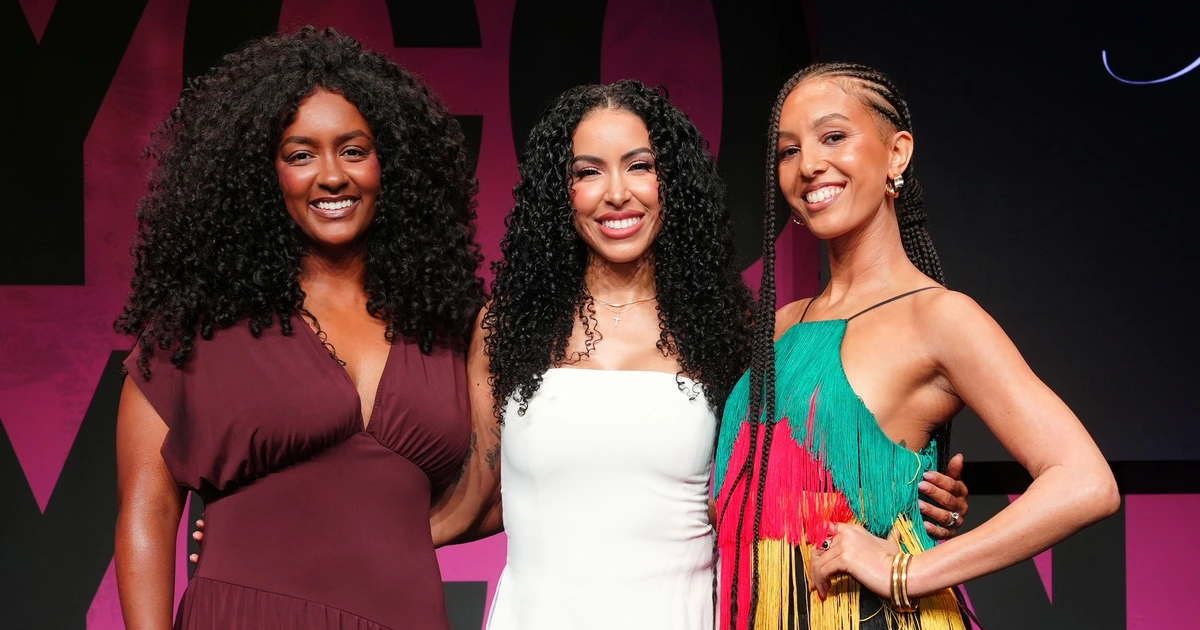
At this year’s ESSENCE Festival, the “Between Us Curls” panel served as a platform for Black women to discuss the intersection of personal identity and hair care. Panelists Ava Pearl and Hermela Lamps, joined by moderator and ESSENCE Senior Beauty Editor Akili King, explored how cultural expectations, motherhood, and the beauty industry have shaped their personal journeys with natural hair. The discussion highlighted a shift toward prioritizing hair health and individual autonomy over rigid societal standards.
For many, the conversation surrounding Black hair is inherently political and deeply personal. During the live taping of the Between Us Curls podcast, Ava Pearl noted the lack of representation she experienced during her formative years. “We all kind of share the same story,” Pearl said, emphasizing the collective nature of the struggle to find acceptance for natural textures in mainstream spaces. The discussion underscored that for many, hair is not merely an aesthetic choice but a fundamental component of identity.
The Evolution of Natural Hair Care
The transition from societal pressure to self-acceptance is a recurring theme for many within the Black community. Hermela Lamps, a content creator, shared her experience growing up in environments where natural hair was often sidelined in favor of other styles. She pointed specifically to the influence of cultural norms, such as the prevalence of silk presses within the Ethiopian community, which often discouraged the embrace of natural textures.

“I come from Ethiopian roots where a lot of women didn’t embrace their natural hair,” Lamps stated. Her approach to hair has since shifted toward prioritizing the specific needs of her hair in the current chapter of her life. This sentiment aligns with a broader movement in the beauty industry that emphasizes hair health—including managing damage and considering the “big chop”—as a form of self-care rather than a chore.
Pearl, who founded the Between Us Curls podcast and the CurlyCon event, noted that the industry is finally beginning to prioritize spaces where Black women feel seen and understood. “Doing my hair isn’t something that’s a task,” Pearl said, highlighting a change in perspective that views hair maintenance as an act of self-identity rather than an obligation.
Motherhood and Hair Maintenance
The panel also addressed the practical challenges of balancing hair care with the demands of new motherhood. Both Pearl and Lamps, who are both mothers, discussed how their routines have adapted to accommodate their changing lifestyles. Lamps admitted that the early stages of motherhood were challenging, leading her to rely more heavily on protective styles to maintain her hair while managing the responsibilities of a new parent.

For Pearl, the experience of motherhood provided a new perspective on time management and self-care. Balancing these responsibilities with her eight-month-old child, she reiterated that hair remains a core part of her identity. The panelists agreed that as life stages shift, so too does the relationship with one’s hair. Lamps encouraged the audience to embrace this fluidity, stating, “You have the permission to wear your hair in whatever form that may be. Just show up and take care of yourself.”
The Broader Impact of Representation
The discussion at the ESSENCE Festival highlights a growing demand for nuanced conversations about Black hair. By centering the experiences of women who have navigated different cultural expectations, the Between Us Curls panel provided a space to validate the diverse ways Black women choose to present themselves. The emphasis on “doing what’s right for your hair” suggests a move away from monolithic standards of beauty toward a more individualized approach to grooming and self-expression.

As the beauty industry continues to evolve, the demand for authentic representation and accessible information regarding natural hair care remains a priority for consumers. The conversations held at events like the ESSENCE Festival indicate that while progress has been made in terms of visibility, the focus is increasingly shifting toward the internal experience of the individual—moving beyond the external pressure of how hair “should” look toward how it makes the person feel.
For those interested in following the ongoing dialogue, the Between Us Curls podcast continues to document these stories, providing a digital space for community and shared experience. As the conversation matures, it is likely that future discussions will continue to explore the intersection of health, identity, and the evolving standards of beauty in the modern era.
What has been your experience in finding a hair routine that works for your lifestyle? Share your thoughts in the comments section below.