
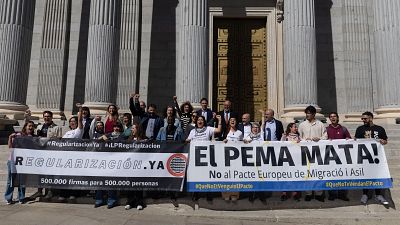
Spain’s immigration regularization program has surpassed 900,000 applications, marking the largest effort of its kind in the country’s history, according to government data and reports from regional authorities. The program, launched in late 2023, offers undocumented migrants a path to legal status under strict eligibility criteria, including proof of residency and employment. With just weeks remaining before the June 30 deadline, officials in regions like Andalusia are reporting record demand at post offices and community centers.
The surge in applications reflects both the urgency of the situation for migrants and the Spanish government’s push to address a backlog of irregular statuses. According to the Spanish Ministry of Interior, the program has already processed more than double the applications received in previous regularization drives. Meanwhile, regional governments, including Andalusia and Catalonia, have expanded outreach efforts to ensure migrants—particularly those in vulnerable conditions—meet the June 30 cutoff.
Yet the program’s success is not without challenges. Reports from Galician authorities describe long lines and late-night assistance sessions as officials rush to clarify complex requirements. Meanwhile, advocacy groups warn that some migrants—especially those without stable housing or employment—may still face hurdles in completing their applications before the deadline.
📢 ÚLTIMO DÍA para regularizar tu situación en España. Hasta el 30 de junio puedes presentar tu solicitud en las oficinas de Correos. No dejes pasar esta oportunidad. 💙 #RegularizaciónExtrordinaria #Inmigración
What You Need to Know About Spain’s Record Regularization Drive
- 900,000+ applications submitted since the program launched in late 2023, according to Spanish Interior Ministry data.
- The June 30 deadline is critical—applications submitted after this date will not be processed.
- Eligibility requires proof of residency for at least 2 years and employment or economic activity.
- Regional governments, including Andalusia and Catalonia, are offering extended support hours.
- Advocacy groups report disparities in access, with rural areas and undocumented communities facing higher barriers.
Why This Regularization Program Is a Turning Point for Spain’s Migration Policy
Spain’s extraordinary regularization program is the largest since the 2005 regularization drive, which granted legal status to nearly 800,000 migrants. However, this new initiative differs in scope and urgency. While the 2005 program focused on long-term residents, the current effort targets a more diverse group—including recent arrivals, seasonal workers, and those in precarious conditions.
According to Injuve (Spain’s Youth Institute), the program also aims to integrate younger migrants through targeted workshops. “This is an opportunity of a lifetime for many,” said María Fernández, a social worker in Seville, citing cases where migrants have secured jobs and housing only after gaining legal status.
Yet critics argue the program’s eligibility criteria—particularly the 2-year residency requirement—exclude vulnerable groups, such as unaccompanied minors or victims of trafficking. The UNHCR has urged Spain to expand protections for these populations, noting that many arrived before the residency clock began.
Step-by-Step: How to Apply for Spain’s Immigration Regularization
The process involves three key stages, as outlined by the Spanish Ministry of Interior:
- Gather Documentation:
- Proof of residency (e.g., rental contracts, utility bills) for at least 24 months.
- Employment contract or tax records demonstrating economic activity.
- Valid passport or identity documents (if available).
- Submit Application:
- Applications must be filed in person at Correos offices or authorized centers.
- Deadline: June 30, 2024 (no extensions will be granted).
- Fee: €80 (non-refundable, regardless of approval status).
- Processing and Outcome:
- Decisions are expected within 6–12 months, though backlogs may delay some cases.
- Approved applicants receive a temporary residence permit, renewable after 5 years.
- Rejected applicants can appeal but cannot reapply under this program.
How Different Regions Are Handling the Rush
While the national deadline remains June 30, regional governments have implemented localized measures to accommodate demand:
| Region | Key Initiative | Deadline Extension? | Notable Challenge |
|---|---|---|---|
| Andalusia | Extended post office hours until midnight on weekdays; mobile outreach teams in rural areas. | No (national deadline applies). | High demand in Seville and Málaga, where 30% of applications are concentrated. |
| Catalonia | Free legal clinics for applicants; partnerships with NGOs to assist vulnerable groups. | No. | Language barriers for non-Spanish speakers in Barcelona. |
| Canary Islands | Priority processing for applicants with employment in agriculture or tourism. | No. | Limited post office capacity on Tenerife and Gran Canaria. |
After June 30: The Future of Spain’s Migration Policy
The regularization program’s outcome will shape Spain’s approach to immigration for years to come. Analysts point to three likely scenarios:
- Success and Expansion: If approval rates exceed 70%, the government may introduce annual regularization windows, as proposed by the Spanish Socialist Workers’ Party (PSOE).
- Backlog and Reform: Delays in processing could lead to calls for faster-track systems, particularly for migrants in healthcare or agriculture, sectors facing labor shortages.
- Political Debate: Right-wing parties, including Vox, have criticized the program as “amnesty-like,” potentially influencing future legislation.
The next critical checkpoint is the September 2024 report from the Spanish Parliament’s Immigration Commission, which will assess approval rates, regional disparities, and potential reforms. Meanwhile, the Ministry of Interior has pledged to publish monthly updates on processed applications.
Frequently Asked Questions About Spain’s Regularization Program
Q: Can I apply if I arrived in Spain after January 2022?
A: No. The program requires proof of residency for at least 24 months prior to application, meaning arrivals after January 2022 do not qualify. Full eligibility criteria are available on the Interior Ministry’s website.
Q: What if I don’t have all the documents?
A: Some regional offices, like those in Andalusia, accept alternative evidence, such as employer letters or community vouchers. However, applicants must still prove residency and economic ties.
Q: Will this affect my ability to travel?
A: Approved applicants receive a temporary residence permit, but not an ID card or passport. Travel within the Schengen Zone is permitted, but non-Schengen travel may require additional documentation. Spanish consulates provide guidance on travel documents.
With the June 30 deadline approaching, migrants and advocates urge those eligible to act now. For official updates, visit the Spanish Ministry of Interior or contact regional immigration offices. Share your experiences or questions in the comments below—we’ll connect you with verified resources.