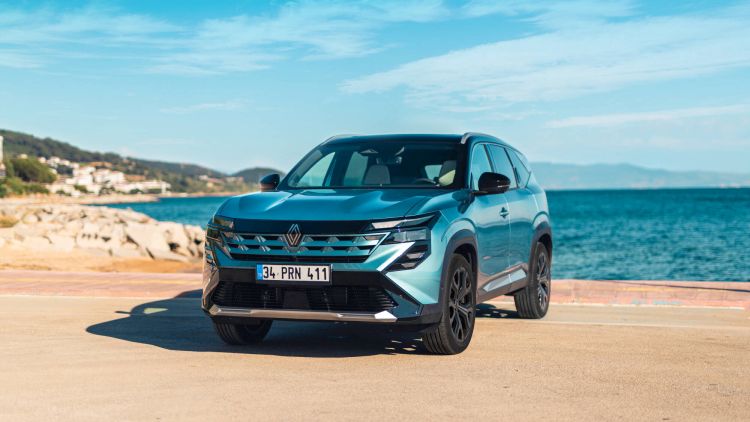
Renault is expanding its production footprint in Turkey with the manufacturing of the Boreal SUV, a strategic move aimed at strengthening the company’s presence in the C-segment SUV market. This production shift leverages Turkey’s established automotive infrastructure to optimize supply chains and meet regional demand for versatile, mid-sized crossovers.
The decision to produce the Renault Boreal in Turkey follows the group’s broader strategy of regionalizing production to mitigate logistics costs and hedge against global supply chain volatility. By utilizing Turkish facilities, Renault aims to maintain competitive pricing while ensuring the Boreal remains a core offering for European and Middle Eastern markets.
Industry data indicates that Turkey has become a critical hub for the Renault-Nissan-Mitsubishi Alliance. The country’s ability to provide high-quality components and a skilled workforce allows the manufacturer to scale the Boreal’s output efficiently, positioning the vehicle as a direct competitor to other popular C-segment SUVs in the region.
Strategic Importance of Turkish Manufacturing for Renault
The manufacturing of the Boreal SUV in Turkey is not an isolated event but part of a long-term industrial commitment. According to official company reports from Renault Group, the company has invested heavily in its Turkish operations to transition toward more sustainable and flexible production lines. This flexibility is essential for the Boreal, which requires a modular assembly process to accommodate various engine specifications and trim levels.

Turkey’s geographical position serves as a bridge between the European Union and emerging markets in Asia and Africa. By producing the Boreal locally, Renault reduces the lead time for deliveries and lowers the carbon footprint associated with transporting finished vehicles from distant plants. This localization strategy is a key pillar of the “Renaulution” strategic plan, which emphasizes efficiency and value over sheer volume.
Furthermore, the Turkish automotive sector provides a robust ecosystem of tier-one and tier-two suppliers. This proximity ensures that the Boreal’s assembly line can maintain a “just-in-time” inventory system, reducing the overhead costs typically associated with long-distance shipping of parts. The integration of local suppliers helps Renault stabilize costs against currency fluctuations that often plague international trade.
Boreal SUV: Market Positioning and Technical Focus
The Renault Boreal enters a crowded C-segment SUV market, where consumers prioritize a blend of urban maneuverability and family-sized utility. The vehicle is designed to offer a balance of fuel efficiency and interior space, targeting young families and urban professionals who require a vehicle capable of both city commuting and long-distance travel.
Technical specifications for the Boreal focus on versatility. While specific powertrain details vary by market, the model emphasizes a range of options including hybridized engines to align with tightening emissions standards in the European Union. The use of a shared platform within the Alliance allows the Boreal to benefit from proven chassis technology, ensuring reliability and reducing development costs.
The SUV’s design follows Renault’s current aesthetic language, characterized by bold grille work and an elevated ride height. This design choice is specifically tailored to appeal to the “lifestyle” buyer—those who value the aesthetic of an off-roader but primarily operate on paved roads. The interior focuses on digital integration, featuring updated infotainment systems and driver-assistance technologies designed to improve safety in dense urban environments.
Impact on the Turkish Automotive Labor Market
The production of the Boreal SUV provides a significant boost to the Turkish industrial workforce. The automotive industry is one of Turkey’s largest export sectors, and the addition of a high-demand model like the Boreal ensures sustained employment levels at assembly plants and within the supporting component industry.

This move encourages the upskilling of the local workforce, as the production of modern SUVs requires expertise in advanced robotics, electronic integration, and quality control systems. The collaboration between Renault and Turkish engineers facilitates a transfer of technology that benefits the broader national industrial base, promoting higher standards of precision engineering.
Economic analysts note that such investments signal confidence in Turkey’s macroeconomic stability regarding industrial production. While the broader economy may face challenges, the automotive sector remains a resilient pillar due to its deep integration into global value chains. The Boreal project reinforces Turkey’s status as a preferred destination for European automotive OEMs (Original Equipment Manufacturers).
Comparative Analysis: Regional Production vs. Importation
When comparing the production of the Boreal in Turkey to importing the model from other global plants, several operational advantages emerge. Importation often involves high tariffs and unpredictable shipping timelines, particularly following the disruptions seen in global maritime logistics over the last three years.
Local production eliminates these barriers, allowing Renault to respond more dynamically to market trends. For example, if demand for a specific color or trim level spikes in a neighboring market, the Turkish plant can adjust its output far more quickly than a plant located in Asia or Western Europe. This agility is a critical competitive advantage in the fast-moving SUV segment.
Additionally, the cost structure of Turkish manufacturing—combining competitive labor costs with high productivity—allows Renault to maintain a healthier margin on the Boreal. This financial headroom can be reinvested into further R&D or used to offer more competitive financing packages to end consumers, effectively increasing the vehicle’s market share.
The shift toward Turkish production also aligns with the “Green Deal” initiatives of the European Union. By shortening the distance between the factory and the final customer, Renault reduces the total lifecycle emissions of the Boreal, a metric that is becoming increasingly important to environmentally conscious buyers and regulatory bodies.
Future Outlook for Renault in Turkey
The Boreal SUV is likely the first of several models that will see increased production volumes in Turkey as Renault transitions its fleet toward electrification. The infrastructure currently being built for the Boreal can be adapted for future electric vehicle (EV) models, ensuring that the Turkish plants do not become obsolete as the industry moves away from internal combustion engines.

Industry observers expect Renault to further integrate smart-factory technologies in its Turkish facilities, including AI-driven quality inspections and automated logistics. This evolution will be necessary to maintain the precision required for the next generation of SUVs and EVs, where electronic complexity is significantly higher than in traditional vehicles.
The success of the Boreal in the Turkish production cycle will serve as a benchmark for future model placements. If the plant achieves the targeted efficiency and quality metrics, it is probable that Renault will allocate more of its global C-segment and D-segment production to the region, further cementing the partnership between the French automaker and the Turkish industrial sector.
The next confirmed milestone for the Boreal’s rollout involves the official release of regional pricing and delivery schedules for the upcoming fiscal quarter. These details will provide a clearer picture of the vehicle’s final market positioning and its projected sales targets for the European and Middle Eastern regions.
We invite readers to share their thoughts on the shift toward regionalized automotive production in the comments section below.