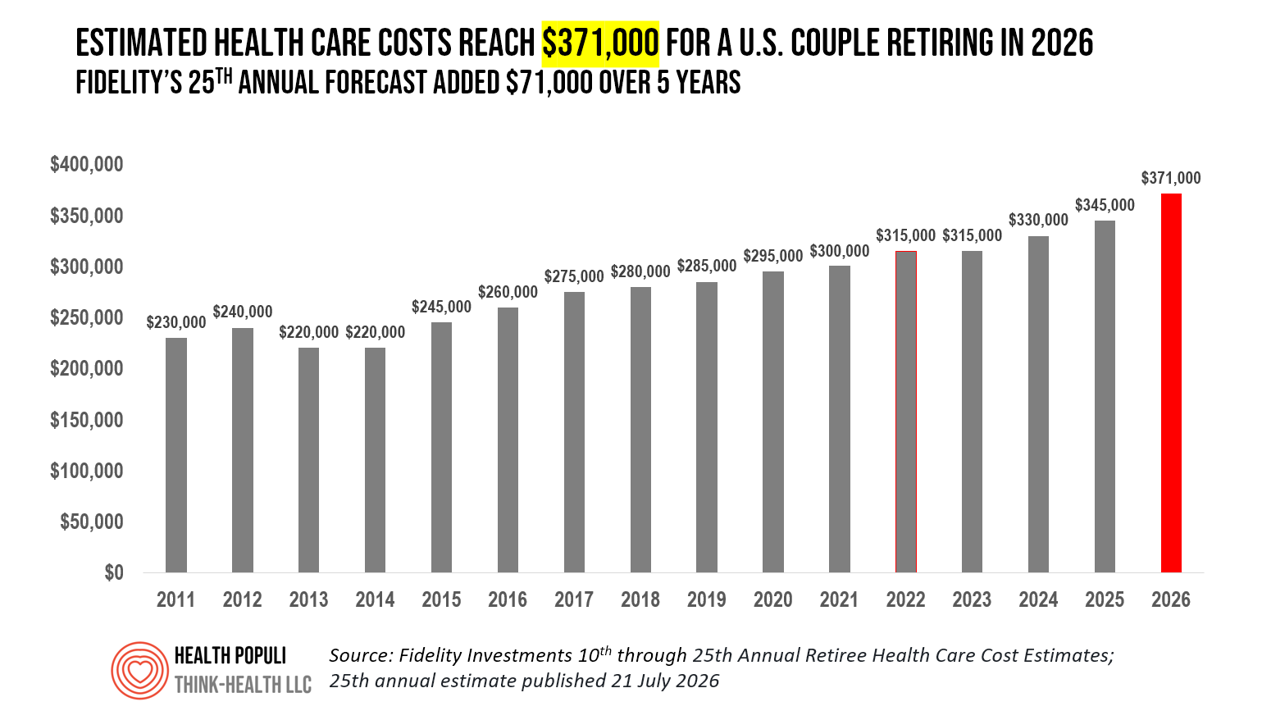
A 65-year-old retiring in the United States in 2026 can expect to spend an average of $185,500 on healthcare and medical expenses throughout retirement, according to Fidelity Investment’s 25th Annual Retiree Health Care Cost Estimate report published in July. This top-line figure marks a 7.5% increase from the previous year’s estimate, representing one of the highest annual growth rates recorded since Fidelity began exploring retiree health care costs.
I have tracked these escalating figures for years. According to Fidelity’s survey data of U.S. working adults, more than half of pre-retirees incorrectly assume that Medicare will cover all of their healthcare expenses from retirement until death.
Steve Betts, head of Fidelity Health, addressed this common misconception in the annual report’s release. “Medicare is a critical part of retirement health coverage, but it does not eliminate every health care expense,” Betts stated, noting that the new estimates demonstrate why pre-retirees and retirees must carefully evaluate out-of-pocket costs when building retirement income strategies.
What Drives the $185,500 Retiree Health Care Estimate?
The $185,500 benchmark captures projected lifetime expenditures for a 65-year-old retiring in 2026. However, the macro calculation does not include long-term care expenses, which can add substantially to an aging adult’s financial burden. The core components of the estimate break down across three primary categories of medical spending.
Medicare Parts B and D premiums account for 45% of the total projected cost. Other medical expenses—including copayments, coinsurance, and deductibles—make up 48% of the projected outlays. Out-of-pocket prescription drug expenses account for the remaining 7% of the total.
Historical data from Fidelity’s tracking highlights the long-term volatility of these expenses. While costs have risen in nearly every year since 2011, intermittent dips occurred between 2012 and 2013, and again from 2022 to 2023.
Broader Economic Pressures on Family Budgets
For retirees and families planning for the future, medical inflation does not happen in a vacuum. Healthcare expenditures compete directly with everyday living costs at the kitchen table. Household budgets are currently strained by prices for food and groceries, utility bills, gas prices at the pump, rent and mortgage, alongside the economic fallout of tariffs impacting consumer electronics like laptops and washing machines with computer chips.
These immediate cost-of-living pressures intersect with longer-term structural concerns regarding federal programs. News has indicated that the Medicare and Social Security trust funds could hit a point of insolvency by 2033. While that milestone may feel distant to younger generations, it forms the bedrock assumption for workers approaching age 50 and beyond.
As policymakers on Capitol Hill debate federal resource allocation and long-term fiscal reform, preserving the stability of Medicare and Social Security remains paramount for the healthcare and caring economy ecosystem. These programs represent earned benefits funded through payroll contributions rather than government handouts, making ongoing public engagement essential as reform discussions take shape.
Next Steps for Retirement Planning
What are your thoughts on rising retirement healthcare costs? Share your experiences or join the discussion in the comments below.
Related reading
- Pre-Surgical Complications Part 2: Aortic Stenosis, TAVR Dilemmas, and the Chaos of US Healthcare
- West Nile Virus Surge in Greece: Athens Medical Association Demands Urgent Mosquito Control
- Impact of Parental Hospitalization on Children’s Health Insurance in China (archynewsy.com)
- US Homeowners Insurance Premiums Outpace Inflation as Costs Surge (newsdirectory3.com)