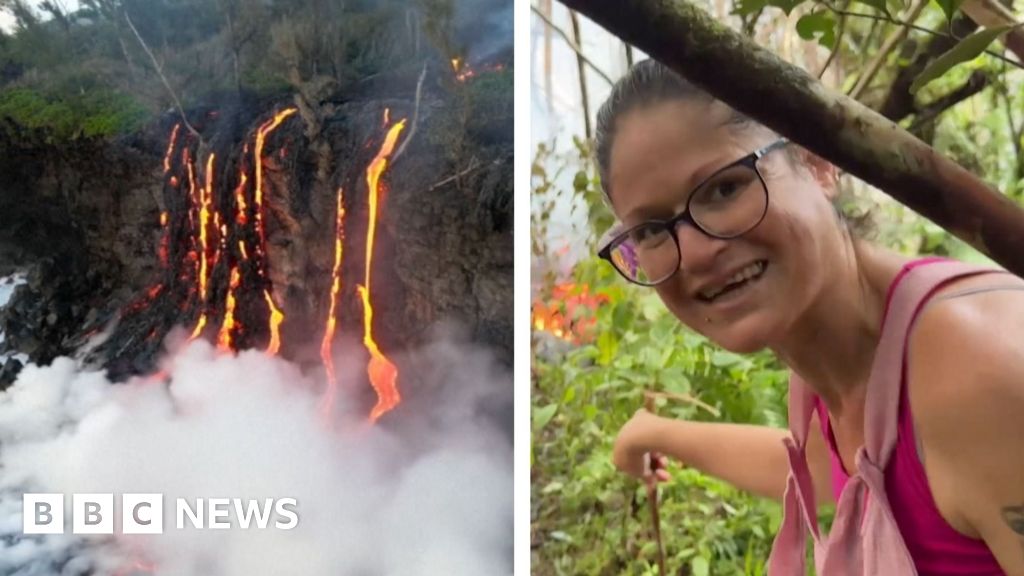
Saint-Pierre, Réunion Island – The dramatic spectacle of volcanic activity on Réunion Island continues to draw attention as lava from the Piton de la Fournaise volcano reached the Indian Ocean on Sunday, February 18, 2026, for the first time in nearly two decades. The eruption, which began on February 13, 2026, marks the second such event this year and has led to disruptions across the island, including the closure of a key highway.
The Piton de la Fournaise, French for “Peak of the Furnace,” is one of the world’s most active volcanoes, alongside Kīlauea in Hawaii, Stromboli and Etna in Italy, and Mount Erebus in Antarctica. Located on the eastern side of Réunion Island, a French overseas department in the Indian Ocean, the shield volcano presents a unique combination of natural beauty and potential hazard. The current eruption follows a pattern of activity, with previous eruptions occurring in 2006-2007, 2007, 2008, 2010, and 2015, demonstrating its consistent, though often unpredictable, nature.
A Volcano’s Reach: Lava Flows and Infrastructure Impacts
The most recent lava flows have impacted the RN2 national highway, a crucial artery connecting the south and east of the island. Authorities have closed sections of the road to ensure public safety, forcing detours and causing travel delays for residents and tourists alike. The disruption highlights the ongoing challenge of coexisting with an active volcano and the need for robust infrastructure planning and emergency response protocols. The lava reaching the ocean is a significant event, as it creates steam explosions and alters the coastline, though the immediate impact on marine life is still being assessed.
The volcano’s activity is closely monitored by the Observatoire Volcanologique de la Réunion (OVPF), which provides regular updates and hazard assessments. The OVPF utilizes a network of sensors and satellite imagery to track the movement of lava, gas emissions, and ground deformation, providing crucial information for decision-making by local authorities. The current eruption is characterized by effusive activity, meaning that lava is flowing steadily rather than exploding violently, which, while still dangerous, allows for more predictable monitoring and evacuation planning.
Understanding Piton de la Fournaise: Geology and History
Piton de la Fournaise is a shield volcano, formed by the accumulation of fluid lava flows over thousands of years. Its elevation reaches 2,621 meters (8,599 feet), and We see dominated by the Enclos Fouqué, an 8-kilometer (5.0 mi) wide caldera. The caldera’s rim is marked by steep cliffs, known as remparts, and a breach on the southeast side allows lava to flow towards the ocean. The volcano’s geological history reveals a complex pattern of eruptions and caldera collapses, with the current structure being approximately 530,000 years old.
The eastern flank of Piton de la Fournaise is considered unstable and is in the early stages of a potential collapse. Scientists warn that a large-scale collapse could trigger a megatsunami, although the probability of such an event is considered low in the immediate future. Ongoing research focuses on understanding the factors that contribute to flank instability and developing early warning systems to mitigate the risk. The volcano is located within Réunion National Park, a UNESCO World Heritage Site, attracting both scientists and tourists drawn to its unique geological features and dramatic landscapes.
A Tourist Attraction and Local Landmark
Despite the inherent risks, Piton de la Fournaise remains a major tourist attraction for Réunion Island. Visitors are drawn to the otherworldly landscapes, the opportunity to witness volcanic activity firsthand (from safe distances, of course), and the hiking trails that crisscross the surrounding terrain. Locals often refer to the volcano simply as “le Volcan” (“the Volcano”), reflecting its central role in the island’s identity and culture. The island offers a diverse range of experiences, from exploring the volcanic landscapes to immersing oneself in the vibrant Creole culture and cuisine.
The current eruption has not deterred all tourists, with many flocking to vantage points to observe the lava flows. However, authorities are urging caution and advising visitors to adhere to safety guidelines, including staying within designated viewing areas and following the instructions of local officials. The economic impact of the eruption is being closely monitored, with potential disruptions to tourism and agriculture being assessed.
Ongoing Monitoring and Future Outlook
The Observatoire Volcanologique de la Réunion continues to monitor Piton de la Fournaise around the clock, providing regular updates on the eruption’s progress. The OVPF’s website and social media channels are the primary sources of information for residents and visitors. The volcano’s activity is expected to continue for the foreseeable future, although the intensity and duration of the eruption are tricky to predict. Scientists are studying the eruption to gain a better understanding of the volcano’s behavior and improve forecasting capabilities.
The eruption serves as a reminder of the powerful forces that shape our planet and the importance of respecting the natural environment. Réunion Island’s experience with Piton de la Fournaise demonstrates the challenges and opportunities of living in close proximity to an active volcano, requiring a balance between economic development, scientific research, and public safety. The next official update from the OVPF is expected on February 22, 2026, providing further insights into the eruption’s evolution.
Key Takeaways:
- Piton de la Fournaise erupted on February 13, 2026, and lava reached the Indian Ocean on February 18, 2026.
- The eruption has disrupted transportation on Réunion Island, closing sections of the RN2 highway.
- The volcano is closely monitored by the Observatoire Volcanologique de la Réunion (OVPF).
- Piton de la Fournaise is a major tourist attraction, despite the inherent risks.
We encourage readers to share their thoughts and experiences in the comments below. Stay tuned to World Today Journal for further updates on this developing story and other key global events.
Keep reading