
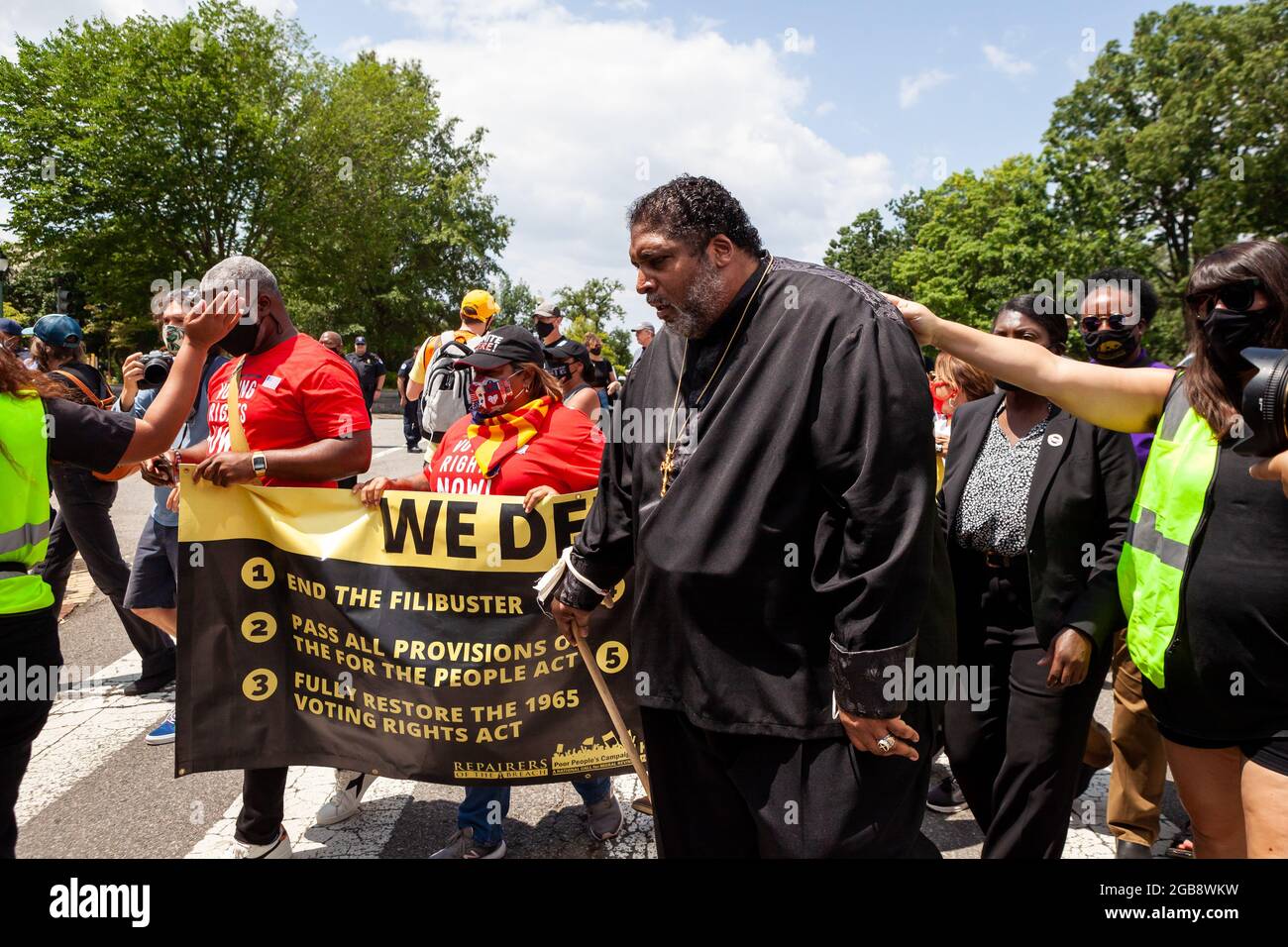
In the evolving landscape of American social activism, the Reverend Dr. William J. Barber II has announced a renewed commitment to a strategy that first gained national recognition over a decade ago. Known for his role in the grassroots movement of nonviolent civil disobedience that emerged in North Carolina in 2013, Barber is now transitioning the “Moral Mondays” protest model to the nation’s capital. This move marks a significant escalation in his efforts to challenge current political discourse, specifically targeting what he describes as an overreach of Christian nationalism and the systemic policies that impact marginalized communities.
The decision to bring these demonstrations to Washington, D.C., follows recent public gatherings, including events held near the White House. Barber, who serves as the president and senior lecturer of Repairers of the Breach, argues that the current climate necessitates a theological and moral response. His organization, which focuses on training leaders to advocate for a “moral agenda,” is currently coordinating with a coalition of faith leaders and civil rights activists to sustain a long-term presence in the capital.
On Saturday, @RevDrBarber stood outside the White House at the Peace &. Nonviolence Rally with a message: “We’re not the first ones to take these streets, nor will we be the last. Over and over again, people have come to this place to change public policy.” pic.twitter.com/CapvAj0zKd— The Root (@TheRoot) May 16, 2026
Challenging the Public Narrative
At the center of Barber’s current efforts is a direct critique of events he characterizes as being rooted in religious nationalism. According to Barber, recent efforts by some clergy to frame public events as a “rededication” of the country are theologically flawed. Instead, he advocates for a “redirection” of national policy, arguing that true faith in the public square must prioritize the needs of the most vulnerable citizens.
Barber’s approach involves what he terms “policy violence,” a concept he uses to describe legislative or administrative decisions that negatively impact the health, safety, and economic security of the population. He suggests that the refusal to address issues such as healthcare access, voting rights, and environmental protections constitutes a moral failure. By invoking the Hebrew term “Rasha,” Barber emphasizes the theological weight he assigns to the failure to challenge injustice, framing it not merely as a political disagreement but as a moral imperative.
The Strategy for Sustained Mobilization
Unlike intermittent demonstrations, the upcoming phase of Moral Mondays is designed to be a continuous, rotating presence of religious and community leaders. Barber has outlined a clear timeline for the next steps in this mobilization, which includes a special prayer gathering scheduled for the first Monday in June, followed by a broader relaunch of the protest series on June 8, 2026.
The Poor People’s Campaign: A National Call for Moral Revival, which Barber co-launched in 2017, serves as an institutional backbone for these efforts. The organization maintains a national team of strategists, artists, and religious leaders who work to elevate the voices of those directly impacted by systemic issues. By holding space in Washington every Monday, the organizers intend to maintain consistent pressure on policymakers, ensuring that their specific moral agenda remains a part of the public conversation.
What Happens Next
As the movement prepares for its June 8 relaunch, the focus remains on building a broad, interfaith coalition capable of sustaining long-term advocacy. For observers and participants, the coming weeks will likely see an increase in activity as religious leaders from across the United States are invited to participate in the upcoming prayer gatherings and subsequent demonstrations.
The effectiveness of this campaign will depend on its ability to translate moral arguments into tangible policy shifts. With the next major checkpoint set for the first Monday in June, the movement is positioning itself to remain a fixture in the D.C. Protest scene throughout the summer. We will continue to track these developments as the June 8 date approaches and more information regarding the coalition’s specific objectives becomes available.
What are your thoughts on the role of faith-based movements in shaping modern political policy? Join the conversation in the comments below.
Related reading
- Collapsed Sidewalk in Depok Sawangan Gets Repairs After Public Outcry
- Digi Power X: AI Infrastructure and Data Center Solutions
- BP Q2 Profit Hits $5.7 Billion Amid Trump Criticism of Big Oil Windfalls (time.news)
- Trump Administration Begins Systematic Appropriation of Japanese Manga (newsdirectory3.com)