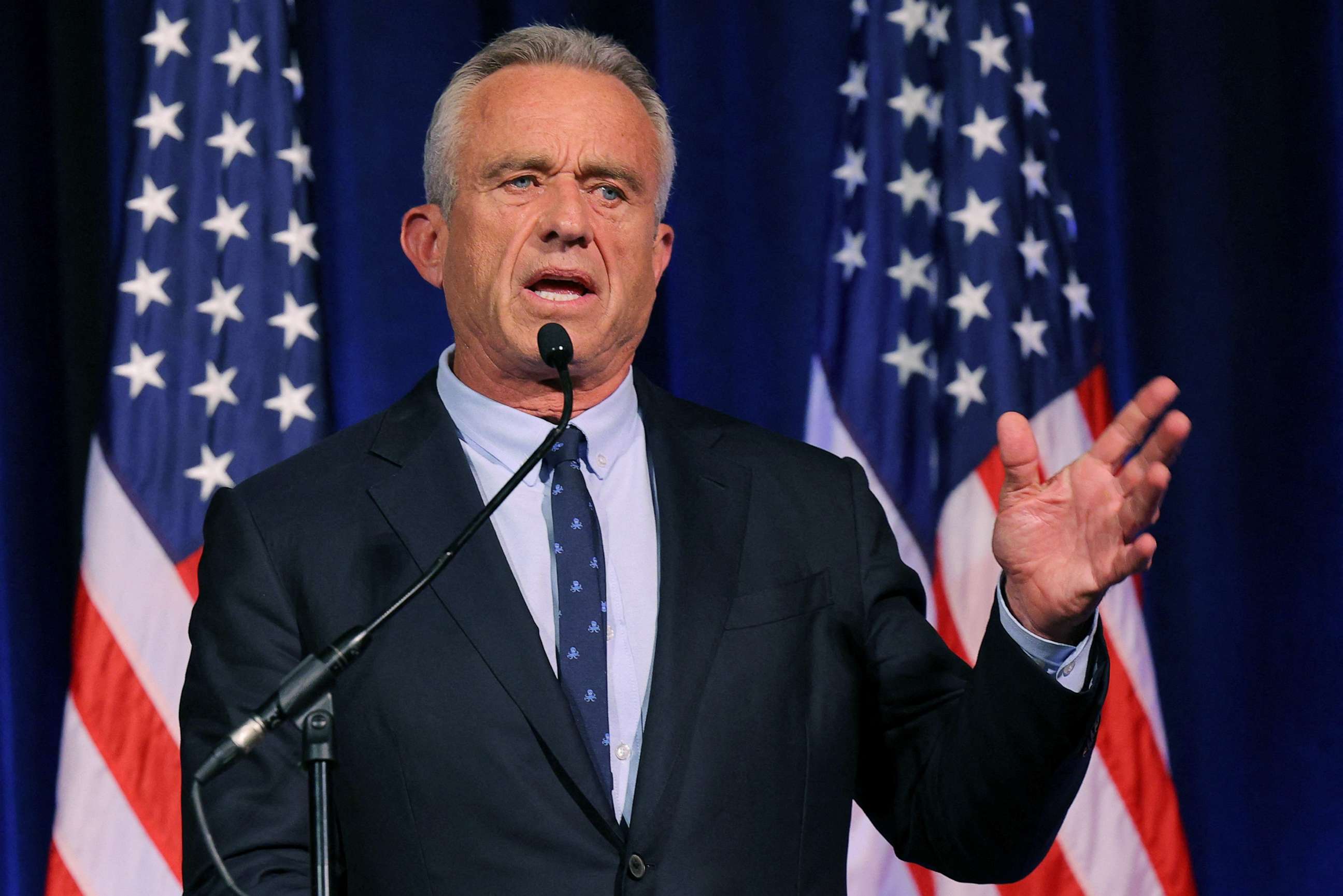
Dr. Debra Houry, the former chief medical officer at the Centers for Disease Control and Prevention (CDC), has publicly stated that the leadership of Department of Health and Human Services (HHS) Secretary Robert F. Kennedy Jr. has caused significant and lasting damage to public health institutions. During a recent appearance on CBS News’s “Face the Nation,” Houry pointed to a sharp decline in public trust as a primary consequence of the current administration’s approach to federal health policy.
The concerns raised by public health officials underscore a broader trend of declining confidence in government agencies. Recent data from a poll conducted by Harvard University’s T.H. Chan School of Public Health and the de Beaumont Foundation’s Public Health Listening Lab indicates that public trust in CDC health recommendations has dropped significantly. Between a survey conducted in spring 2025 and a follow-up poll held from March 19 through April 1, the percentage of U.S. adults who trust the CDC’s health recommendations fell from 77 percent to 50 percent, according to the research findings.
Public Trust and Institutional Stability
The erosion of institutional credibility is a central theme in the current critique of HHS management. In her interview with host Margaret Brennan, Dr. Houry highlighted the difficulty of restoring faith in public health guidance once it has been compromised. “I think the secretary has caused a lot of irreparable harm, and when you look at many of the polls out there, the trust in public health, specifically CDC, has decreased dramatically, over 20 points in many polls,” Houry said on “Face the Nation.”
Houry further emphasized the practical implications of this shift, noting that some states have begun to remove direct links to the CDC website, opting instead to prioritize information from other medical organizations. This trend, she argued, creates a fragmented public health landscape that makes a unified, evidence-based response to health crises increasingly difficult to coordinate. Rebuilding the public’s confidence in these federal agencies is widely viewed by health experts as a long-term challenge that may require years of consistent, transparent communication.
The Impact of Shifting Health Messaging
The decline in trust is not merely a matter of polling numbers; it reflects a fundamental change in how the public engages with federal health recommendations. The Harvard T.H. Chan School of Public Health and the de Beaumont Foundation’s Public Health Listening Lab study, which surveyed 2,205 U.S. adults, serves as a quantitative benchmark for this shift. With trust levels falling by a significant margin, the ability of federal agencies to effectively disseminate guidance during outbreaks or health emergencies is increasingly being questioned by former agency insiders.
The situation is further complicated by the intersection of political discourse and medical guidance. As state-level health departments and independent medical organizations distance themselves from federal messaging, the challenge for future administrations will be to reestablish a baseline of scientific authority. Experts suggest that the process of repairing the damage to public health messaging is not only about the policies themselves, but also about the ability to regain the public’s buy-in through consistent, non-partisan health communication.
Looking Ahead at Federal Health Oversight
The current state of the HHS and its relationship with the CDC remains a focal point for legislative and public health scrutiny. As the administration continues to navigate its current policy priorities, the long-term consequences of these shifts in leadership and messaging remain a subject of debate among policymakers and health professionals. For the public, the primary concern lies in the clarity and reliability of health information provided during critical moments of decision-making.
We encourage readers to share their perspectives on the importance of institutional trust in public health in the comments section below.
Related reading
- Whale Poop Found on Beach Leads to “Revolutionary” Scientific Study
- Judge Rules in Favor of Xbox Player Against Microsoft Lawyers
- Samsung Health May Delete User Data if AI Training Consent is Denied (archyde.com)
- Latvia’s Bomb Shelter Adaptation: Progress, Challenges and Public Skepticism (world-today-news.com)